Back
Copy
Share
Like
trend
Runners' Basecamp: SEOUL
Runners' Basecamp: SEOUL
Runners' Basecamp: SEOUL
The fact that UVU opened its world’s first store in Seongsu-dong instead of London demonstrates that Seoul is the ideal beachhead for testing a global brand’s chances of survival. Regular gatherings of running crews are reshaping commercial districts, and the 6,424 foreign participants in the 2026 Seoul Marathon confirm that Seoul is emerging as a global running capital.
The fact that UVU opened its world’s first store in Seongsu-dong instead of London demonstrates that Seoul is the ideal beachhead for testing a global brand’s chances of survival. Regular gatherings of running crews are reshaping commercial districts, and the 6,424 foreign participants in the 2026 Seoul Marathon confirm that Seoul is emerging as a global running capital.
The fact that UVU opened its world’s first store in Seongsu-dong instead of London demonstrates that Seoul is the ideal beachhead for testing a global brand’s chances of survival. Regular gatherings of running crews are reshaping commercial districts, and the 6,424 foreign participants in the 2026 Seoul Marathon confirm that Seoul is emerging as a global running capital.
Article Highlights
Seoul, the New Standard in Global Retail: The fact that London-based UVU opened its first-ever global flagship in Seongsu-dong, ahead of its home market, proves that Korea has emerged as the most strategic reference market for global brands.
The Future of Commercial Districts Led by Communities: Running crews with strong fandoms, such as JSRC and NBRC, regularly anchor specific neighborhoods, building a sustainable customer-attraction ecosystem based not just on foot traffic but on "high-purchasing-power communities."
Urban Infrastructure as a Location Advantage: Seoul’s uniquely iconic run-course assets, including the Han River and Seoul Forest, are a powerful retail competitive edge that other cities cannot replicate, and they serve as key touchpoints where brands can capture customers’ lifestyle data.
The running craze, which started with a surge in health and outdoor activity after the pandemic, has now settled into a huge industrial ecosystem beyond just a trend. The dominance of sports retail, once occupied by golf and tennis, has rapidly shifted to 'running' starting in 2024, which presents retailers with the challenge of building community hubs beyond mere product sales. Notably, the London-based performance brand UVU (You Versus You) selecting Seoul's Seongsu-dong for its first physical store over its home country suggests that Korea's strategic standing in the global market has reached its peak. This article aims to analyze the impact of running on the retail landscape, industry response strategies, and the geographical and cultural background of Seoul's rise as a global running hub and forecast the future of related retail.
UVU: A London brand that has branded 'the fight with oneself'
UVU(https://uvuclub.com/) was founded in 2017 in London, England, by fitness influencer Adi Gillespie(@Adi Gillespie) and his colleagues. The brand name UVU (You Versus You) encapsulates the philosophy of 'competing not with others, but with yesterday's self', which perfectly aligns with the values of self-improvement and perseverance sought by modern runners. Initially, it gained status akin to 'the Supreme of running' by employing extreme scarcity marketing, allowing only those with email invitation codes to purchase for a limited time (48 hours). The visuals of the crew genuinely enjoying extreme running shared through Instagram helped it rapidly emerge as a premium running brand combining functionality and fashion.
Chosen Seongsu-dong over London?
On March 14, UVU opened its first official store in the world at 218-2 Seongsu-dong 1-ga. The choice of Seoul as the first flagship location by a global brand reflects recognition of the explosive trends and sensitivity of the Korean market, and the existence of the overwhelming running infrastructure of Seoul Forest plays a significant role. The Seoul Forest course is not only easily accessible, being adjacent to Seongsu and Ttukseom, but the relatively mild elevation difference in the course eases the burden of running, which is a major advantage. Additionally, the abundance of trees around provides shade, making it ideal for running. Notably, attractive cafes and restaurants such as Accote du Parc, Center Coffee, and Mash Coffee are located along the course, perfectly fulfilling the role of a 'retail-integrated course' that takes care of post-run relaxation. Ultimately, Seongsu-dong serves as both a starting and finishing point for the major running courses leading to Seoul Forest and Han River Park, possessing the value of being a strategic hub where actual runners gather. This demonstrates Korea's function as a forward base predicting the survival potential of global brands beyond simply being a market for selling goods.
/Seongsu uvu store
Urban Nature Seoul: Running real experiences
Recently, the paths of foreign tourists visiting Korea have quickly shifted away from simple shopping centered in Myeongdong to the 'Dailycation' trend, deeply experiencing and exploring the daily lives of locals. There has been a growing desire for 'real experiences', where visitors eat, enjoy, and run like Koreans. According to the Korea Tourism Organization's survey on inbound tourists (2024-2025), the reason for foreign visitors coming to Korea is significantly influenced by appreciation of natural scenery (33.7%), ranking high after gastronomy and shopping. In addition to Seoul Forest, Seoul is endowed with natural conditions that allow its urban areas such as Namsan, Inwangsan, and the Han River to function as running tracks, producing a powerful synergy that aligns with the 'natural landscapes' and 'local experiences' sought by foreigners. As part of this trend, the number of foreigners visiting Korea for marathon participation has increased by 20% compared to the previous year, and the number of foreign visitors to the Bukhansan Hiking Tourism Center has also increased about 2.7 times compared to 2024. Consequently, it has become an inevitable choice based on data for retail brands to integrate the links between 'running + nature + real experiences in Korea' into their business strategies.
As the Bukchon running courses heat up, places like New Balance Bukchon Run Hub and Good Runner Company have established themselves, while Adidas opens specialized stores in Seochon targeting Inwangsan courses, and Puma promotes the Seoul Forest Run concept, illustrating that the geographical beauty of Seoul has become a strong theme in retail. Such aesthetic courses provide runners with experiences beyond mere exercise and create a unique advantage for running sites in Seoul that cannot be imitated by other cities.
/Good Runner Company (Bukchon), New Balance (Bukchon)
The end of high-cost sports and the expansion of 'community-based wellness'
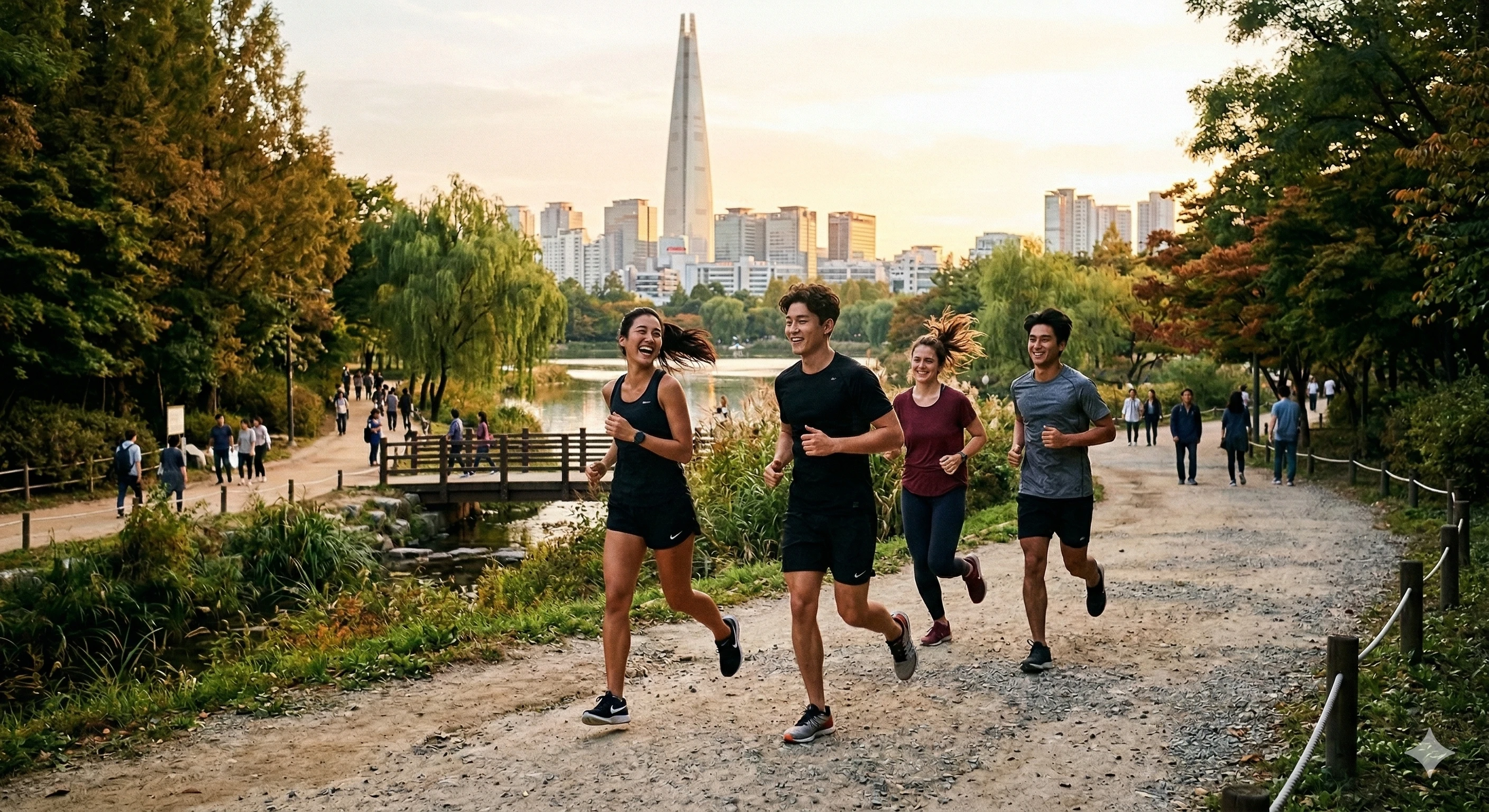
In times of recession, consumers no longer invest in sports that involve excessive equipment and maintenance costs, instead returning to running, which has high satisfaction and low barriers to entry (Refer to the 2026 trend article). Running has evolved into a new community business for exchanging healthy energy and connecting with others. Notably, the key driver of Korea's running craze is the 'social running crew'. Unlike past clubs that were focused on records and competition, groups like SRC (Social Running Crew Seoul) and JSRC emphasize 'flexible solidarity' and 'aesthetic values'. They share the beauty of the running process through SNS, redefining exercise as a trendy cultural activity and a social network. This existence of a strong user community is a decisive reason why global brands choose Korea as the most dynamic testing ground. The culture of running courses together and sharing experiences creates a strong fandom for the brands and is a key driving force for retailers to secure customer dwell time and brand loyalty.
/Group Running image(ai)
Meet at CU Banpo Pier at 7 o’clock
CU Banpo Pier is an example of a hyper-vertical store serving as a hub for a community with a specific purpose, not just a convenience store. Unlike traditional Han River convenience stores that focus on common demands like ramen or drinks, this store was designed from the planning stage to serve as a base camp for runners. The 18 storage lockers and changing rooms installed inside hit the pain points of office worker runners who visit the Han River without any separate preparations after work. Additionally, combining a tech zone where wearables like smartwatches and goggles can be experienced demonstrates that offline stores function as infrastructure beyond just sales points.
In terms of MD composition, it presents a distinct niche curation compared to general stores. It greatly strengthens product lines specialized in condition management before and after running, such as electrolyte drinks and energy gels, offering more than five times compared to general stores. Furthermore, essential consumables like socks and arm bands are always available, creating an environment where one can run 'without equipment at any time'. This strategy dramatically increases the dwell time and visit frequency of the specific target, transforming the store into a gathering place for running crews and a strong brand supporter. Ultimately, this space serves as a hub for sophisticated vertical data collection, clearly showing the future of retail real estate as 'lifestyle infrastructure'.
/Running Station image
Industry expansion focused on runner data
The most valuable asset that offline retail can obtain from stores is not short-term sales but the refined data of consumers. In particular, gym or fitness-based retail possesses profoundly deep data compared to other categories. This is because it can legally collect highly personalized health data such as demographic information like member affiliation, body composition (InBody), physical characteristics, and exercise goals. Such 'deep data' can be leveraged for business expansion beyond simple target marketing into adjacent industries like medical, wellness, insurance, and diet solutions. Future winners will be decided based on securing 'running data' flowing through spaces and how they convert this refined personal information into value.
In response to the running craze, fitness platforms like Buffet Ground (Buffet Seoul) are executing sophisticated expansion plans that combine IT technology with offline bases. They are entering office areas like GFC and SFC to enhance accessibility for office worker runners while organizing 'run course' programs where people gather randomly to run together at specific times through an app. Especially, tracking exercise volume to provide mileage and linking it with F&B services is part of the strategy to datafy and manage customers' overall lifestyles. (Need to check if it's an acceptable insert / Jenny)
The running craze, which started with a surge in health and outdoor activity after the pandemic, has now settled into a huge industrial ecosystem beyond just a trend. The dominance of sports retail, once occupied by golf and tennis, has rapidly shifted to 'running' starting in 2024, which presents retailers with the challenge of building community hubs beyond mere product sales. Notably, the London-based performance brand UVU (You Versus You) selecting Seoul's Seongsu-dong for its first physical store over its home country suggests that Korea's strategic standing in the global market has reached its peak. This article aims to analyze the impact of running on the retail landscape, industry response strategies, and the geographical and cultural background of Seoul's rise as a global running hub and forecast the future of related retail.
UVU: A London brand that has branded 'the fight with oneself'
UVU(https://uvuclub.com/) was founded in 2017 in London, England, by fitness influencer Adi Gillespie(@Adi Gillespie) and his colleagues. The brand name UVU (You Versus You) encapsulates the philosophy of 'competing not with others, but with yesterday's self', which perfectly aligns with the values of self-improvement and perseverance sought by modern runners. Initially, it gained status akin to 'the Supreme of running' by employing extreme scarcity marketing, allowing only those with email invitation codes to purchase for a limited time (48 hours). The visuals of the crew genuinely enjoying extreme running shared through Instagram helped it rapidly emerge as a premium running brand combining functionality and fashion.
Chosen Seongsu-dong over London?
On March 14, UVU opened its first official store in the world at 218-2 Seongsu-dong 1-ga. The choice of Seoul as the first flagship location by a global brand reflects recognition of the explosive trends and sensitivity of the Korean market, and the existence of the overwhelming running infrastructure of Seoul Forest plays a significant role. The Seoul Forest course is not only easily accessible, being adjacent to Seongsu and Ttukseom, but the relatively mild elevation difference in the course eases the burden of running, which is a major advantage. Additionally, the abundance of trees around provides shade, making it ideal for running. Notably, attractive cafes and restaurants such as Accote du Parc, Center Coffee, and Mash Coffee are located along the course, perfectly fulfilling the role of a 'retail-integrated course' that takes care of post-run relaxation. Ultimately, Seongsu-dong serves as both a starting and finishing point for the major running courses leading to Seoul Forest and Han River Park, possessing the value of being a strategic hub where actual runners gather. This demonstrates Korea's function as a forward base predicting the survival potential of global brands beyond simply being a market for selling goods.
/Seongsu uvu store
Urban Nature Seoul: Running real experiences
Recently, the paths of foreign tourists visiting Korea have quickly shifted away from simple shopping centered in Myeongdong to the 'Dailycation' trend, deeply experiencing and exploring the daily lives of locals. There has been a growing desire for 'real experiences', where visitors eat, enjoy, and run like Koreans. According to the Korea Tourism Organization's survey on inbound tourists (2024-2025), the reason for foreign visitors coming to Korea is significantly influenced by appreciation of natural scenery (33.7%), ranking high after gastronomy and shopping. In addition to Seoul Forest, Seoul is endowed with natural conditions that allow its urban areas such as Namsan, Inwangsan, and the Han River to function as running tracks, producing a powerful synergy that aligns with the 'natural landscapes' and 'local experiences' sought by foreigners. As part of this trend, the number of foreigners visiting Korea for marathon participation has increased by 20% compared to the previous year, and the number of foreign visitors to the Bukhansan Hiking Tourism Center has also increased about 2.7 times compared to 2024. Consequently, it has become an inevitable choice based on data for retail brands to integrate the links between 'running + nature + real experiences in Korea' into their business strategies.
As the Bukchon running courses heat up, places like New Balance Bukchon Run Hub and Good Runner Company have established themselves, while Adidas opens specialized stores in Seochon targeting Inwangsan courses, and Puma promotes the Seoul Forest Run concept, illustrating that the geographical beauty of Seoul has become a strong theme in retail. Such aesthetic courses provide runners with experiences beyond mere exercise and create a unique advantage for running sites in Seoul that cannot be imitated by other cities.
/Good Runner Company (Bukchon), New Balance (Bukchon)
The end of high-cost sports and the expansion of 'community-based wellness'
In times of recession, consumers no longer invest in sports that involve excessive equipment and maintenance costs, instead returning to running, which has high satisfaction and low barriers to entry (Refer to the 2026 trend article). Running has evolved into a new community business for exchanging healthy energy and connecting with others. Notably, the key driver of Korea's running craze is the 'social running crew'. Unlike past clubs that were focused on records and competition, groups like SRC (Social Running Crew Seoul) and JSRC emphasize 'flexible solidarity' and 'aesthetic values'. They share the beauty of the running process through SNS, redefining exercise as a trendy cultural activity and a social network. This existence of a strong user community is a decisive reason why global brands choose Korea as the most dynamic testing ground. The culture of running courses together and sharing experiences creates a strong fandom for the brands and is a key driving force for retailers to secure customer dwell time and brand loyalty.
/Group Running image(ai)
Meet at CU Banpo Pier at 7 o’clock
CU Banpo Pier is an example of a hyper-vertical store serving as a hub for a community with a specific purpose, not just a convenience store. Unlike traditional Han River convenience stores that focus on common demands like ramen or drinks, this store was designed from the planning stage to serve as a base camp for runners. The 18 storage lockers and changing rooms installed inside hit the pain points of office worker runners who visit the Han River without any separate preparations after work. Additionally, combining a tech zone where wearables like smartwatches and goggles can be experienced demonstrates that offline stores function as infrastructure beyond just sales points.
In terms of MD composition, it presents a distinct niche curation compared to general stores. It greatly strengthens product lines specialized in condition management before and after running, such as electrolyte drinks and energy gels, offering more than five times compared to general stores. Furthermore, essential consumables like socks and arm bands are always available, creating an environment where one can run 'without equipment at any time'. This strategy dramatically increases the dwell time and visit frequency of the specific target, transforming the store into a gathering place for running crews and a strong brand supporter. Ultimately, this space serves as a hub for sophisticated vertical data collection, clearly showing the future of retail real estate as 'lifestyle infrastructure'.
/Running Station image
Industry expansion focused on runner data
The most valuable asset that offline retail can obtain from stores is not short-term sales but the refined data of consumers. In particular, gym or fitness-based retail possesses profoundly deep data compared to other categories. This is because it can legally collect highly personalized health data such as demographic information like member affiliation, body composition (InBody), physical characteristics, and exercise goals. Such 'deep data' can be leveraged for business expansion beyond simple target marketing into adjacent industries like medical, wellness, insurance, and diet solutions. Future winners will be decided based on securing 'running data' flowing through spaces and how they convert this refined personal information into value.
In response to the running craze, fitness platforms like Buffet Ground (Buffet Seoul) are executing sophisticated expansion plans that combine IT technology with offline bases. They are entering office areas like GFC and SFC to enhance accessibility for office worker runners while organizing 'run course' programs where people gather randomly to run together at specific times through an app. Especially, tracking exercise volume to provide mileage and linking it with F&B services is part of the strategy to datafy and manage customers' overall lifestyles. (Need to check if it's an acceptable insert / Jenny)
More in
More in
trend
trend
trend
Mar 2, 2026
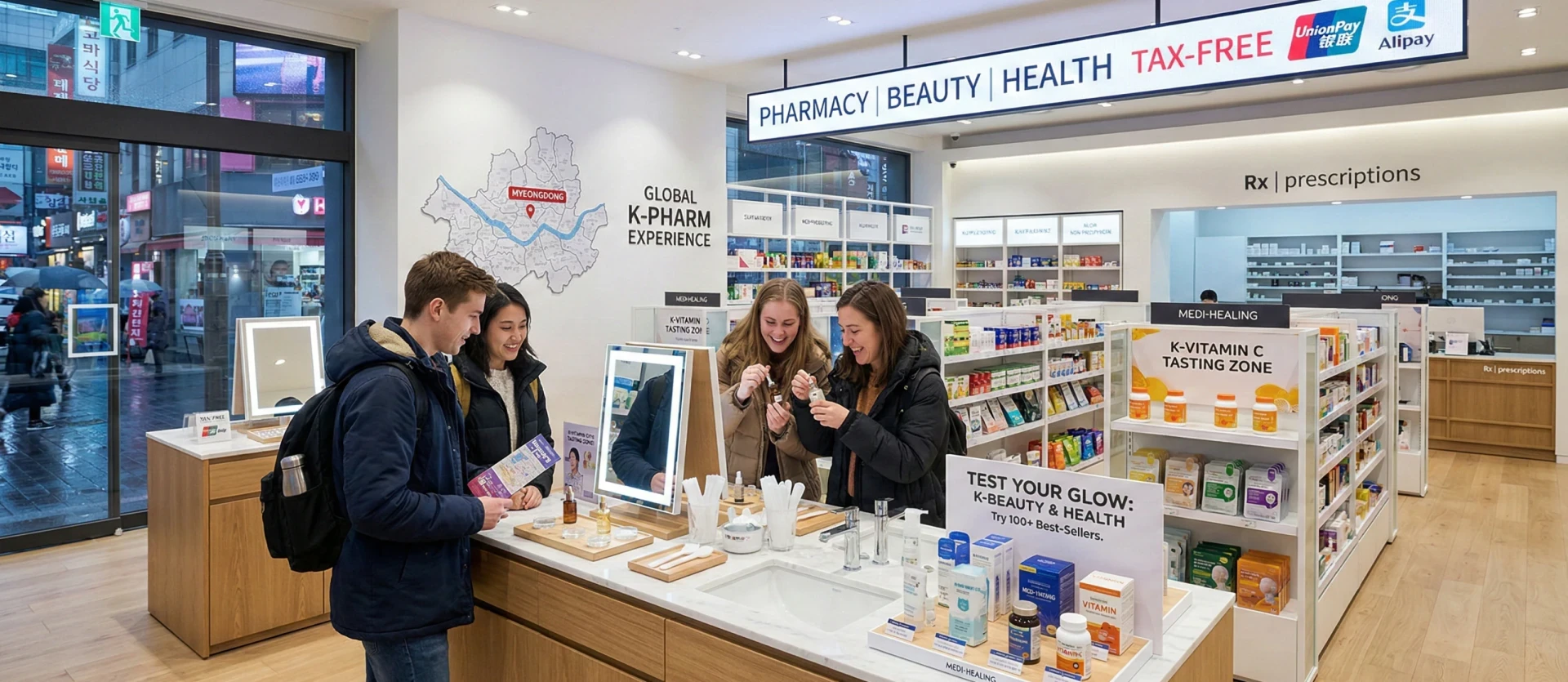
Pharmacy without prescription, is it a pharmacy or Olive Young?
The paradigm shift of Korean pharmacy retail, which combines high-profit non-covered items and experiential spaces, has rapidly emerged as an anchor tenant in core commercial areas.
trend
Feb 25, 2026
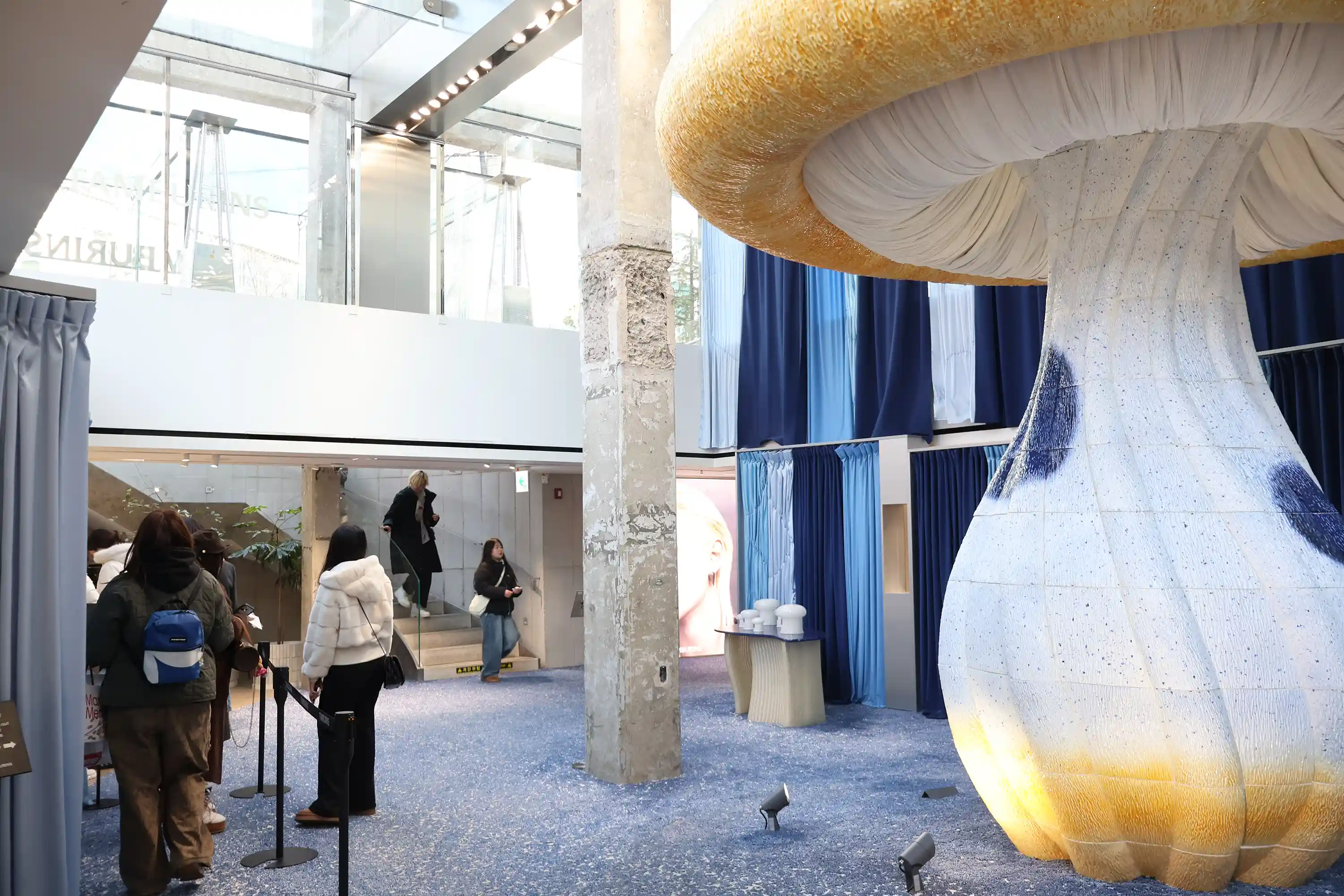
2026 Retail Trend: Maximizing Taste, Minimizing Risk
In an economic downturn, people may keep their wallets shut, but they won’t give up their tastes—2026 consumer trends focus on splitting spending into smaller units and prioritizing ‘small indulgences.’
Get the best of 'detail'
in your inbox, every month
Once a month, no spam
Get the best of 'detail'
in your inbox, every month
Once a month, no spam
Get the best of 'detail'
in your inbox, every month
Once a month, no spam