Back
Copy
Share
Like
trend
Pharmacy without prescription, is it a pharmacy or Olive Young?
Pharmacy without prescription, is it a pharmacy or Olive Young?
Pharmacy without prescription, is it a pharmacy or Olive Young?
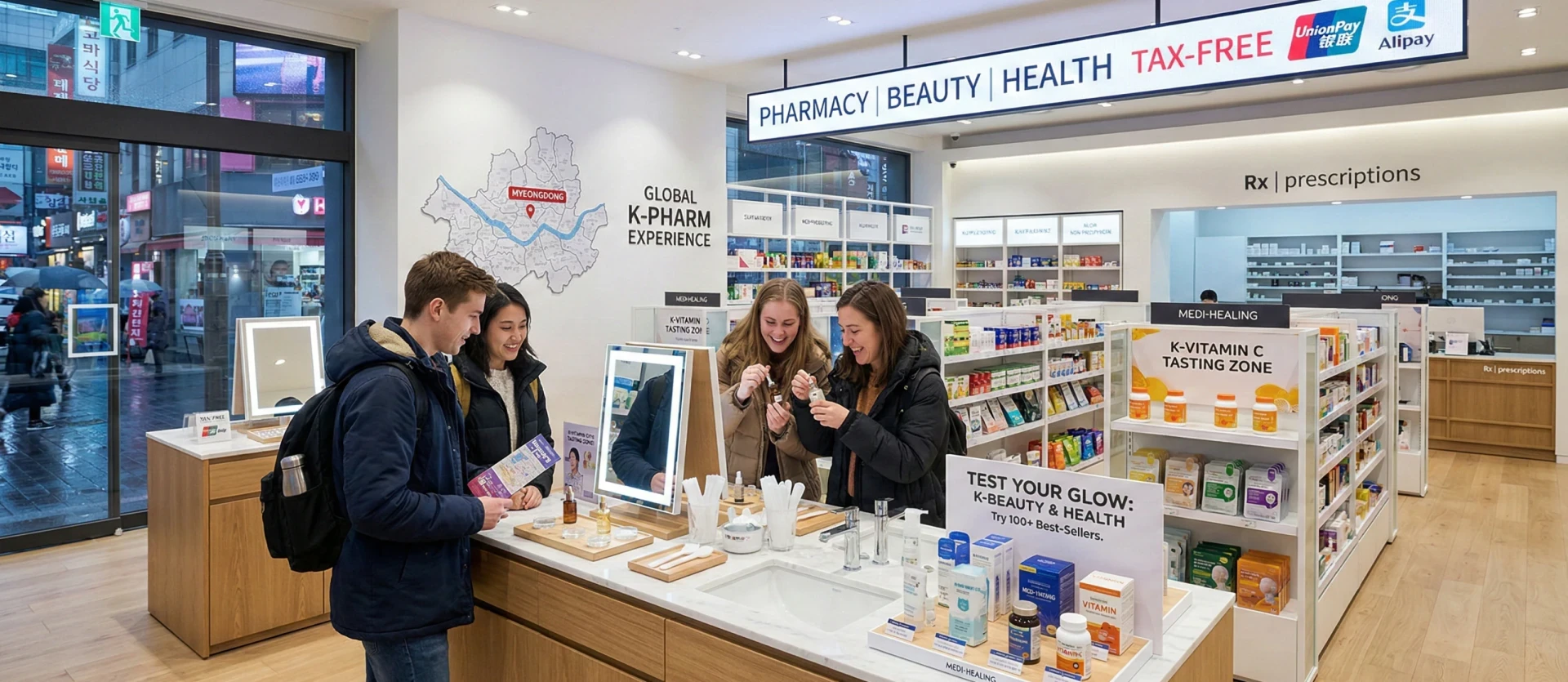
Foreign revenue at Myeongdong pharmacies ranges from a minimum of 93% to a maximum of 96%. The era has arrived where pharmacies function as retail stores exclusively for international consumers. The drugstore-style model, pioneered by Hongik Pharmacy, is now emerging as a new anchor tenant in the K-Wellness retail landscape.
Foreign revenue at Myeongdong pharmacies ranges from a minimum of 93% to a maximum of 96%. The era has arrived where pharmacies function as retail stores exclusively for international consumers. The drugstore-style model, pioneered by Hongik Pharmacy, is now emerging as a new anchor tenant in the K-Wellness retail landscape.
Foreign revenue at Myeongdong pharmacies ranges from a minimum of 93% to a maximum of 96%. The era has arrived where pharmacies function as retail stores exclusively for international consumers. The drugstore-style model, pioneered by Hongik Pharmacy, is now emerging as a new anchor tenant in the K-Wellness retail landscape.
Article Highlights
The Rise of Retailized 'K-Pharmacy': Pharmacies in Myeongdong and Seongsu have transcended their role as hospital support facilities. By adopting open shelving and lavish interiors similar to Olive Young, they have evolved into "Wellness Shopping Destinations" that are now essential stops for international tourists.
Asset Value Proven by Overwhelming Profitability: Large-scale pharmacies, with foreign revenue shares reaching up to 96%, are redefining building values. Through the sale of high-margin nutraceuticals and cosmeceuticals, they have emerged as blue-chip anchor tenants capable of sustaining premium rents.
SNS-Driven Destination Shopping Hubs: Viral "must-buy" lists shared on TikTok and Instagram have repositioned pharmacy items as high-functionality extensions of K-Beauty. This shift has elevated the pharmacy into a global retail platform sought after by consumers from around the world.
In the recent Korean retail market, pharmacies have rapidly emerged as core anchor tenants with powerful foot-traffic generation, moving far beyond their traditional role as mere medical support facilities. Breaking away from the passive model where survival depended entirely on proximity to hospitals, pharmacies are now seizing prime ground-floor frontages in ultra-high-rent districts like Myeong-dong and Gangnam Station, drawing in both foreign tourists and Gen Z consumers.
This phenomenon is a direct result of the K-Health & Beauty ecosystem, pioneered by Olive Young, migrating into the pharmacy sector. It signals a fundamental structural shift: from a dispensary-centered model focused on professional prescriptions to a lifestyle drugstore centered on high-margin functional health foods and cosmeceuticals. In this article, we analyze this transformation and explore how pharmacies have become the protagonists of Korea’s premier commercial districts.
The Expansibility of Pharmacy Retail Shown by Overseas Drug Stores
Drugstores in the West and Japan have expanded by blurring the lines between healthcare and retail. While Walgreens and CVS (US/EU) convert prescription waiting times into convenience shopping, Japanese drugstores have become tourist destinations by combining vast SKUs with tax-free benefits.
In contrast, Korea’s emerging models like Redi-Young blend Japanese-style "shopping fun" with a focus on the pharmacist’s professional counseling. By leveraging the unique monopoly on prescription rights, the Korean model integrates expert "Trust Assets" with retail, offering a far more sophisticated Health Curation than its global counterparts.
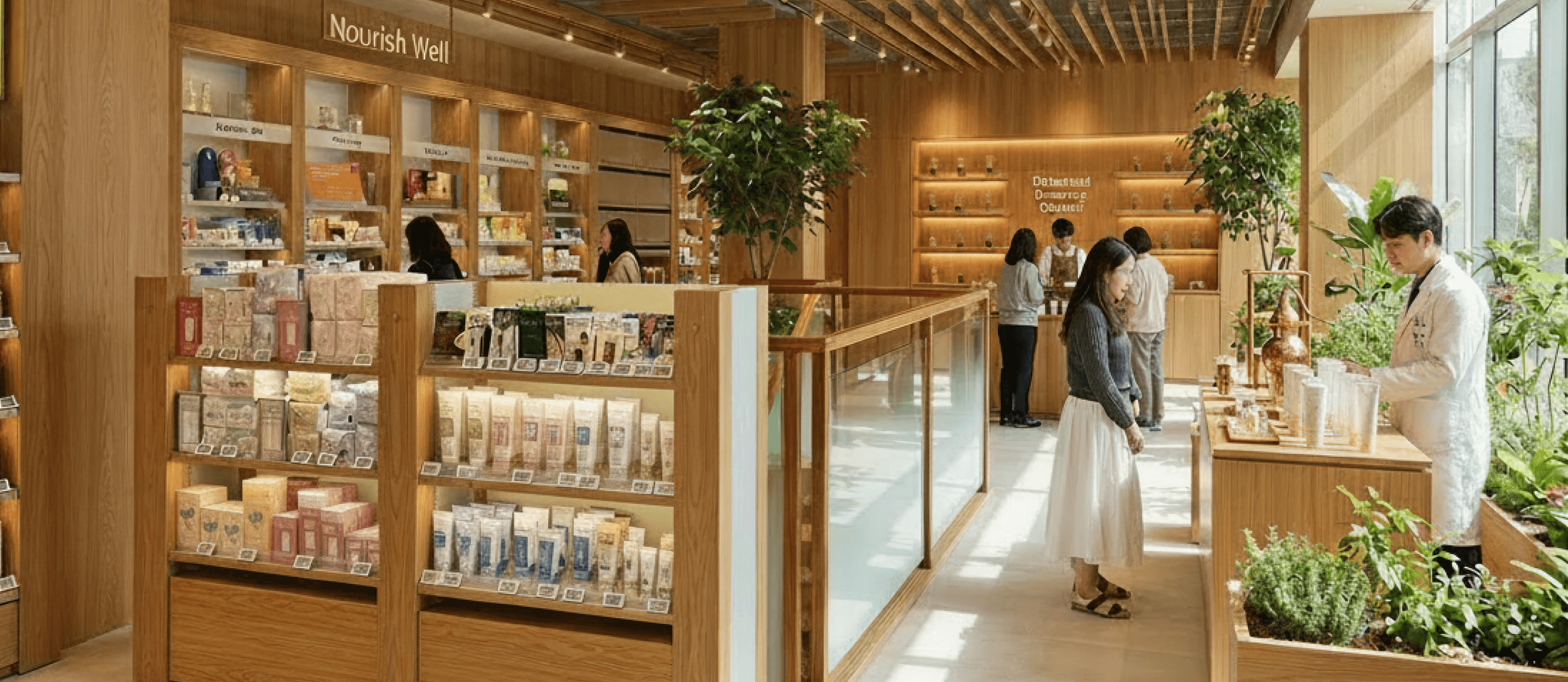
A virtual image created based on an actual pharmacy interior image. It has been produced with reference to the atmosphere of the Myeongdong pharmacy space, where filming is restricted.
The Olive Young Effect: The Rebirth of the Pharmacy as a Retail Powerhouse
Riding the global wave of K-beauty, Korea’s pharmacy retail is undergoing a unique evolution. As Olive Young solidified its status as a sanctuary for K-beauty among global tourists, consumer interest naturally expanded beyond cosmetics into functional quasi-drugs and health supplements. Emerging models like Redi-Young have capitalized on this shift by merging pharmaceutical expertise with an enhanced retail shopping experience.
By boldly moving away from traditional, closed-off prescription counters, these new-format pharmacies have introduced open-shelf systems that allow customers to physically interact with products and compare ingredients. This spatial strategy extends the "exploration time" prior to professional consultation, significantly boosting conversion rates.
More importantly, it provides a strategic foundation to increase the sales mix of Over-the-Counter (OTC) drugs and health supplements, which offer substantially higher margins compared to professional prescription drugs. According to Visa Korea, transaction volumes in the medical and healthcare sectors surged by approximately 58% year-on-year. This explosive growth in large-scale pharmacy retail has, in turn, fueled Olive Young’s own strategic expansion into the broader wellness sector.
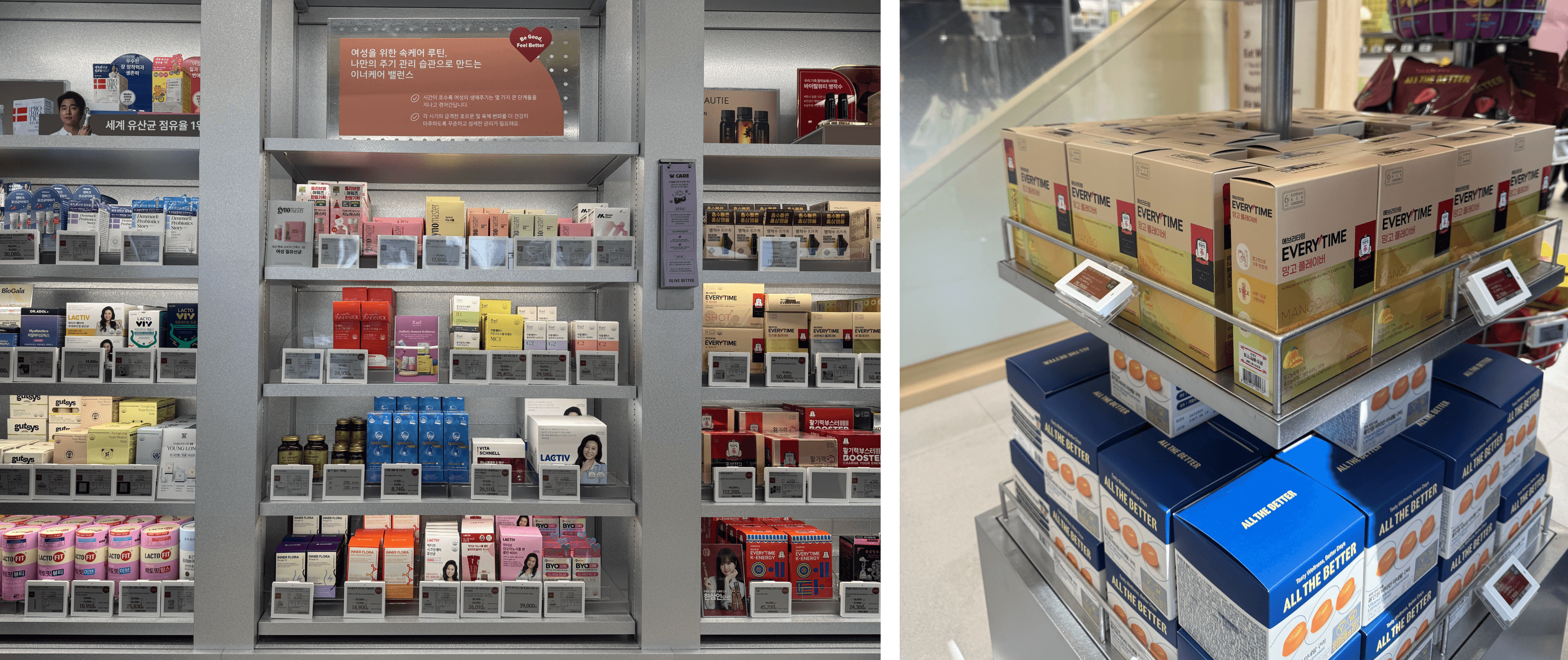
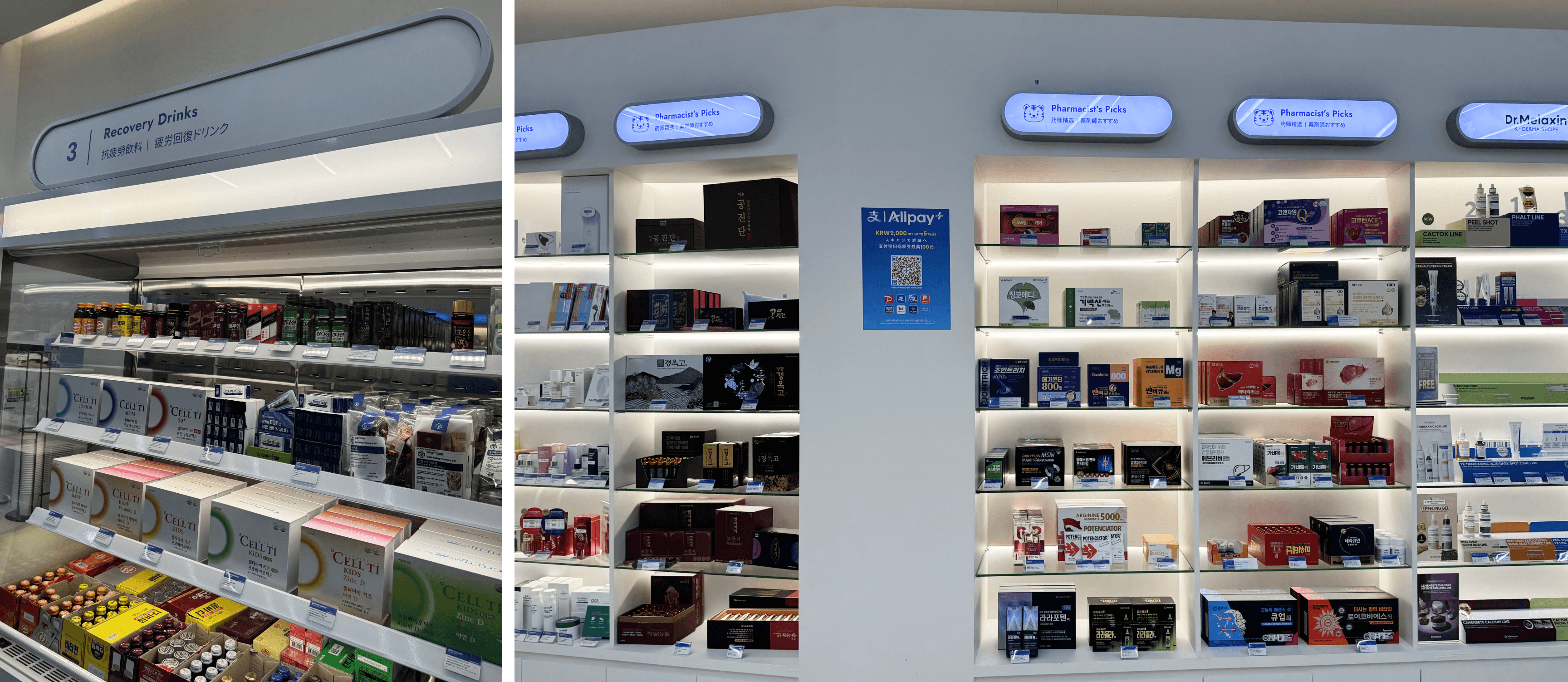
Above: Olive Better, Below: Ready Young. Due to nearly identical displays and product lineups, they are indistinguishable by interior photos alone.
Seongsu & Myeongdong Rents? It’s Nothing.
The aggressive entry of large-scale pharmacies into ground-floor prime sites along Myeongdong’s main street and Seongsu-dong’s thoroughfares clearly signals a fundamental shift: the pharmacy revenue model has been thoroughly restructured toward a retail-centric approach. While traditional, prescription-based models face structural stagnation due to capped health insurance reimbursement rates, sales from non-prescription drugs and high-margin nutraceuticals targeting foreign tourists guarantee robust operating margins.
According to proprietary intelligence from the CBRE Retail Team, monthly revenues of certain flagship pharmacies in Seongsu have reached levels virtually inconceivable for conventional dispensaries (specific figures are based on internal advisory data and remain confidential). This performance is a direct result of a strategic pivot toward high-turnover retail items. In particular, bulk buying fueled by tax-free benefits has exponentially boosted the Average Ticket Value (ATV), with sales productivity per unit area occasionally outperforming even global fashion powerhouses or major F&B tenants.
From a real estate consulting perspective, pharmacies have evolved into blue-chip tenants with superior rent affordability. They are no longer mere neighborhood amenities but have become pivotal drivers in enhancing asset value and optimizing the cash flow of prime retail properties..
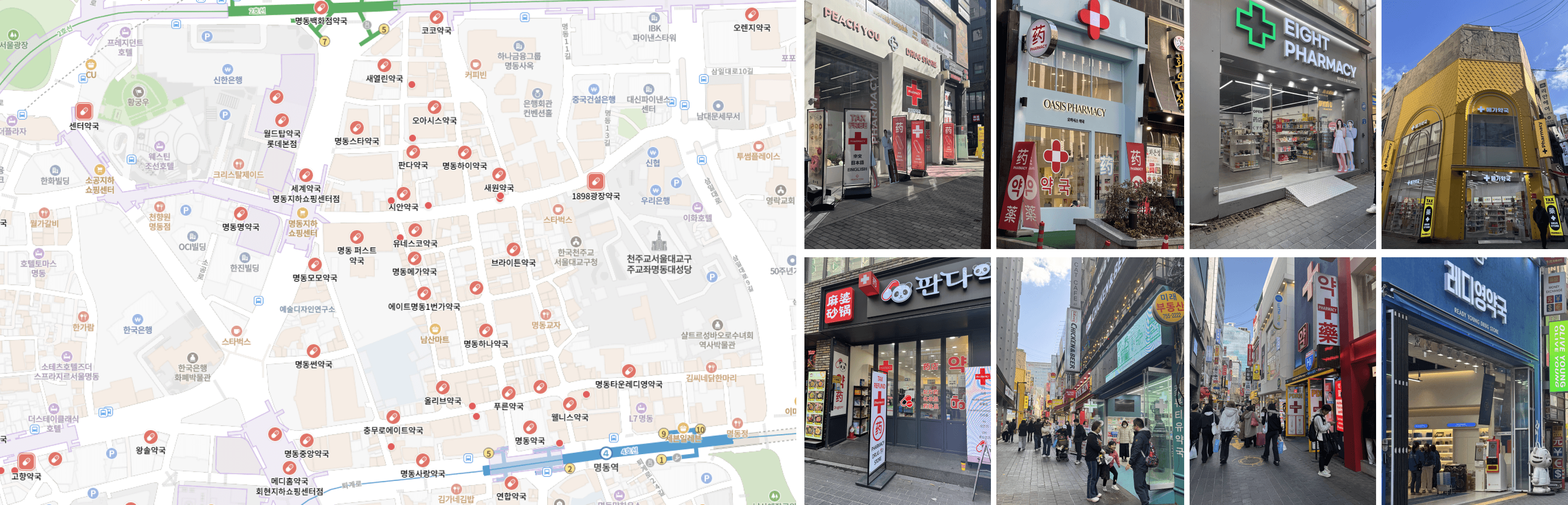
As of March 2026, dozens of pharmacies are concentrated solely within the Myeongdong district. Nearly all of these pharmacies specifically target foreign consumers. (Source: Left map – Naver Maps)
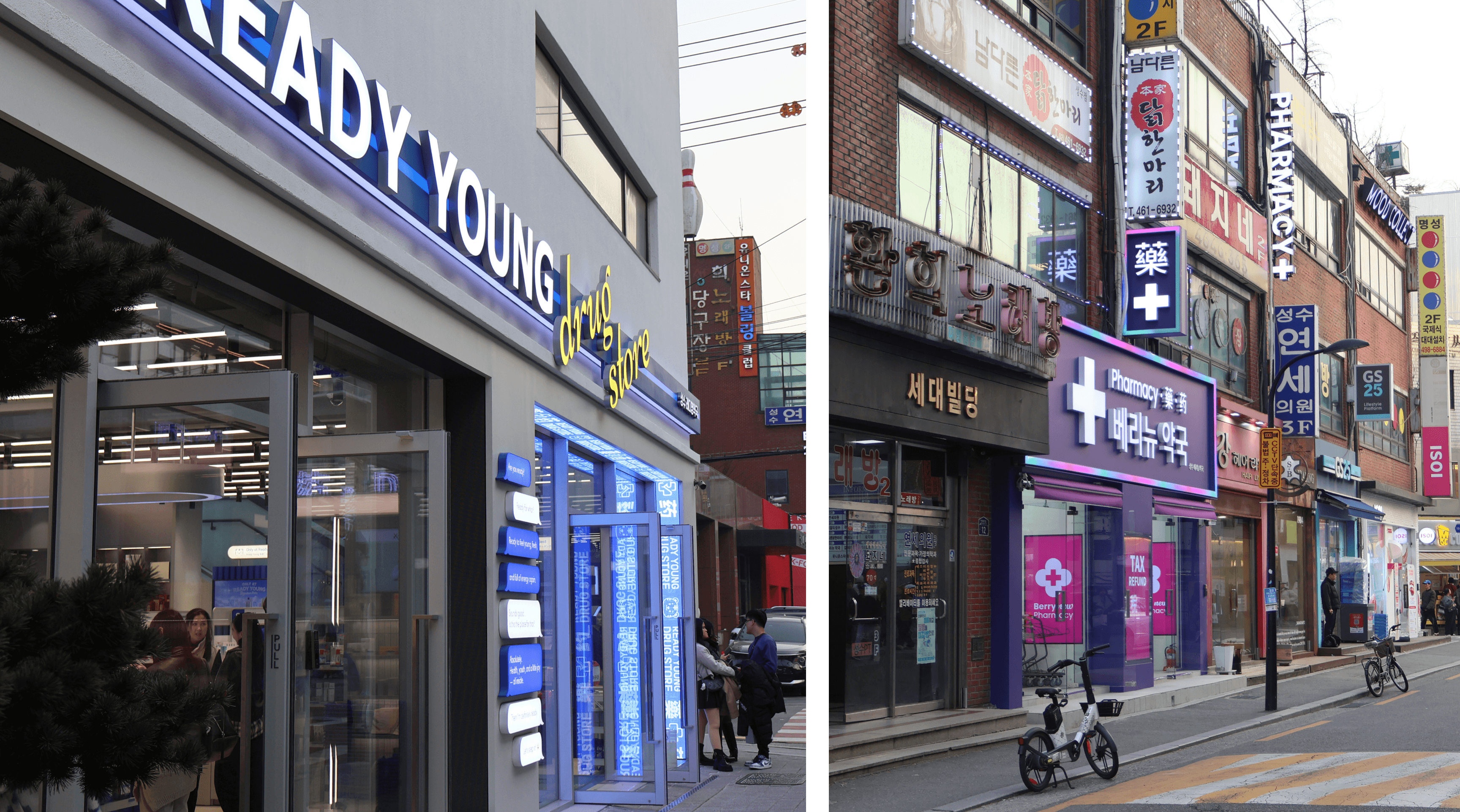
Situated right across from Olive Young N Seongsu, Ready Young and Berry New Pharmacy are capturing the spillover demand by targeting customers looking for pharmaceutical products not carried by the major H&B store.
Overwhelming 95% Revenue Contribution from Foreign Tourists
The most striking data point is the proportion of total revenue generated by foreign consumers. Pharmacies in Myeongdong are reported to derive between 93% and 96% of their total sales from international visitors. This figure is a radical departure from the revenue structures of typical pharmacies located near university hospitals or residential areas, signaling that Myeongdong’s pharmacies now function primarily as retail-focused tourist stores. In practical terms, for every single domestic customer, more than 19 foreign consumers contribute to the top line. The fact that over nine new pharmacies opened in Myeongdong last year alone—and continue to thrive—proves that the pharmacy sector has secured sufficient operating margins and competitive viability, even in the face of the district’s notoriously high prime rents.
With over 90% of the customer base being international, marketing tactics have become exceptionally aggressive. Many stores employ a two-tier service model: immediately upon entry, uniformed staff fluent in Chinese or Japanese engage the consumer before they even express a need, followed by a licensed pharmacist who provides technical product consultation. Larger-scale pharmacies have evolved into experience-driven formats, utilizing diverse multimedia displays and localized posters to bridge the information gap for foreign shoppers.
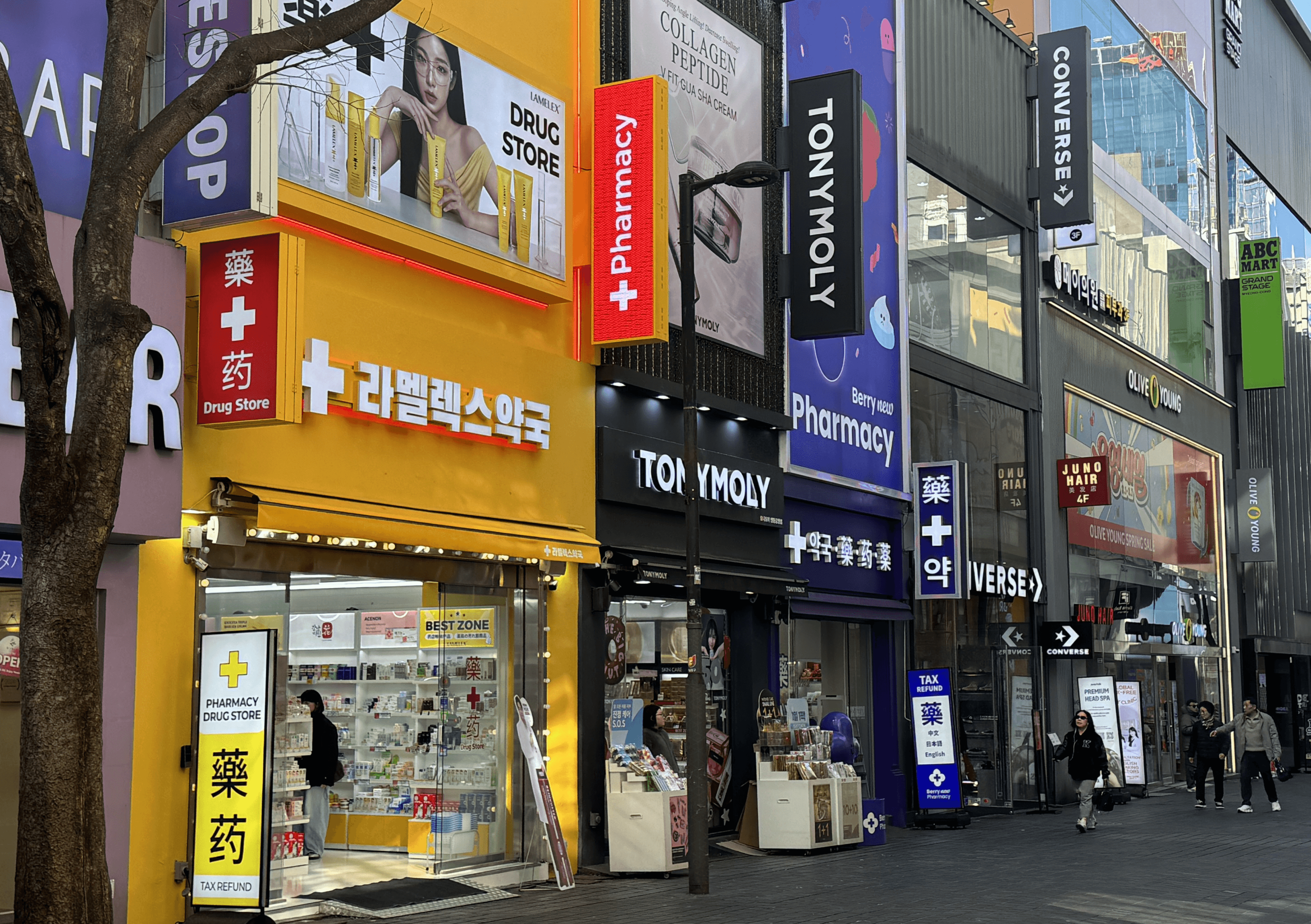
The area around Myeongdong’s Olive Young is home to an unusually high concentration of pharmacies. These outlets are strategically placed to intercept foreign visitors, leveraging the cross-selling synergy between K-beauty products and essential K-pharmaceuticals.
This phenomenon is rapidly shifting beyond traditional tourist hubs like Myeongdong and Hongdae into entertainment-specialized districts. A prime example is the cluster of pharmacies near Sports Complex Station. These outlets strategically align their operations with the schedules of large-scale K-pop concerts at Jamsil Olympic Main Stadium and the Indoor Gymnasium. To lower the entry barrier for global fandoms, they prominently feature foreign-language signage and curated product displays at their storefronts.
By marketing high-potency vitamins and energy drinks—essential for recovery before and after intense performances—as "K-pop Fan Essentials," these pharmacies have mastered niche curation. This shift provides definitive evidence that pharmacy retail has evolved: it is no longer just a community-based amenity but has transformed into a strategic tenant capable of capturing international demand tailored to specific events and consumer purposes.
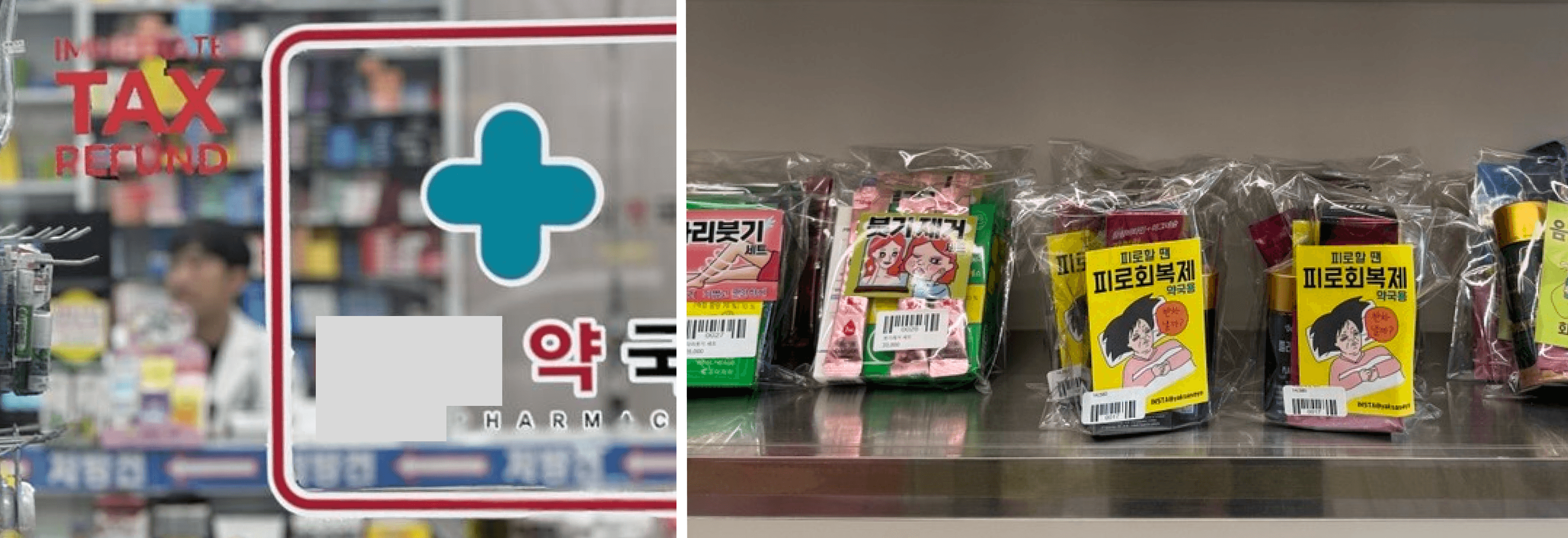
Tax-Free signage is now prominent across numerous pharmacies located near the Sports Complex. The presence of tourist-targeted products, such as fatigue recovery sets, on primary shelving units indicates a significant shift in the consumer base. This confirms that these pharmacies are no longer relying solely on the residential catchment area but are actively capturing emerging inbound demand from international visitors.
Cosmeceuticals and K-Wellness
While a pharmacy visit in the past was strictly for treating illnesses, the modern K-Pharmacy has evolved into a social media-driven Destination Shopping hub. As curated lists of "must-buy Korean pharmacy items" go viral on TikTok and Instagram, specific vitamins, scar ointments, and recovery creams have ascended to the status of global bestsellers.
These viral shopping lists transcend simple medicine, offering high-functionality solutions that act as an extension of K-Beauty. High-demand items like Noscarna (scar treatment) and Melanon or Domina Cream (hyperpigmentation care) have seen explosive popularity. Their appeal lies in the trust that these pharmacy-exclusive products contain more potent ingredients than standard cosmetics, perfectly aligning with the K-Beauty trend of achieving flawless skin.
Furthermore, high-potency Vitamin B complexes like B-max or Inipotan, along with concentrated liquid fatigue recoverers, are marketed as the secret energy source behind the hardworking Korean lifestyle, making them highly sought-after "health souvenirs" for tourists. More recently, Nutricosmetics—beauty products you can both apply and ingest—such as PDRN (salmon DNA) recovery creams and glutathione whitening supplements, have become core strategic items. A pharmacist in Myeongdong noted that ingestible skin regeneration products are particularly favored as premium gifts for foreign visitors.
To capitalize on this, pharmacies are consolidating these trend-driven products into dedicated Global Bestseller Zones at the front of their stores. By pairing multilingual efficacy guides with seamless tax-free systems, they have solidified a virtuous cycle where social media virality is directly converted into high-margin retail revenue.
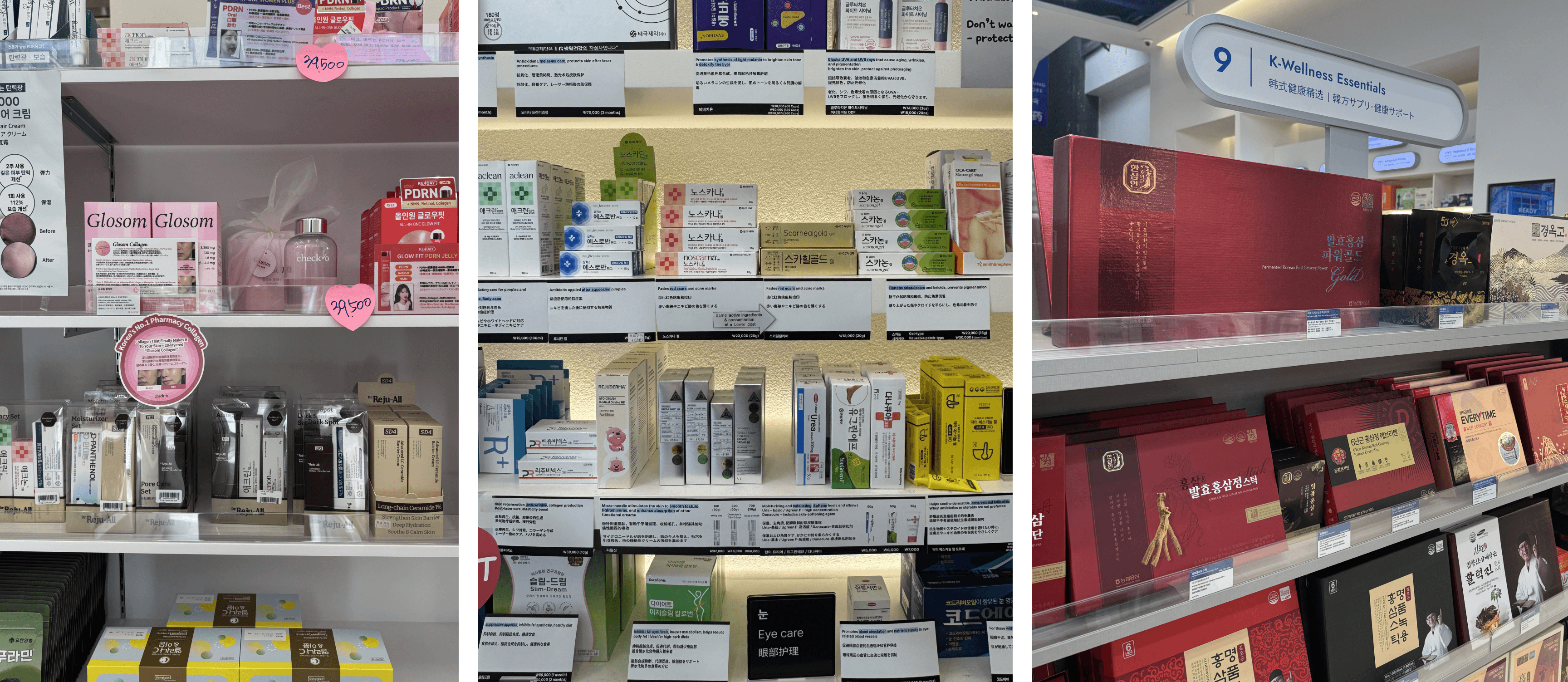
Current State of Pharmacy Displays: High-functionality pharmaceutical items for acne and hyperpigmentation—distinctly differentiated from Olive Young’s offerings—are strategically forward-deployed. Additionally, products like Red Ginseng are curated under the intuitive branding of 'K-Wellness Essentials,' effectively minimizing decision fatigue for international consumers.
The Viral Birthplace Pharmacy, Hongik Pharmacy
Tracing back to the epicenter of the pharmacy retail craze that has now dominated Myeongdong and Seongsu, one encounters Hongik Pharmacy at Exit 8 of Hongdae Entrance Station. This iconic location was the first to demonstrate the potential of a pharmacy as an SNS-driven Destination Shopping hub.
By shattering the conventional grammar of traditional pharmacies, it pioneered a new retail model. Sophisticated lighting, wide-open shelving, and meticulously curated selections for foreign tourists elevated the act of "buying medicine" into a "trendy shopping experience." As its shopping lists went viral globally via Instagram Reels and TikTok, Hongik Pharmacy proved that a pharmacy could move beyond being a secondary facility next to a hospital to become a brand with its own powerful drawing force. This disruptive model born in Hongdae served as the practical catalyst, sparking the trend of large-scale pharmacies and the fierce interior design competition now seen on Myeongdong’s main street.
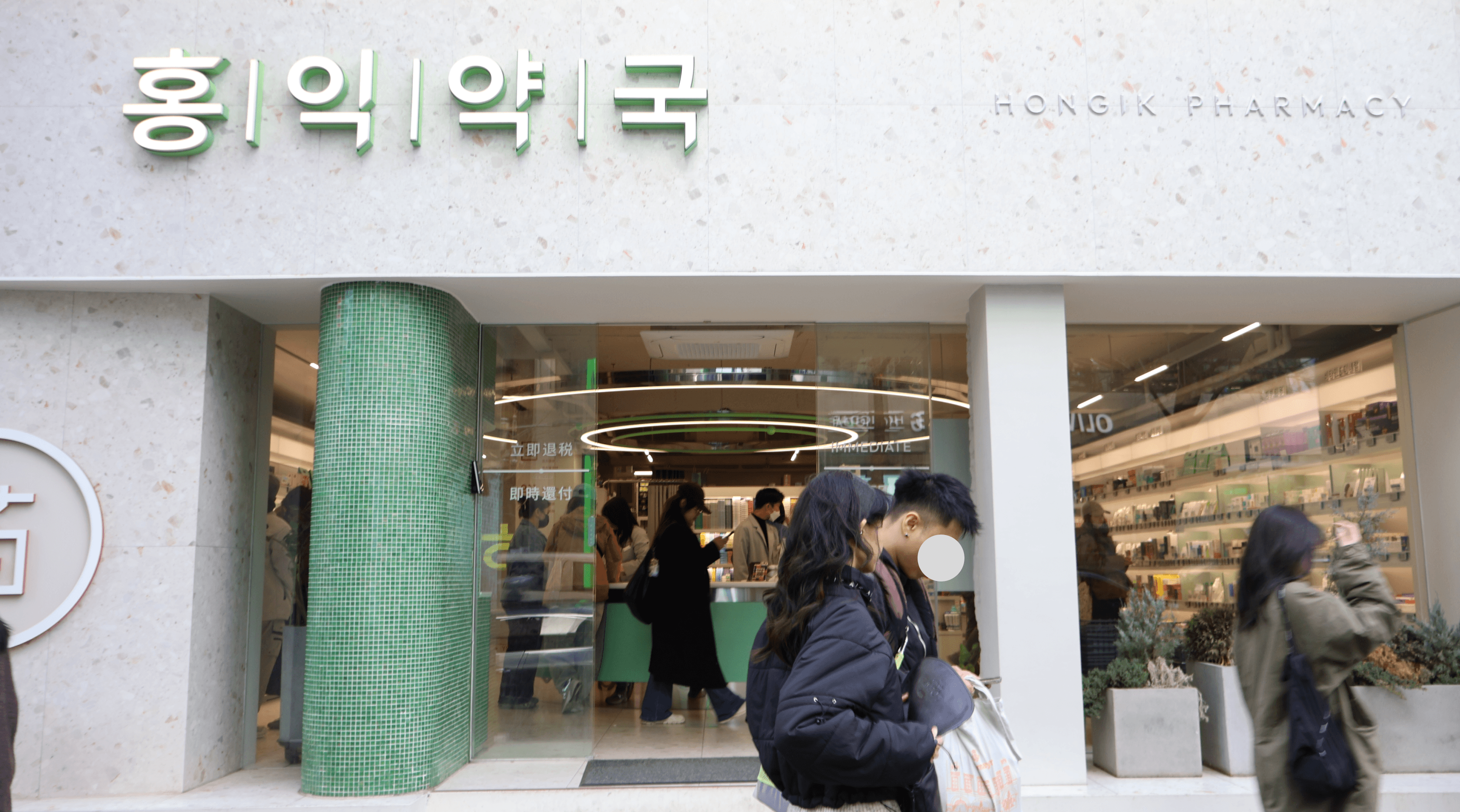
Hongik Pharmacy near Exit 8 of Hongdae Station. They have installed an open dispensing counter in the center of the store, maximizing customer accessibility with layouts inspired by Olive Young's retail displays.
More than a Pharmacy.
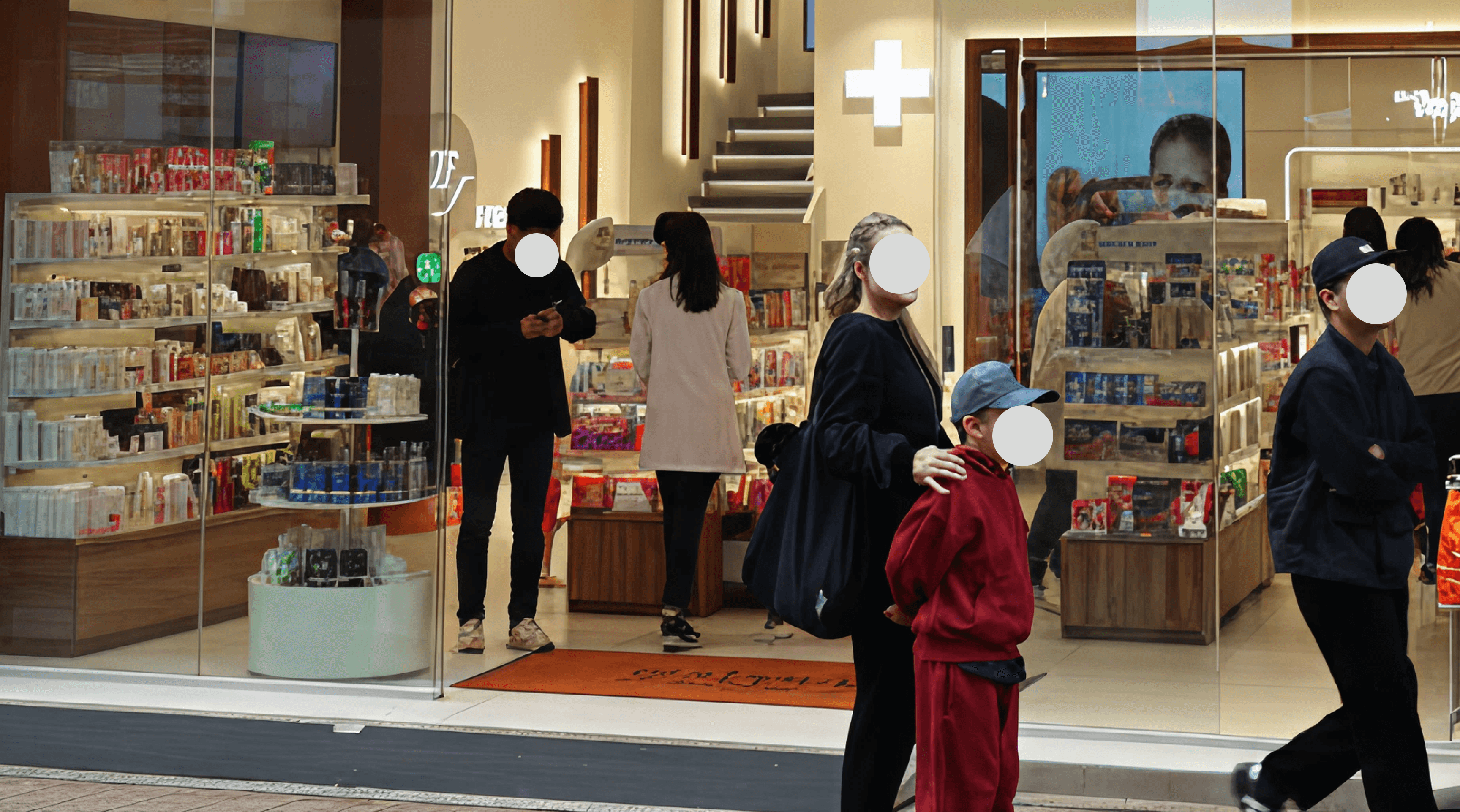
To attract Gen Z and tourists, pharmacies are placing greater emphasis on the aesthetics of their physical spaces. At the storefront, without the explicit word "Pharmacy," it is increasingly difficult to distinguish them from general retail stores. In place of cold, white fluorescent lighting, many have adopted warm illumination, wooden fixtures, and biophilic designs incorporating plants.
This transformation into a space where customers want to stay extends dwell time, naturally increasing exposure to related products and inducing impulse purchases. It is a strategic device to redefine the pharmacy not just as a place to buy medicine, but as a premium wellness lounge. The spatial configuration closely mirrors the atmosphere of Olive Young, utilizing bright lighting, high-density displays, category-based product arrangements, and promotion-heavy merchandising. A significant number of these pharmacies have opted for a layout designed primarily around product sales and circulation, rather than traditional medical consultation areas.
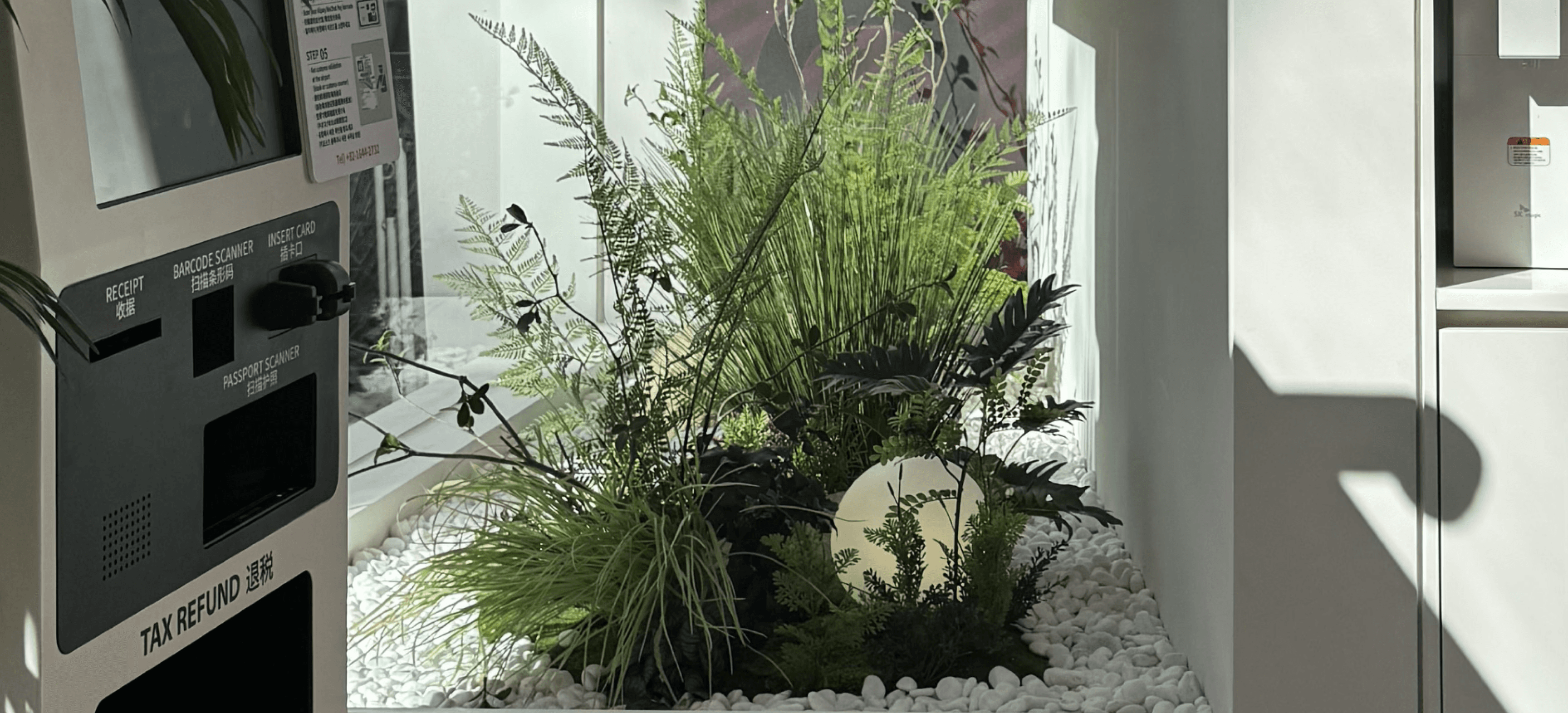
Walking down the streets of Myeongdong, one easily encounters pharmacies with interiors so lavish they overwhelm nearby retail shops. What is particularly intriguing, however, is the atmosphere of strict vigilance or outright restriction regarding interior photography.
A distinct spatial strategy, separate from conventional pharmacies, is the openness of the entryways. Rather than a structure that requires opening a door to enter, some locations are designed so that the store is almost indistinguishable from the street. Certain storefronts feature fully open facades, allowing pedestrian flow to naturally transition into the interior.
By weakening the clinical atmosphere characteristic of medical spaces, this layout allows for the same casual entry as a general retail store. This configuration is perfectly suited for pedestrian-centric districts like Myeongdong and closely mirrors the strategies commonly employed by cosmetic roadshops and H&B stores.
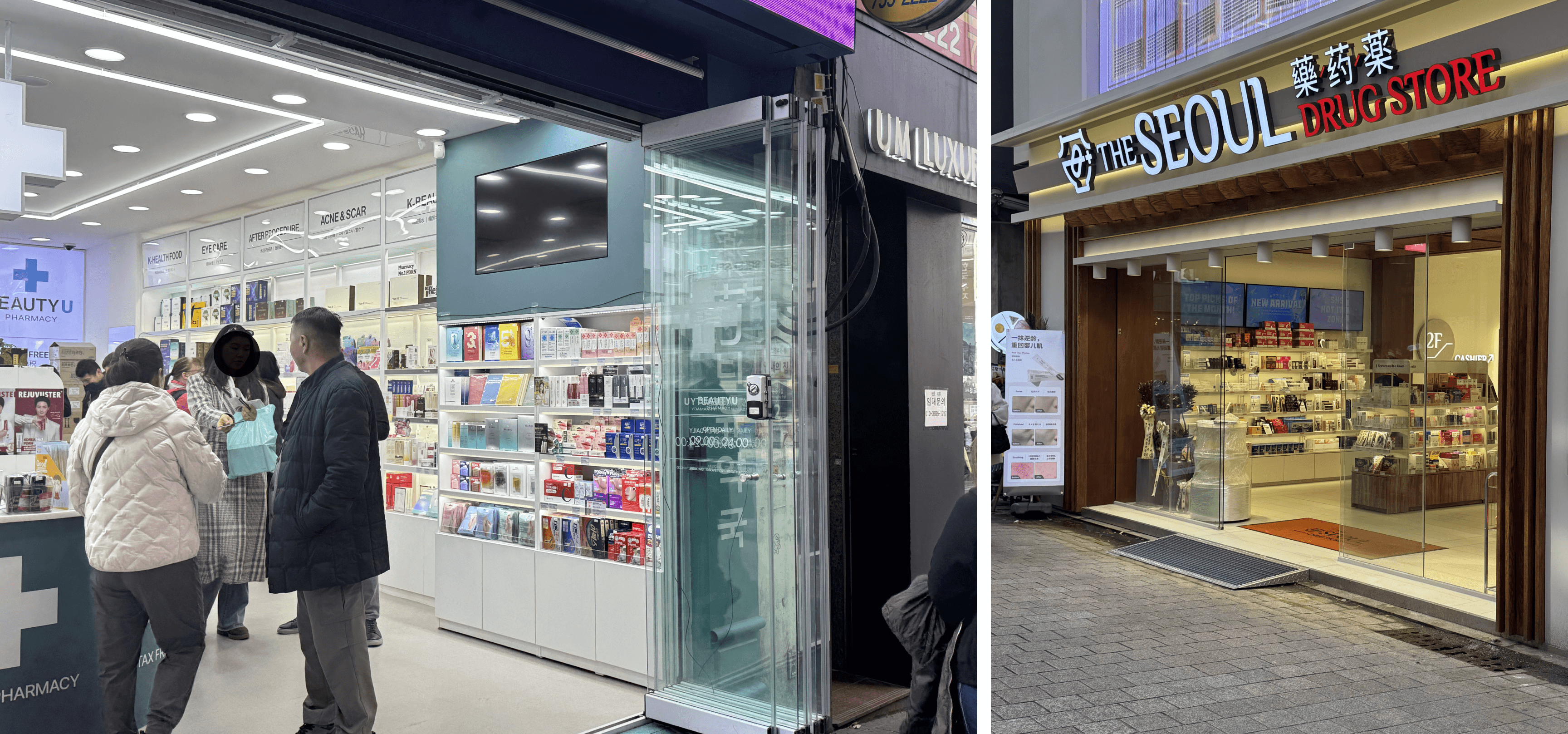
The spatial configuration of pharmacies is also undergoing a transformation. Beyond securing a sense of openness through floor-to-ceiling glass windows, many have installed folding doors to dissolve the boundaries between the street and the interior, creating an environment where customers can enter without hesitation.
K-Pharmacy: The New Ruler of Wellness Retail
The transformation of pharmacies observed thus far is not merely a change in interior design, but the result of a strategic evolution combining real estate asset value with shifting consumer trends. Pharmacies are no longer supplementary facilities next to hospitals; they have become powerful anchor tenants in their own right, defining the very character of commercial districts.
This phenomenon is rapidly spreading beyond core tourist hubs like Myeongdong and Seongsu into entertainment-specialized districts. It is highly symbolic to see pharmacies near Hongdae or Sports Complex Station positioning multilingual signage alongside energy drinks and vitamin sticks to target global fandoms attending K-pop concerts. What was once a simple dispensing space has expanded its function into an "essential stop" and a "K-Wellness experience center" to be visited before and after performances.
Ultimately, the success formula for pharmacy retail depends on how precisely it integrates the trusted asset of a pharmacist's expertise with the shopping convenience of an H&B store. The movement of pharmacies occupying prime ground-floor frontages—where rents are highest—suggests that the boundaries between "healthcare" and "lifestyle" in the future retail market will completely dissolve.
In the recent Korean retail market, pharmacies have rapidly emerged as core anchor tenants with powerful foot-traffic generation, moving far beyond their traditional role as mere medical support facilities. Breaking away from the passive model where survival depended entirely on proximity to hospitals, pharmacies are now seizing prime ground-floor frontages in ultra-high-rent districts like Myeong-dong and Gangnam Station, drawing in both foreign tourists and Gen Z consumers.
This phenomenon is a direct result of the K-Health & Beauty ecosystem, pioneered by Olive Young, migrating into the pharmacy sector. It signals a fundamental structural shift: from a dispensary-centered model focused on professional prescriptions to a lifestyle drugstore centered on high-margin functional health foods and cosmeceuticals. In this article, we analyze this transformation and explore how pharmacies have become the protagonists of Korea’s premier commercial districts.
The Expansibility of Pharmacy Retail Shown by Overseas Drug Stores
Drugstores in the West and Japan have expanded by blurring the lines between healthcare and retail. While Walgreens and CVS (US/EU) convert prescription waiting times into convenience shopping, Japanese drugstores have become tourist destinations by combining vast SKUs with tax-free benefits.
In contrast, Korea’s emerging models like Redi-Young blend Japanese-style "shopping fun" with a focus on the pharmacist’s professional counseling. By leveraging the unique monopoly on prescription rights, the Korean model integrates expert "Trust Assets" with retail, offering a far more sophisticated Health Curation than its global counterparts.
A virtual image created based on an actual pharmacy interior image. It has been produced with reference to the atmosphere of the Myeongdong pharmacy space, where filming is restricted.
The Olive Young Effect: The Rebirth of the Pharmacy as a Retail Powerhouse
Riding the global wave of K-beauty, Korea’s pharmacy retail is undergoing a unique evolution. As Olive Young solidified its status as a sanctuary for K-beauty among global tourists, consumer interest naturally expanded beyond cosmetics into functional quasi-drugs and health supplements. Emerging models like Redi-Young have capitalized on this shift by merging pharmaceutical expertise with an enhanced retail shopping experience.
By boldly moving away from traditional, closed-off prescription counters, these new-format pharmacies have introduced open-shelf systems that allow customers to physically interact with products and compare ingredients. This spatial strategy extends the "exploration time" prior to professional consultation, significantly boosting conversion rates.
More importantly, it provides a strategic foundation to increase the sales mix of Over-the-Counter (OTC) drugs and health supplements, which offer substantially higher margins compared to professional prescription drugs. According to Visa Korea, transaction volumes in the medical and healthcare sectors surged by approximately 58% year-on-year. This explosive growth in large-scale pharmacy retail has, in turn, fueled Olive Young’s own strategic expansion into the broader wellness sector.
Above: Olive Better, Below: Ready Young. Due to nearly identical displays and product lineups, they are indistinguishable by interior photos alone.
Seongsu & Myeongdong Rents? It’s Nothing.
The aggressive entry of large-scale pharmacies into ground-floor prime sites along Myeongdong’s main street and Seongsu-dong’s thoroughfares clearly signals a fundamental shift: the pharmacy revenue model has been thoroughly restructured toward a retail-centric approach. While traditional, prescription-based models face structural stagnation due to capped health insurance reimbursement rates, sales from non-prescription drugs and high-margin nutraceuticals targeting foreign tourists guarantee robust operating margins.
According to proprietary intelligence from the CBRE Retail Team, monthly revenues of certain flagship pharmacies in Seongsu have reached levels virtually inconceivable for conventional dispensaries (specific figures are based on internal advisory data and remain confidential). This performance is a direct result of a strategic pivot toward high-turnover retail items. In particular, bulk buying fueled by tax-free benefits has exponentially boosted the Average Ticket Value (ATV), with sales productivity per unit area occasionally outperforming even global fashion powerhouses or major F&B tenants.
From a real estate consulting perspective, pharmacies have evolved into blue-chip tenants with superior rent affordability. They are no longer mere neighborhood amenities but have become pivotal drivers in enhancing asset value and optimizing the cash flow of prime retail properties..
As of March 2026, dozens of pharmacies are concentrated solely within the Myeongdong district. Nearly all of these pharmacies specifically target foreign consumers. (Source: Left map – Naver Maps)
Situated right across from Olive Young N Seongsu, Ready Young and Berry New Pharmacy are capturing the spillover demand by targeting customers looking for pharmaceutical products not carried by the major H&B store.
Overwhelming 95% Revenue Contribution from Foreign Tourists
The most striking data point is the proportion of total revenue generated by foreign consumers. Pharmacies in Myeongdong are reported to derive between 93% and 96% of their total sales from international visitors. This figure is a radical departure from the revenue structures of typical pharmacies located near university hospitals or residential areas, signaling that Myeongdong’s pharmacies now function primarily as retail-focused tourist stores. In practical terms, for every single domestic customer, more than 19 foreign consumers contribute to the top line. The fact that over nine new pharmacies opened in Myeongdong last year alone—and continue to thrive—proves that the pharmacy sector has secured sufficient operating margins and competitive viability, even in the face of the district’s notoriously high prime rents.
With over 90% of the customer base being international, marketing tactics have become exceptionally aggressive. Many stores employ a two-tier service model: immediately upon entry, uniformed staff fluent in Chinese or Japanese engage the consumer before they even express a need, followed by a licensed pharmacist who provides technical product consultation. Larger-scale pharmacies have evolved into experience-driven formats, utilizing diverse multimedia displays and localized posters to bridge the information gap for foreign shoppers.
The area around Myeongdong’s Olive Young is home to an unusually high concentration of pharmacies. These outlets are strategically placed to intercept foreign visitors, leveraging the cross-selling synergy between K-beauty products and essential K-pharmaceuticals.
This phenomenon is rapidly shifting beyond traditional tourist hubs like Myeongdong and Hongdae into entertainment-specialized districts. A prime example is the cluster of pharmacies near Sports Complex Station. These outlets strategically align their operations with the schedules of large-scale K-pop concerts at Jamsil Olympic Main Stadium and the Indoor Gymnasium. To lower the entry barrier for global fandoms, they prominently feature foreign-language signage and curated product displays at their storefronts.
By marketing high-potency vitamins and energy drinks—essential for recovery before and after intense performances—as "K-pop Fan Essentials," these pharmacies have mastered niche curation. This shift provides definitive evidence that pharmacy retail has evolved: it is no longer just a community-based amenity but has transformed into a strategic tenant capable of capturing international demand tailored to specific events and consumer purposes.
Tax-Free signage is now prominent across numerous pharmacies located near the Sports Complex. The presence of tourist-targeted products, such as fatigue recovery sets, on primary shelving units indicates a significant shift in the consumer base. This confirms that these pharmacies are no longer relying solely on the residential catchment area but are actively capturing emerging inbound demand from international visitors.
Cosmeceuticals and K-Wellness
While a pharmacy visit in the past was strictly for treating illnesses, the modern K-Pharmacy has evolved into a social media-driven Destination Shopping hub. As curated lists of "must-buy Korean pharmacy items" go viral on TikTok and Instagram, specific vitamins, scar ointments, and recovery creams have ascended to the status of global bestsellers.
These viral shopping lists transcend simple medicine, offering high-functionality solutions that act as an extension of K-Beauty. High-demand items like Noscarna (scar treatment) and Melanon or Domina Cream (hyperpigmentation care) have seen explosive popularity. Their appeal lies in the trust that these pharmacy-exclusive products contain more potent ingredients than standard cosmetics, perfectly aligning with the K-Beauty trend of achieving flawless skin.
Furthermore, high-potency Vitamin B complexes like B-max or Inipotan, along with concentrated liquid fatigue recoverers, are marketed as the secret energy source behind the hardworking Korean lifestyle, making them highly sought-after "health souvenirs" for tourists. More recently, Nutricosmetics—beauty products you can both apply and ingest—such as PDRN (salmon DNA) recovery creams and glutathione whitening supplements, have become core strategic items. A pharmacist in Myeongdong noted that ingestible skin regeneration products are particularly favored as premium gifts for foreign visitors.
To capitalize on this, pharmacies are consolidating these trend-driven products into dedicated Global Bestseller Zones at the front of their stores. By pairing multilingual efficacy guides with seamless tax-free systems, they have solidified a virtuous cycle where social media virality is directly converted into high-margin retail revenue.
Current State of Pharmacy Displays: High-functionality pharmaceutical items for acne and hyperpigmentation—distinctly differentiated from Olive Young’s offerings—are strategically forward-deployed. Additionally, products like Red Ginseng are curated under the intuitive branding of 'K-Wellness Essentials,' effectively minimizing decision fatigue for international consumers.
The Viral Birthplace Pharmacy, Hongik Pharmacy
Tracing back to the epicenter of the pharmacy retail craze that has now dominated Myeongdong and Seongsu, one encounters Hongik Pharmacy at Exit 8 of Hongdae Entrance Station. This iconic location was the first to demonstrate the potential of a pharmacy as an SNS-driven Destination Shopping hub.
By shattering the conventional grammar of traditional pharmacies, it pioneered a new retail model. Sophisticated lighting, wide-open shelving, and meticulously curated selections for foreign tourists elevated the act of "buying medicine" into a "trendy shopping experience." As its shopping lists went viral globally via Instagram Reels and TikTok, Hongik Pharmacy proved that a pharmacy could move beyond being a secondary facility next to a hospital to become a brand with its own powerful drawing force. This disruptive model born in Hongdae served as the practical catalyst, sparking the trend of large-scale pharmacies and the fierce interior design competition now seen on Myeongdong’s main street.
Hongik Pharmacy near Exit 8 of Hongdae Station. They have installed an open dispensing counter in the center of the store, maximizing customer accessibility with layouts inspired by Olive Young's retail displays.
More than a Pharmacy.
To attract Gen Z and tourists, pharmacies are placing greater emphasis on the aesthetics of their physical spaces. At the storefront, without the explicit word "Pharmacy," it is increasingly difficult to distinguish them from general retail stores. In place of cold, white fluorescent lighting, many have adopted warm illumination, wooden fixtures, and biophilic designs incorporating plants.
This transformation into a space where customers want to stay extends dwell time, naturally increasing exposure to related products and inducing impulse purchases. It is a strategic device to redefine the pharmacy not just as a place to buy medicine, but as a premium wellness lounge. The spatial configuration closely mirrors the atmosphere of Olive Young, utilizing bright lighting, high-density displays, category-based product arrangements, and promotion-heavy merchandising. A significant number of these pharmacies have opted for a layout designed primarily around product sales and circulation, rather than traditional medical consultation areas.
Walking down the streets of Myeongdong, one easily encounters pharmacies with interiors so lavish they overwhelm nearby retail shops. What is particularly intriguing, however, is the atmosphere of strict vigilance or outright restriction regarding interior photography.
A distinct spatial strategy, separate from conventional pharmacies, is the openness of the entryways. Rather than a structure that requires opening a door to enter, some locations are designed so that the store is almost indistinguishable from the street. Certain storefronts feature fully open facades, allowing pedestrian flow to naturally transition into the interior.
By weakening the clinical atmosphere characteristic of medical spaces, this layout allows for the same casual entry as a general retail store. This configuration is perfectly suited for pedestrian-centric districts like Myeongdong and closely mirrors the strategies commonly employed by cosmetic roadshops and H&B stores.
The spatial configuration of pharmacies is also undergoing a transformation. Beyond securing a sense of openness through floor-to-ceiling glass windows, many have installed folding doors to dissolve the boundaries between the street and the interior, creating an environment where customers can enter without hesitation.
K-Pharmacy: The New Ruler of Wellness Retail
The transformation of pharmacies observed thus far is not merely a change in interior design, but the result of a strategic evolution combining real estate asset value with shifting consumer trends. Pharmacies are no longer supplementary facilities next to hospitals; they have become powerful anchor tenants in their own right, defining the very character of commercial districts.
This phenomenon is rapidly spreading beyond core tourist hubs like Myeongdong and Seongsu into entertainment-specialized districts. It is highly symbolic to see pharmacies near Hongdae or Sports Complex Station positioning multilingual signage alongside energy drinks and vitamin sticks to target global fandoms attending K-pop concerts. What was once a simple dispensing space has expanded its function into an "essential stop" and a "K-Wellness experience center" to be visited before and after performances.
Ultimately, the success formula for pharmacy retail depends on how precisely it integrates the trusted asset of a pharmacist's expertise with the shopping convenience of an H&B store. The movement of pharmacies occupying prime ground-floor frontages—where rents are highest—suggests that the boundaries between "healthcare" and "lifestyle" in the future retail market will completely dissolve.
More in
More in
trend
trend
trend
Mar 6, 2026
Runners' Basecamp: SEOUL
The reason why Seoul has become a 'holy site' for global learning
trend
Feb 25, 2026
2026 Retail Trend: Maximizing Taste, Minimizing Risk
In an economic downturn, people may keep their wallets shut, but they won’t give up their tastes—2026 consumer trends focus on splitting spending into smaller units and prioritizing ‘small indulgences.’
Get the best of 'detail'
in your inbox, every month
Once a month, no spam
Get the best of 'detail'
in your inbox, every month
Once a month, no spam
Get the best of 'detail'
in your inbox, every month
Once a month, no spam