Back
Copy
Share
Like
trend
2026 Retail Trend: Maximizing Taste, Minimizing Risk
2026 Retail Trend: Maximizing Taste, Minimizing Risk
2026 Retail Trend: Maximizing Taste, Minimizing Risk
In 2026, consumer behavior is defined by a "Dual-Value" mindset: balancing extreme cost-efficiency with high emotional rewards. This "Small Indulgence" trend has turned premium desserts, fragrances, and Gacha shops into essential outlets for self-expression.
In 2026, consumer behavior is defined by a "Dual-Value" mindset: balancing extreme cost-efficiency with high emotional rewards. This "Small Indulgence" trend has turned premium desserts, fragrances, and Gacha shops into essential outlets for self-expression.
In 2026, consumer behavior is defined by a "Dual-Value" mindset: balancing extreme cost-efficiency with high emotional rewards. This "Small Indulgence" trend has turned premium desserts, fragrances, and Gacha shops into essential outlets for self-expression.
Article Highlights
The Rise of Ambivalent Consumption: Consumers are no longer just "saving." They are strategically cutting costs on daily essentials to fund high-end splurges. This "Frugal but Premium" paradox is reshaping the luxury dessert and niche fragrance markets.
The "Small Indulgence" Economy: As long-term financial goals feel out of reach, shoppers are pivoting to "Micro-Gratification." Gacha shops, custom stationery, and travel-sized scents provide the immediate emotional ROI and comfort that modern consumers crave.
Strategic De-risking & Verification: To avoid purchase failure, "verification costs" are rising. Shoppers now prioritize trial-size products and test-bed stores, leading to the explosive growth of high-efficiency retail channels like Daiso Beauty.
The South Korean retail market has entered a phase of Expenditure Restructuring due to prolonged inflationary pressures and high interest rates. As macroeconomic uncertainty persists, consumer behavior is shifting toward immediate gratification through small-scale spending. This is a strategic consumption pattern aimed at maximizing Psychological ROI and brand experience within a constrained budget. While a recession may reduce total volume, it does not erase consumer desire; instead, it results in fragmented demand, manifesting in smaller, high-frequency units.
The Coffee Divide: Survival vs. Sensory Immersion
For a caffeine transfusion
The low-cost coffee market—led by Mega Coffee, Compose Coffee, and Mammoth Coffee—has evolved from a mere budget alternative into an essential daily infrastructure. Historically, these brands used aggressive pricing to offset subpar locations and quality. Today, they leverage top-tier celebrity endorsements and strategic branding to position themselves as a "Rational Lifestyle" choice rather than a "cheap alternative." To combat domestic market saturation, these players are expanding globally, proving the scalability of the "K-Value" model and transforming a high-volume, low-margin business into a global retail standard.
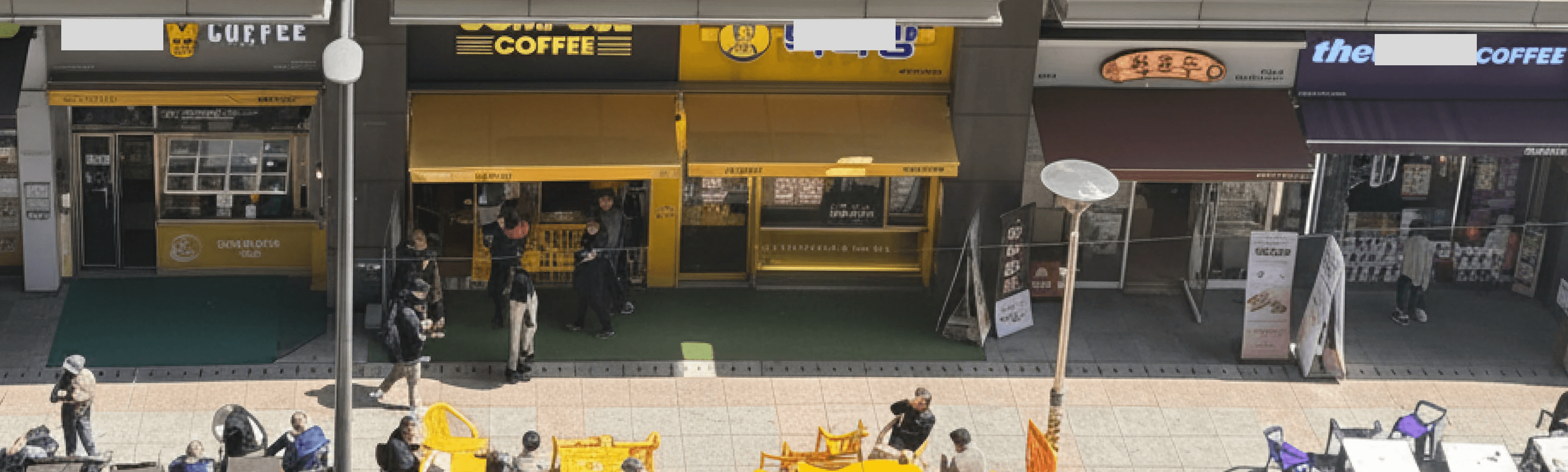
A single building facade housing four different low-cost coffee brands, symbolizing the hyper-competitive "Caffeine Transfusion" demand and overwhelming market dominance in the Jonggak Station business district.
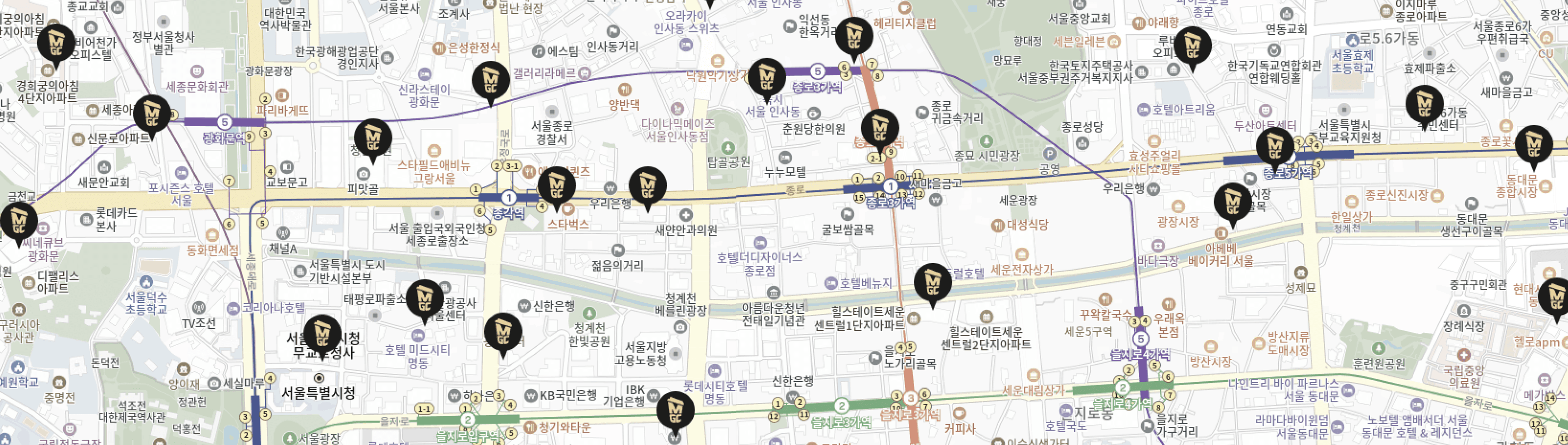
Current distribution of Mega Coffee outlets within the Seoul CBD (Central Business District). (Source: Mega Coffee)
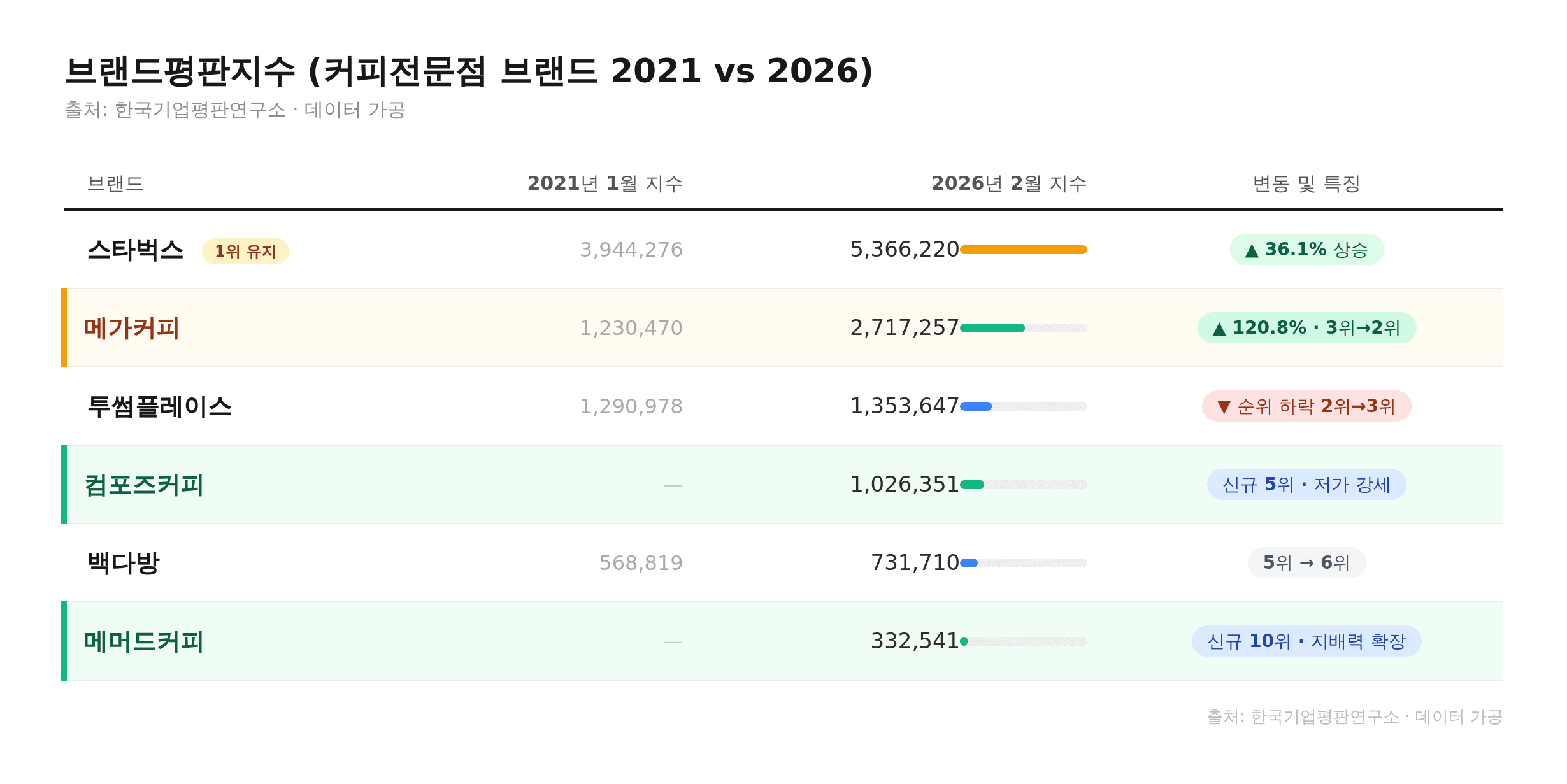
Comparing brand reputation index figures from 2021 to 2026, the growth of low-cost coffee brands is clearly visible in the data.
For immersive experience
If low-cost coffee is responsible for survival-oriented, efficient consumption as “caffeine transfusion,” espresso bars represent “smart luxury,” where people enjoy a rich taste experience at low cost (the price of a single espresso). In busy daily life, consumers are increasingly displaying ambivalent behavior: embracing the speed offered by Mega Coffee or Compose Coffee while also seeking dense moments of rest by taking a short break to enjoy standing espresso at an espresso bar. As the number of cafes nationwide has surpassed 100,000 and reached saturation, ordinary low-to-mid-priced independent cafes continue to struggle, while espresso bars survive by solidifying a niche market with “clear expertise” as their weapon.
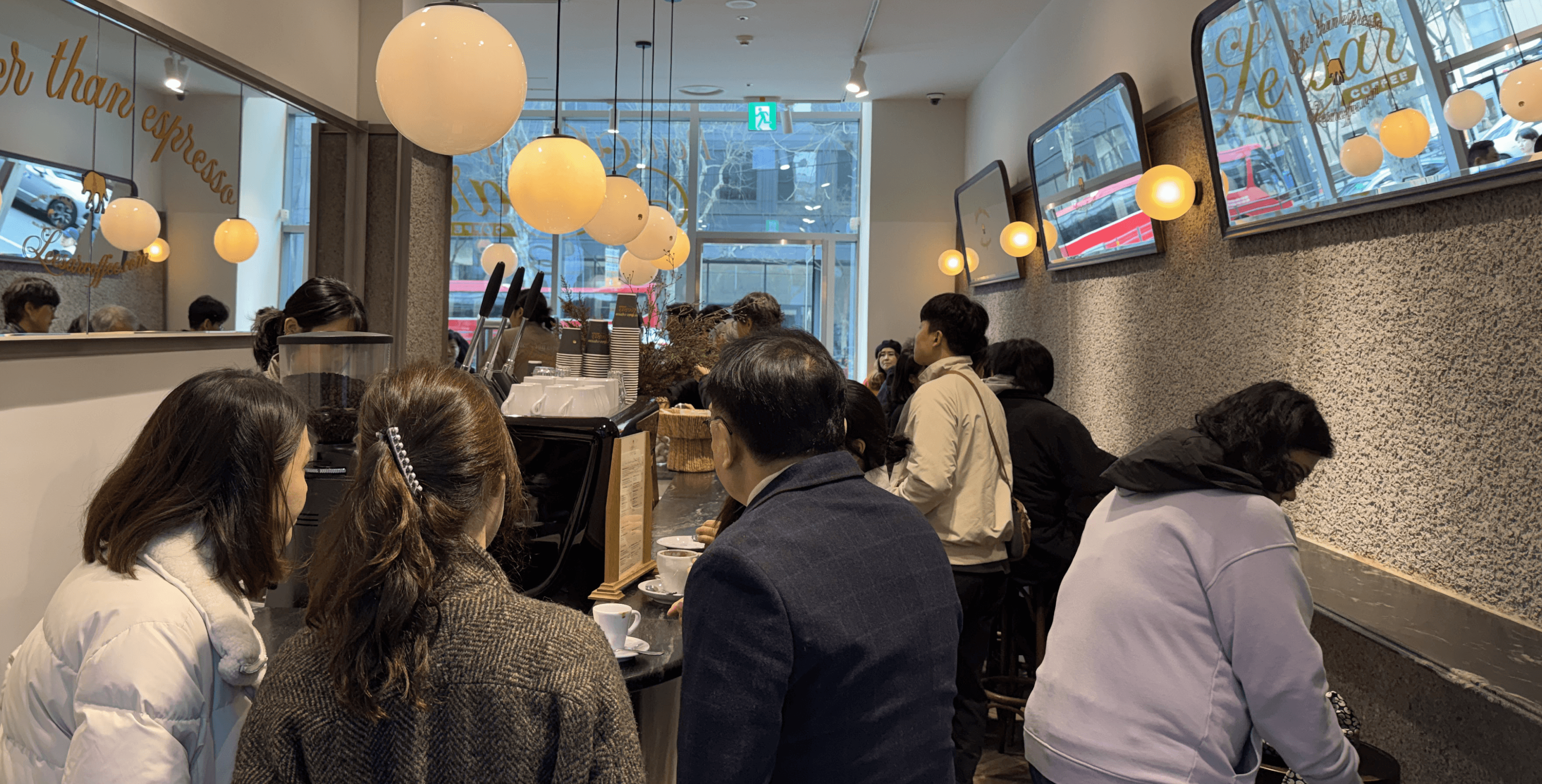
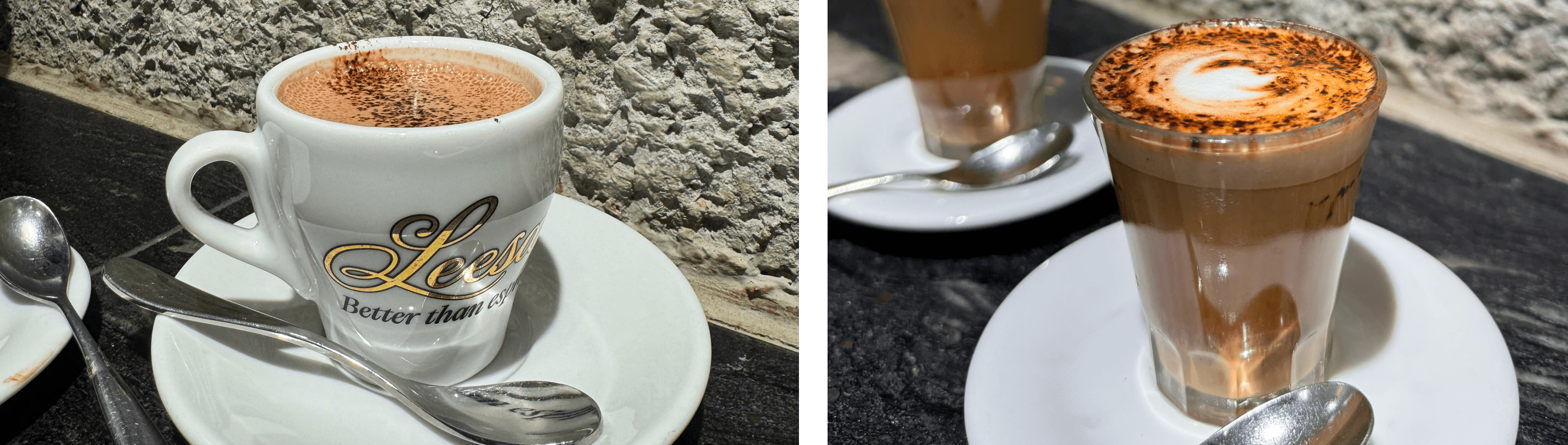
The CBD Reset: Espresso bars near Jonggak Station serve as hybrid spaces where High Turnover meets Brand Experience. These standing-only formats are the optimized retail model for office districts, offering professionals a momentary high-quality escape within a short lunch break.
Premium Sensibility at a Low Price
The popularization of niche fragrance and the modern lipstick effect transformed into small luxury
The recent rise of domestic cosmetic brands (NONFICTION, Tamburins, Granhand, etc.) that have taken over Bukchon and Seongsu shows how the niche category of fragrance has shifted into mainstream consumption. Instead of imported niche perfumes costing hundreds of thousands of won, consumers buy hand creams or room sprays priced around 50,000 won, allowing them to own the mood and identity proposed by premium brands at lower cost. This is a modern adaptation of the lipstick effect—the idea that lipstick sales rise during recessions—and suggests that scent has gained strong status as a personal emotional luxury.
This phenomenon is observed not only among domestic consumers but also among international tourists. Foreign visitors to Korea are driving spending under 100,000 won at Olive Young and fragrance specialty stores. In fact, the strategic concentration of accessible fragrance-related brands priced around 100,000 won in major commercial areas with high foreign visitor density, such as Bukchon and Seongsu (see reference: street: same Bukchon, different strategy), is further evidence that global consumers are also focusing on small-luxury experiences with low psychological barriers.
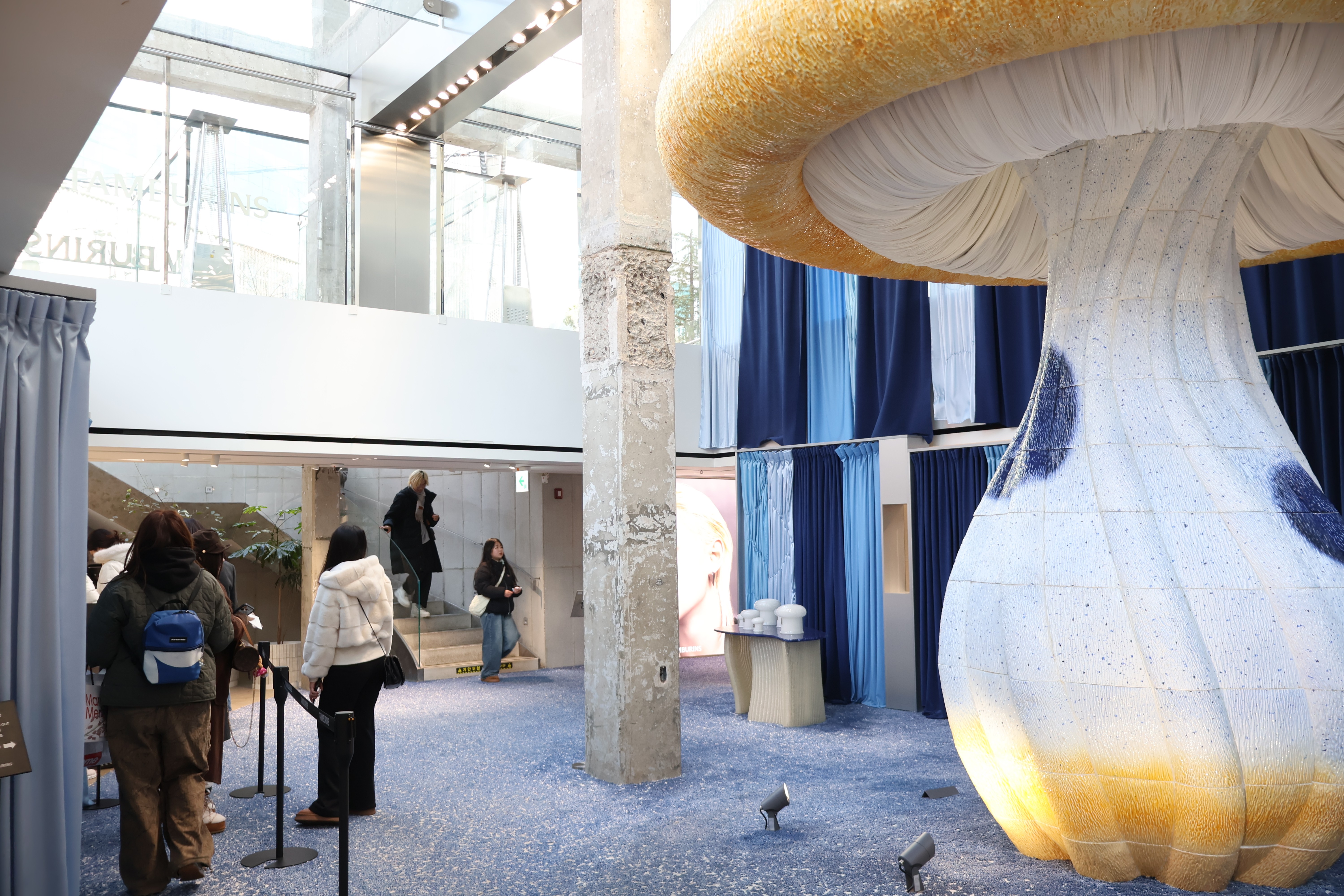
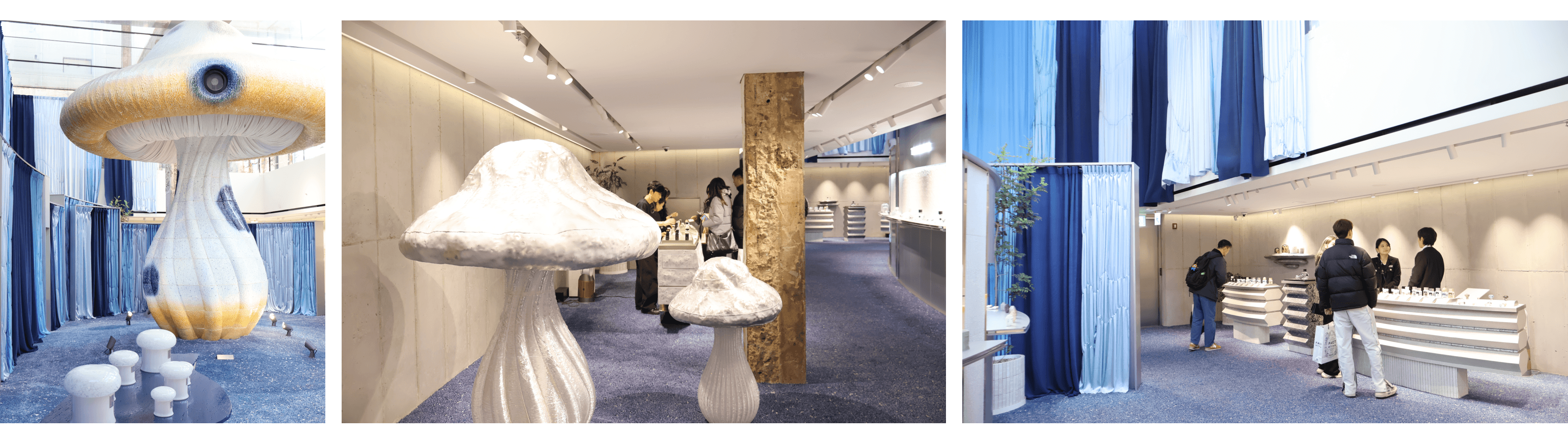
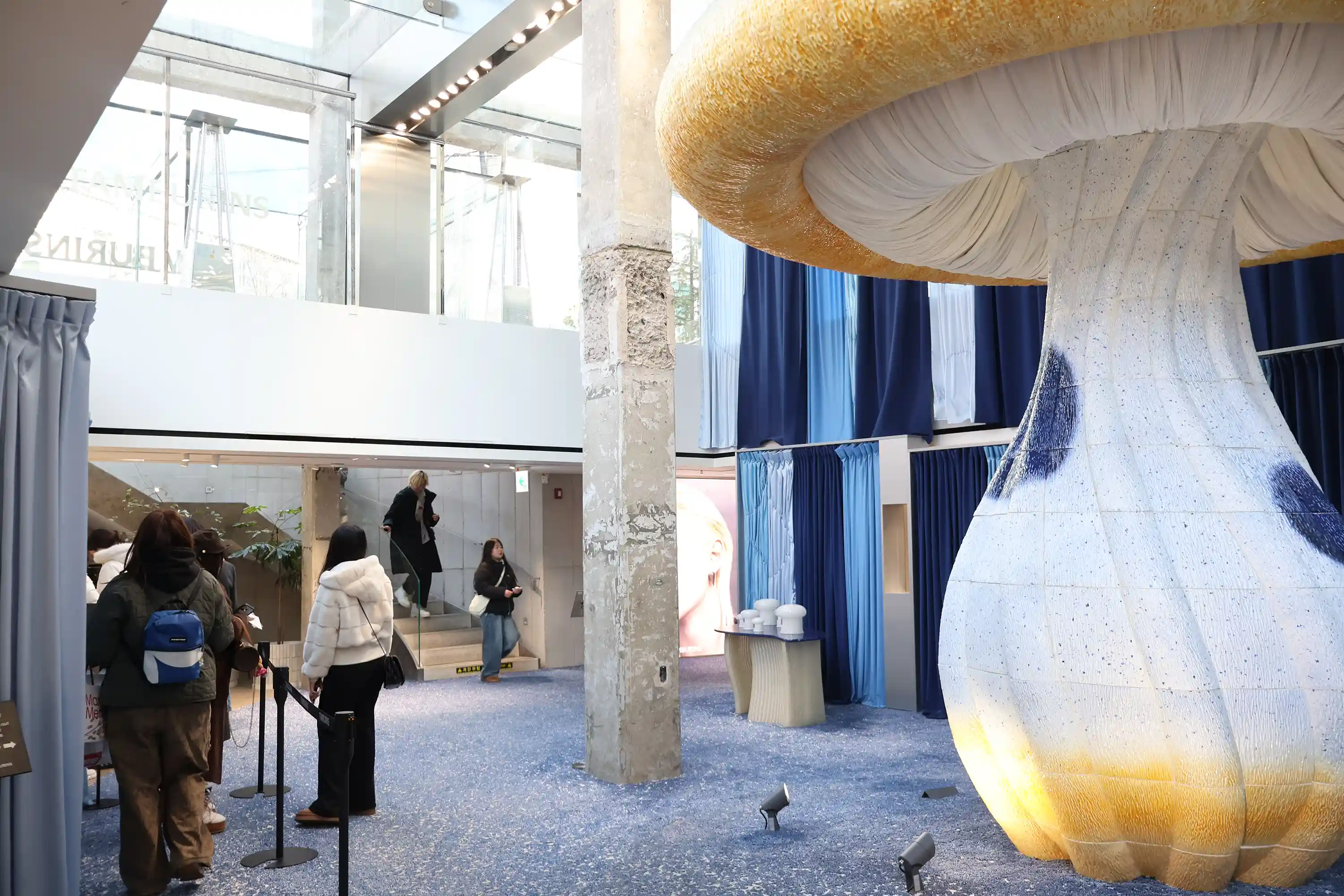
Tamburins in Seongsu. Tamburins is a distinctive domestic brand that expanded the niche category of fragrance into mainstream consumption. In particular, by using “experimental spaces” as a device, it visualizes brand storytelling and offers visitors a synesthetic brand experience that goes beyond simply selling products.
Maybe I can’t buy Chanel, but I can at least buy a ‘Dujjonku’
High-priced desserts targeting the psychological Maginot line amid ultra-low-cost consumption
Even within the ultra-low-cost consumption trend, the craze for “Dujjonku (Dubai chewy cookie),” which approached 7,000–8,000 won per piece, is a notable exception. Despite being priced close to a meal, the key point is that unlike imported luxury goods or expensive appliances—unreachable categories—it is perceived as “the most expensive indulgence allowed within one’s psychological Maginot line.” This is so-called “Small Indulgence.” Consumers channel money saved on low-cost coffee into this single premium dessert, actively practicing extreme polarization in consumption. From a retail perspective, this proves that even with a high-price strategy, consumers can show sufficient willingness to pay if the rationale of being a “small comfort in daily life” is clear.
At the beginning of the year, major domestic F&B corporations such as Starbucks, A Twosome Place, Baskin-Robbins, and Dunkin rushed to launch new products featuring Dujjonku and jumped on this train. In one cafe near Jonggak Station, sales reportedly nearly tripled after introducing Dujjonku, creating a situation where even large F&B companies with capital and infrastructure had no choice but to ride this proven profit model. Although the trend spread quickly and cooled quickly, Dujjonku served not only as a dessert but also effectively as a kind of “social currency”. It became a small but clear token of thoughtfulness in caring for one another. Small in size but not at all small in price—yet still an accessible luxury within the psychological Maginot line—it perfectly replaced the role lipstick played as an emotional luxury item during the Great Depression in 1930s America.
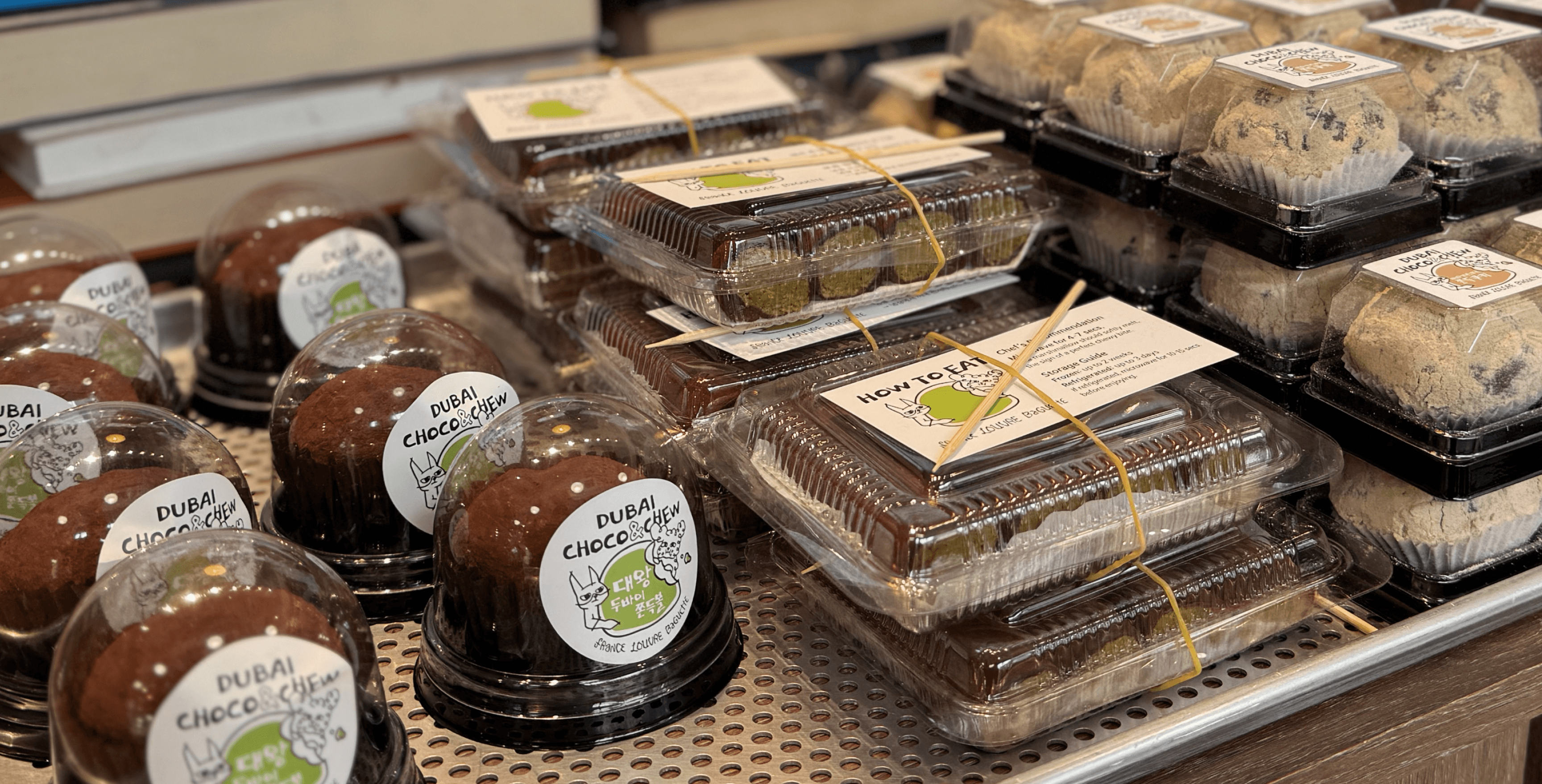
“Dujjonku” products that maintained prices around 8,000 won until early February have begun price reductions. Despite improved price competitiveness, the open-run phenomenon seen before has not reappeared. This suggests that as trend cycles in the dessert category shorten, scarcity-based conspicuous consumption is fading and demand within commercial districts is shifting to new categories.
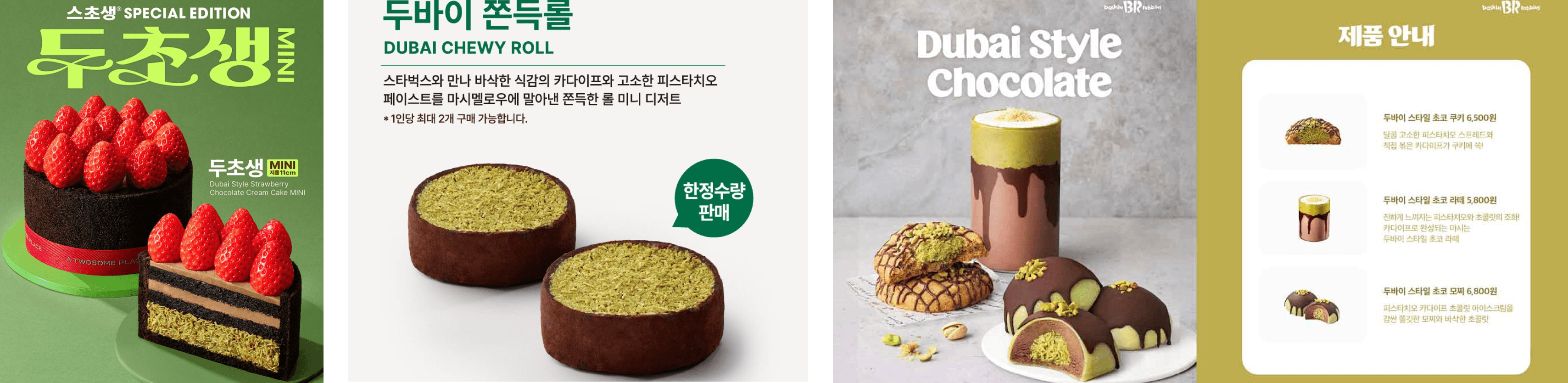
Aggressive menu launches and mass-production systems were established, but due to market saturation, consumer interest is gradually declining. (Source: brand websites)
Small and precious: play in your hands instead of grand self-actualization
An experiential retail trend centered on immersion and achievement through custom experiences
The “bolkku (pen decorating)” craze observed in Dongdaemun Market indicates that the focus of consumption has shifted from grand self-actualization to small play in one’s hands. The process of assembling and decorating a pen to one’s own taste provides high immersion and a sense of achievement despite its low price. In particular, this trend, combined with Korea’s uniquely cute stationery culture, is also appealing to foreign tourists as an experiential tourism product. It shows that in retail environments, beyond simply selling goods, a custom experience in which consumers directly participate in the outcome can be a powerful competitive edge even in low-price markets.

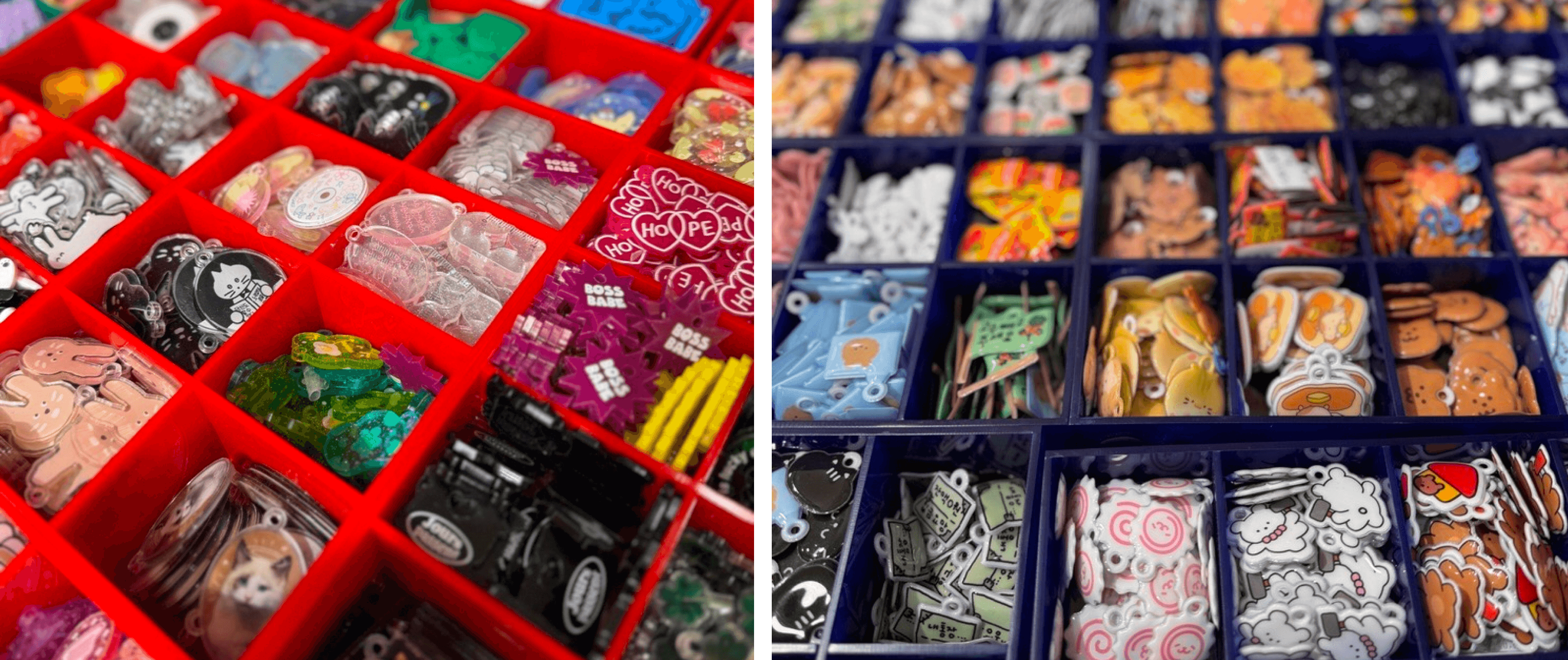
Driven by SNS virality, the rapidly growing “bolkku (ball-chain decorating)” trend is drawing huge crowds of domestic and international visitors to the Dongdaemun materials market (Source: AI-regenerated image based on Dongdaemun materials mall photos). This DIY trend has expanded into general retail shops as well, where “custom keyring” services—allowing consumers to choose parts and make items themselves—have become key customer-attraction content. This shows that demand for “customization,” which values individual identity, is driving sales in the low-involvement accessories market.
Dopamine vending machines
The most strikingly incongruous scene recently seen on Yeonmujang-gil in Seongsu and in major station-area districts is the confident spread of unmanned gacha shops (capsule toy specialty stores) and claw machines right next to luxury pop-up stores. Claw machines, once tucked away in corners of underground shopping arcades, have now moved into the most expensive retail strongholds in terms of rent. This is one of the most extreme expressions of Small Indulgence, a core consumer trend of 2026. Consumers are buying immediate rewards and the fleeting dopamine rush of “the draw” for small amounts between 3,000 and 5,000 won. In a context where macro-level asset accumulation is uncertain, consumers enjoy small uncertainties within a controllable range and taste “the cheapest victory” when they get the character they want. From a retail perspective, gacha shops are a high-efficiency model that minimizes labor-cost risk while maximizing sales per pyeong, and at the same time function as powerful anchor tenants that drive destination traffic. Ultimately, the boom in gacha shops is both retail’s clever response to a low-growth era’s lack of achievement and the most rational space for play chosen by consumers.
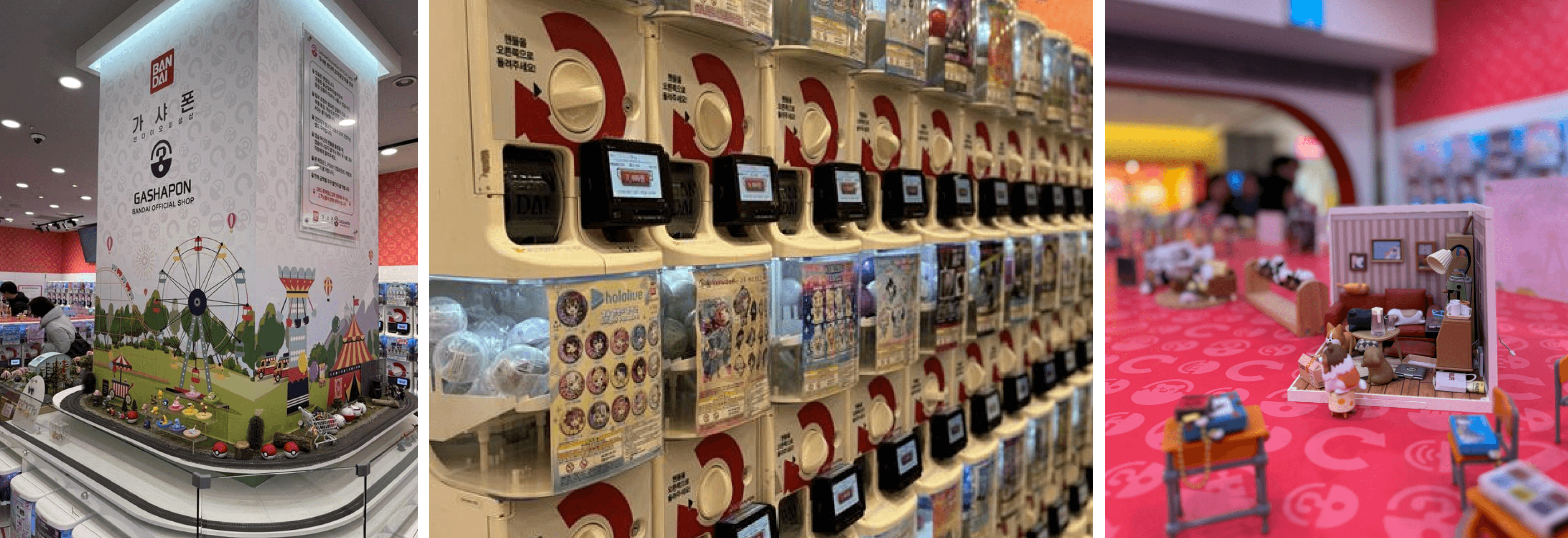
The emergence of corporate-run mall formats backed by large capital—such as Bandai’s official gacha shop at Jamsil Lotte World Mall—proves that this is no temporary fad but an established retail category.
My money is precious. I won’t risk failure.
Paying verification costs to minimize purchase-failure risk, and ultra-small/low-volume consumption patterns
The emergence of test-centered stores like Olive Young’s Olive Better is evidence that consumers are extremely wary of purchase failure. As spending power shrinks, the psychological blow from a failed purchase grows, leading to structures where consumers pay separate verification costs. Ultra-small products under 5,000 won—such as bite-sized olive oil portions and small-volume incense sticks—provide consumers opportunities to try new brands with low price barriers. This is the result of combining the rise of single-person households with rational consumption that buys only as much as needed, alongside a cautious pattern of not opening one’s wallet until convinced.

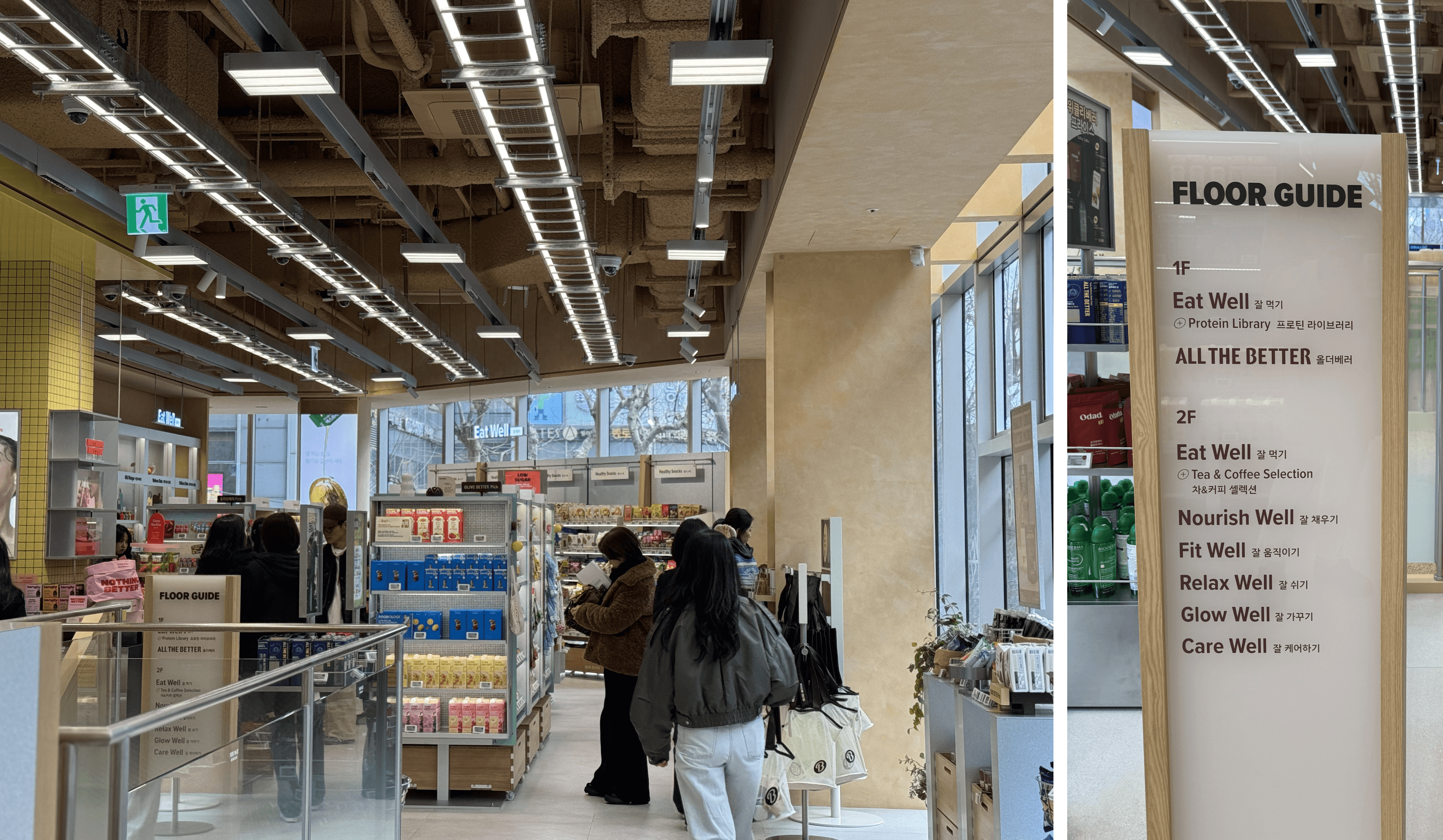
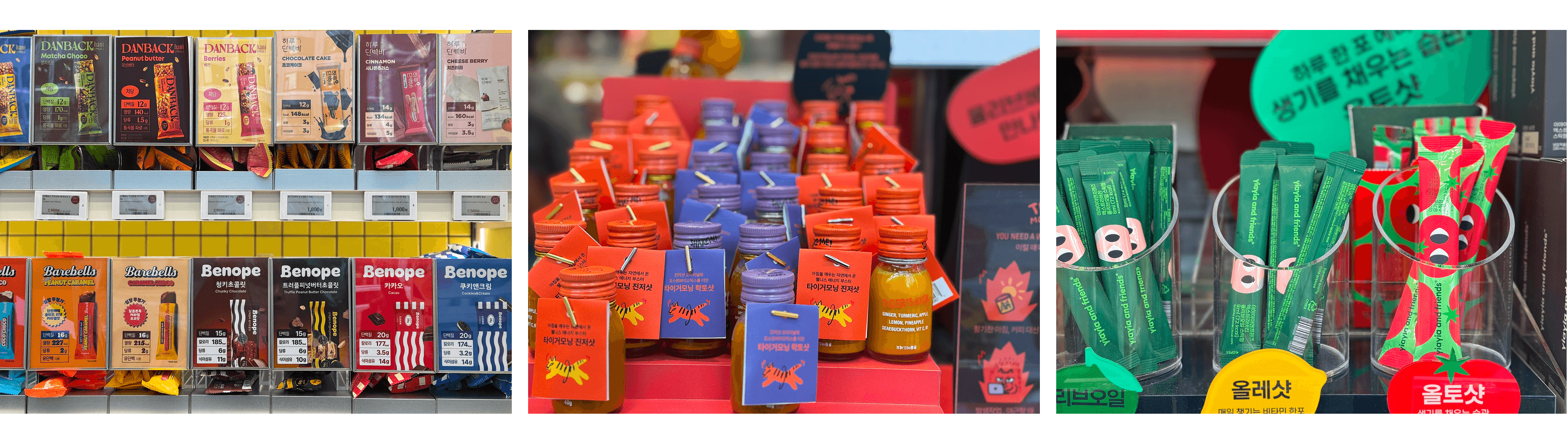
The recently opened Olive Better Gwanghwamun branch stands out for its MD composition that maximizes “high-density nutrition” and “convenience.” It curates product lines that busy office workers can easily consume during work, such as small-pack energy bars, single-dose olive oil, and supplements.
I thought the price tag was a typo, but the quality was spot-on
The power of real full-size products without the markup: why Daiso became a cosmetics pilgrimage spot
Today, Daiso has rapidly emerged beyond being a simple low-cost household goods store into a powerful distribution channel in the beauty industry. In particular, its cosmetics section has become a go-to pilgrimage spot for all age groups, including Gen MZ, seeking “fail-safe consumption.” The core of Daiso cosmetics is the overwhelming price accessibility of all products being 5,000 won or less. Breaking the old prejudice of being merely “cheap,” it has raised quality standards through collaborations with proven brands such as VT Cosmetics (Reedle Shot), A-Solution, and more recently Jung Saem Mool. In this way, Daiso’s success means that beyond “value for money,” its strategy of maximizing psychological satisfaction relative to price—“visible value”—has hit the mark. While Olive Better strengthens premium, experience-centered curation while targeting rational consumption, Daiso has completely lowered entry barriers with ultra-low-price value as its weapon. As a result, by offering even the full-size products at low prices, Daiso has reduced even the time consumers spend deliberating.
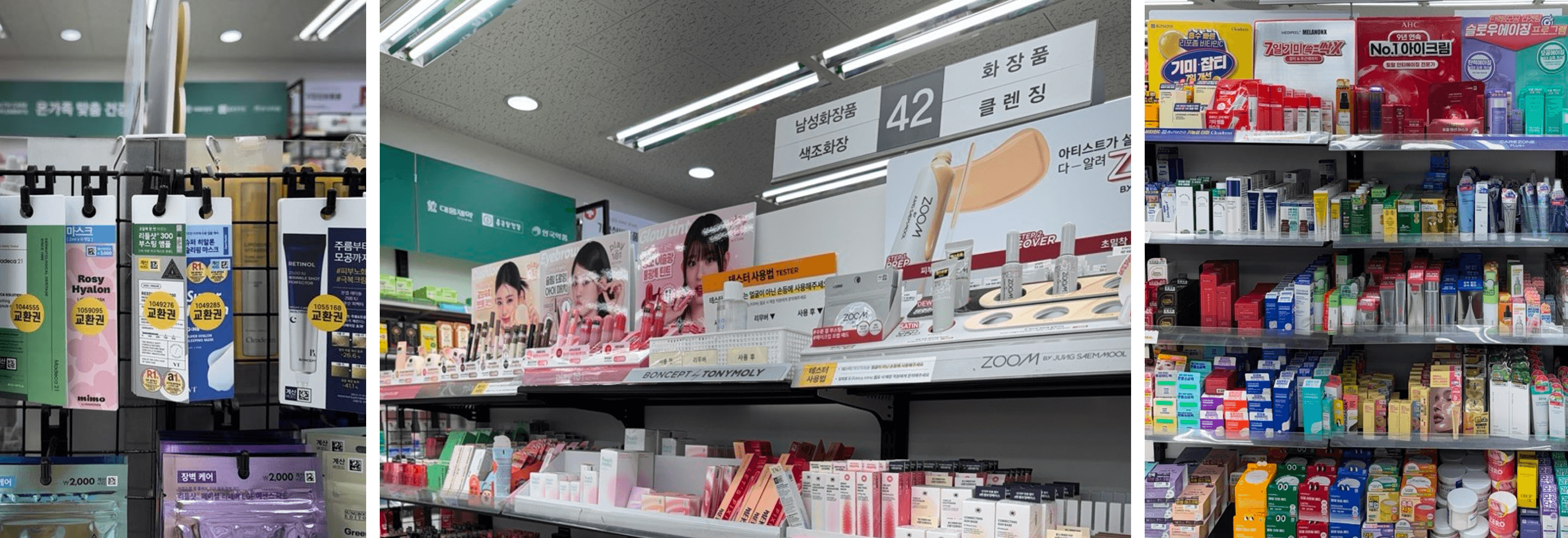
The color cosmetics category at Daiso’s Sports Complex Station branch shows such overwhelming turnover that securing stock on weekday afternoons is nearly impossible. As “Daiso Beauty” has moved beyond value-for-money and into the mainstream, demand is exceeding supply. Sunday morning is a golden time when stock is replenished before foot traffic surges, making it the only time to fully check the product lineup.
All the golf proof shots are done, but…
The decline of high-cost, show-off leisure and demand migration to running as a practical, high-efficiency exercise
The golf boom that exploded during COVID-19 cooled rapidly in the face of interest rate hikes and economic slowdown. According to Korea Customs Service statistics, domestic golf equipment imports rose steeply from 7,904 tons in 2019 to 12,889 tons in 2022, but in 2023 they declined by 3.71% year-over-year, marking a downward turn. In particular, import volume from January to August last year plunged 16.49% year-over-year to 7,641 tons, showing that after the pandemic special demand ended, the golf market entered a full-fledged contraction phase. Gen MZ consumers and office workers, finding it harder to bear high field fees and equipment prices, are leaving golf courses. In fact, usage rates of golf reservation platforms have peaked and are declining, and the flood of secondhand golf club listings supports this.
If golf and Pilates were high-cost leisure for “proof shots” and “showing off,” running is an “ultra-low-cost, high-efficiency” exercise possible with just a pair of running shoes, requiring neither specialized golf apparel and equipment nor lessons. As more people choose accessible running and hit the track, ASICS, a beneficiary of the running boom, raised its annual sales forecast to 800 billion yen in August 2025. This figure shows that the running boom is not merely a domestic trend but a shift in global demand.
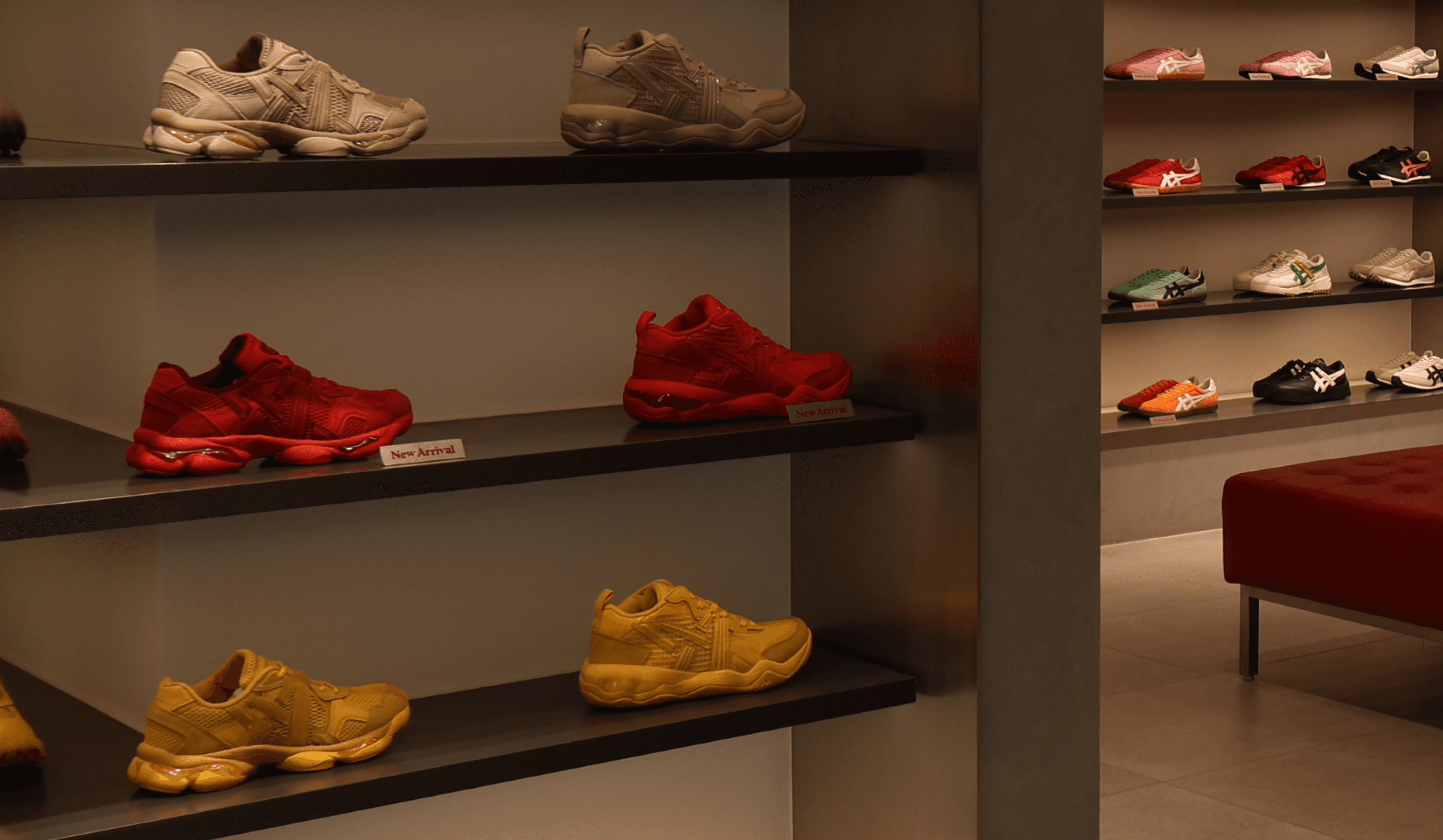
Onitsuka Tiger joined the trend by launching lifestyle sneakers that adopt the functional design of professional running shoes. This is an outcome of the “running-core” trend, in which the popularization of serious running has expanded into fashion. By translating technical elements of performance shoes into everyday fashion items, the brand is targeting highly involved consumers who pursue both functionality and style.
Insight: You only need One.
A survival strategy for an age of ambivalent consumption where brutal frugality and clear indulgence coexist
Just because the economy has become tougher doesn’t mean our desires have dried up too. The outlet has simply changed. The era of proving oneself through big-ticket purchases like imported cars or luxury handbags has momentarily faded, and now we’ve entered an era of finding clear utility in small things that fit in the palm of your hand.
At lunch, people get their caffeine fix with value coffee, but on the way home they willingly open their wallets for a pen customized to their taste or a single 8,000-won cookie. Rather than “display” for others, the “sensation” and “achievement” one personally feels have become more important. Carefully evaluating small-volume samples to reduce failure, and tying up running shoes to run by the riverside near home instead of going to expensive golf courses—these have become not signs of hardship, but a very smart and strategic way of survival.
In the end, today’s retail market seems to be summarized by one phrase: “Ambivalent consumption.” Be brutally frugal when saving, be definite when spending. The unit of consumption has become smaller, but the individual taste contained within it is denser than ever. Even without a grand brand logo, only brands with that small but decisive detail that can deliver real comfort will survive in this era of fragmented consumption.
The South Korean retail market has entered a phase of Expenditure Restructuring due to prolonged inflationary pressures and high interest rates. As macroeconomic uncertainty persists, consumer behavior is shifting toward immediate gratification through small-scale spending. This is a strategic consumption pattern aimed at maximizing Psychological ROI and brand experience within a constrained budget. While a recession may reduce total volume, it does not erase consumer desire; instead, it results in fragmented demand, manifesting in smaller, high-frequency units.
The Coffee Divide: Survival vs. Sensory Immersion
For a caffeine transfusion
The low-cost coffee market—led by Mega Coffee, Compose Coffee, and Mammoth Coffee—has evolved from a mere budget alternative into an essential daily infrastructure. Historically, these brands used aggressive pricing to offset subpar locations and quality. Today, they leverage top-tier celebrity endorsements and strategic branding to position themselves as a "Rational Lifestyle" choice rather than a "cheap alternative." To combat domestic market saturation, these players are expanding globally, proving the scalability of the "K-Value" model and transforming a high-volume, low-margin business into a global retail standard.
A single building facade housing four different low-cost coffee brands, symbolizing the hyper-competitive "Caffeine Transfusion" demand and overwhelming market dominance in the Jonggak Station business district.
Current distribution of Mega Coffee outlets within the Seoul CBD (Central Business District). (Source: Mega Coffee)
Comparing brand reputation index figures from 2021 to 2026, the growth of low-cost coffee brands is clearly visible in the data.
For immersive experience
If low-cost coffee is responsible for survival-oriented, efficient consumption as “caffeine transfusion,” espresso bars represent “smart luxury,” where people enjoy a rich taste experience at low cost (the price of a single espresso). In busy daily life, consumers are increasingly displaying ambivalent behavior: embracing the speed offered by Mega Coffee or Compose Coffee while also seeking dense moments of rest by taking a short break to enjoy standing espresso at an espresso bar. As the number of cafes nationwide has surpassed 100,000 and reached saturation, ordinary low-to-mid-priced independent cafes continue to struggle, while espresso bars survive by solidifying a niche market with “clear expertise” as their weapon.
The CBD Reset: Espresso bars near Jonggak Station serve as hybrid spaces where High Turnover meets Brand Experience. These standing-only formats are the optimized retail model for office districts, offering professionals a momentary high-quality escape within a short lunch break.
Premium Sensibility at a Low Price
The popularization of niche fragrance and the modern lipstick effect transformed into small luxury
The recent rise of domestic cosmetic brands (NONFICTION, Tamburins, Granhand, etc.) that have taken over Bukchon and Seongsu shows how the niche category of fragrance has shifted into mainstream consumption. Instead of imported niche perfumes costing hundreds of thousands of won, consumers buy hand creams or room sprays priced around 50,000 won, allowing them to own the mood and identity proposed by premium brands at lower cost. This is a modern adaptation of the lipstick effect—the idea that lipstick sales rise during recessions—and suggests that scent has gained strong status as a personal emotional luxury.
This phenomenon is observed not only among domestic consumers but also among international tourists. Foreign visitors to Korea are driving spending under 100,000 won at Olive Young and fragrance specialty stores. In fact, the strategic concentration of accessible fragrance-related brands priced around 100,000 won in major commercial areas with high foreign visitor density, such as Bukchon and Seongsu (see reference: street: same Bukchon, different strategy), is further evidence that global consumers are also focusing on small-luxury experiences with low psychological barriers.
Tamburins in Seongsu. Tamburins is a distinctive domestic brand that expanded the niche category of fragrance into mainstream consumption. In particular, by using “experimental spaces” as a device, it visualizes brand storytelling and offers visitors a synesthetic brand experience that goes beyond simply selling products.
Maybe I can’t buy Chanel, but I can at least buy a ‘Dujjonku’
High-priced desserts targeting the psychological Maginot line amid ultra-low-cost consumption
Even within the ultra-low-cost consumption trend, the craze for “Dujjonku (Dubai chewy cookie),” which approached 7,000–8,000 won per piece, is a notable exception. Despite being priced close to a meal, the key point is that unlike imported luxury goods or expensive appliances—unreachable categories—it is perceived as “the most expensive indulgence allowed within one’s psychological Maginot line.” This is so-called “Small Indulgence.” Consumers channel money saved on low-cost coffee into this single premium dessert, actively practicing extreme polarization in consumption. From a retail perspective, this proves that even with a high-price strategy, consumers can show sufficient willingness to pay if the rationale of being a “small comfort in daily life” is clear.
At the beginning of the year, major domestic F&B corporations such as Starbucks, A Twosome Place, Baskin-Robbins, and Dunkin rushed to launch new products featuring Dujjonku and jumped on this train. In one cafe near Jonggak Station, sales reportedly nearly tripled after introducing Dujjonku, creating a situation where even large F&B companies with capital and infrastructure had no choice but to ride this proven profit model. Although the trend spread quickly and cooled quickly, Dujjonku served not only as a dessert but also effectively as a kind of “social currency”. It became a small but clear token of thoughtfulness in caring for one another. Small in size but not at all small in price—yet still an accessible luxury within the psychological Maginot line—it perfectly replaced the role lipstick played as an emotional luxury item during the Great Depression in 1930s America.
“Dujjonku” products that maintained prices around 8,000 won until early February have begun price reductions. Despite improved price competitiveness, the open-run phenomenon seen before has not reappeared. This suggests that as trend cycles in the dessert category shorten, scarcity-based conspicuous consumption is fading and demand within commercial districts is shifting to new categories.
Aggressive menu launches and mass-production systems were established, but due to market saturation, consumer interest is gradually declining. (Source: brand websites)
Small and precious: play in your hands instead of grand self-actualization
An experiential retail trend centered on immersion and achievement through custom experiences
The “bolkku (pen decorating)” craze observed in Dongdaemun Market indicates that the focus of consumption has shifted from grand self-actualization to small play in one’s hands. The process of assembling and decorating a pen to one’s own taste provides high immersion and a sense of achievement despite its low price. In particular, this trend, combined with Korea’s uniquely cute stationery culture, is also appealing to foreign tourists as an experiential tourism product. It shows that in retail environments, beyond simply selling goods, a custom experience in which consumers directly participate in the outcome can be a powerful competitive edge even in low-price markets.
Driven by SNS virality, the rapidly growing “bolkku (ball-chain decorating)” trend is drawing huge crowds of domestic and international visitors to the Dongdaemun materials market (Source: AI-regenerated image based on Dongdaemun materials mall photos). This DIY trend has expanded into general retail shops as well, where “custom keyring” services—allowing consumers to choose parts and make items themselves—have become key customer-attraction content. This shows that demand for “customization,” which values individual identity, is driving sales in the low-involvement accessories market.
Dopamine vending machines
The most strikingly incongruous scene recently seen on Yeonmujang-gil in Seongsu and in major station-area districts is the confident spread of unmanned gacha shops (capsule toy specialty stores) and claw machines right next to luxury pop-up stores. Claw machines, once tucked away in corners of underground shopping arcades, have now moved into the most expensive retail strongholds in terms of rent. This is one of the most extreme expressions of Small Indulgence, a core consumer trend of 2026. Consumers are buying immediate rewards and the fleeting dopamine rush of “the draw” for small amounts between 3,000 and 5,000 won. In a context where macro-level asset accumulation is uncertain, consumers enjoy small uncertainties within a controllable range and taste “the cheapest victory” when they get the character they want. From a retail perspective, gacha shops are a high-efficiency model that minimizes labor-cost risk while maximizing sales per pyeong, and at the same time function as powerful anchor tenants that drive destination traffic. Ultimately, the boom in gacha shops is both retail’s clever response to a low-growth era’s lack of achievement and the most rational space for play chosen by consumers.
The emergence of corporate-run mall formats backed by large capital—such as Bandai’s official gacha shop at Jamsil Lotte World Mall—proves that this is no temporary fad but an established retail category.
My money is precious. I won’t risk failure.
Paying verification costs to minimize purchase-failure risk, and ultra-small/low-volume consumption patterns
The emergence of test-centered stores like Olive Young’s Olive Better is evidence that consumers are extremely wary of purchase failure. As spending power shrinks, the psychological blow from a failed purchase grows, leading to structures where consumers pay separate verification costs. Ultra-small products under 5,000 won—such as bite-sized olive oil portions and small-volume incense sticks—provide consumers opportunities to try new brands with low price barriers. This is the result of combining the rise of single-person households with rational consumption that buys only as much as needed, alongside a cautious pattern of not opening one’s wallet until convinced.
The recently opened Olive Better Gwanghwamun branch stands out for its MD composition that maximizes “high-density nutrition” and “convenience.” It curates product lines that busy office workers can easily consume during work, such as small-pack energy bars, single-dose olive oil, and supplements.
I thought the price tag was a typo, but the quality was spot-on
The power of real full-size products without the markup: why Daiso became a cosmetics pilgrimage spot
Today, Daiso has rapidly emerged beyond being a simple low-cost household goods store into a powerful distribution channel in the beauty industry. In particular, its cosmetics section has become a go-to pilgrimage spot for all age groups, including Gen MZ, seeking “fail-safe consumption.” The core of Daiso cosmetics is the overwhelming price accessibility of all products being 5,000 won or less. Breaking the old prejudice of being merely “cheap,” it has raised quality standards through collaborations with proven brands such as VT Cosmetics (Reedle Shot), A-Solution, and more recently Jung Saem Mool. In this way, Daiso’s success means that beyond “value for money,” its strategy of maximizing psychological satisfaction relative to price—“visible value”—has hit the mark. While Olive Better strengthens premium, experience-centered curation while targeting rational consumption, Daiso has completely lowered entry barriers with ultra-low-price value as its weapon. As a result, by offering even the full-size products at low prices, Daiso has reduced even the time consumers spend deliberating.
The color cosmetics category at Daiso’s Sports Complex Station branch shows such overwhelming turnover that securing stock on weekday afternoons is nearly impossible. As “Daiso Beauty” has moved beyond value-for-money and into the mainstream, demand is exceeding supply. Sunday morning is a golden time when stock is replenished before foot traffic surges, making it the only time to fully check the product lineup.
All the golf proof shots are done, but…
The decline of high-cost, show-off leisure and demand migration to running as a practical, high-efficiency exercise
The golf boom that exploded during COVID-19 cooled rapidly in the face of interest rate hikes and economic slowdown. According to Korea Customs Service statistics, domestic golf equipment imports rose steeply from 7,904 tons in 2019 to 12,889 tons in 2022, but in 2023 they declined by 3.71% year-over-year, marking a downward turn. In particular, import volume from January to August last year plunged 16.49% year-over-year to 7,641 tons, showing that after the pandemic special demand ended, the golf market entered a full-fledged contraction phase. Gen MZ consumers and office workers, finding it harder to bear high field fees and equipment prices, are leaving golf courses. In fact, usage rates of golf reservation platforms have peaked and are declining, and the flood of secondhand golf club listings supports this.
If golf and Pilates were high-cost leisure for “proof shots” and “showing off,” running is an “ultra-low-cost, high-efficiency” exercise possible with just a pair of running shoes, requiring neither specialized golf apparel and equipment nor lessons. As more people choose accessible running and hit the track, ASICS, a beneficiary of the running boom, raised its annual sales forecast to 800 billion yen in August 2025. This figure shows that the running boom is not merely a domestic trend but a shift in global demand.
Onitsuka Tiger joined the trend by launching lifestyle sneakers that adopt the functional design of professional running shoes. This is an outcome of the “running-core” trend, in which the popularization of serious running has expanded into fashion. By translating technical elements of performance shoes into everyday fashion items, the brand is targeting highly involved consumers who pursue both functionality and style.
Insight: You only need One.
A survival strategy for an age of ambivalent consumption where brutal frugality and clear indulgence coexist
Just because the economy has become tougher doesn’t mean our desires have dried up too. The outlet has simply changed. The era of proving oneself through big-ticket purchases like imported cars or luxury handbags has momentarily faded, and now we’ve entered an era of finding clear utility in small things that fit in the palm of your hand.
At lunch, people get their caffeine fix with value coffee, but on the way home they willingly open their wallets for a pen customized to their taste or a single 8,000-won cookie. Rather than “display” for others, the “sensation” and “achievement” one personally feels have become more important. Carefully evaluating small-volume samples to reduce failure, and tying up running shoes to run by the riverside near home instead of going to expensive golf courses—these have become not signs of hardship, but a very smart and strategic way of survival.
In the end, today’s retail market seems to be summarized by one phrase: “Ambivalent consumption.” Be brutally frugal when saving, be definite when spending. The unit of consumption has become smaller, but the individual taste contained within it is denser than ever. Even without a grand brand logo, only brands with that small but decisive detail that can deliver real comfort will survive in this era of fragmented consumption.
More in
More in
trend
trend

trend
Mar 6, 2026
Runners' Basecamp: SEOUL
The reason why Seoul has become a 'holy site' for global learning
trend
Mar 2, 2026
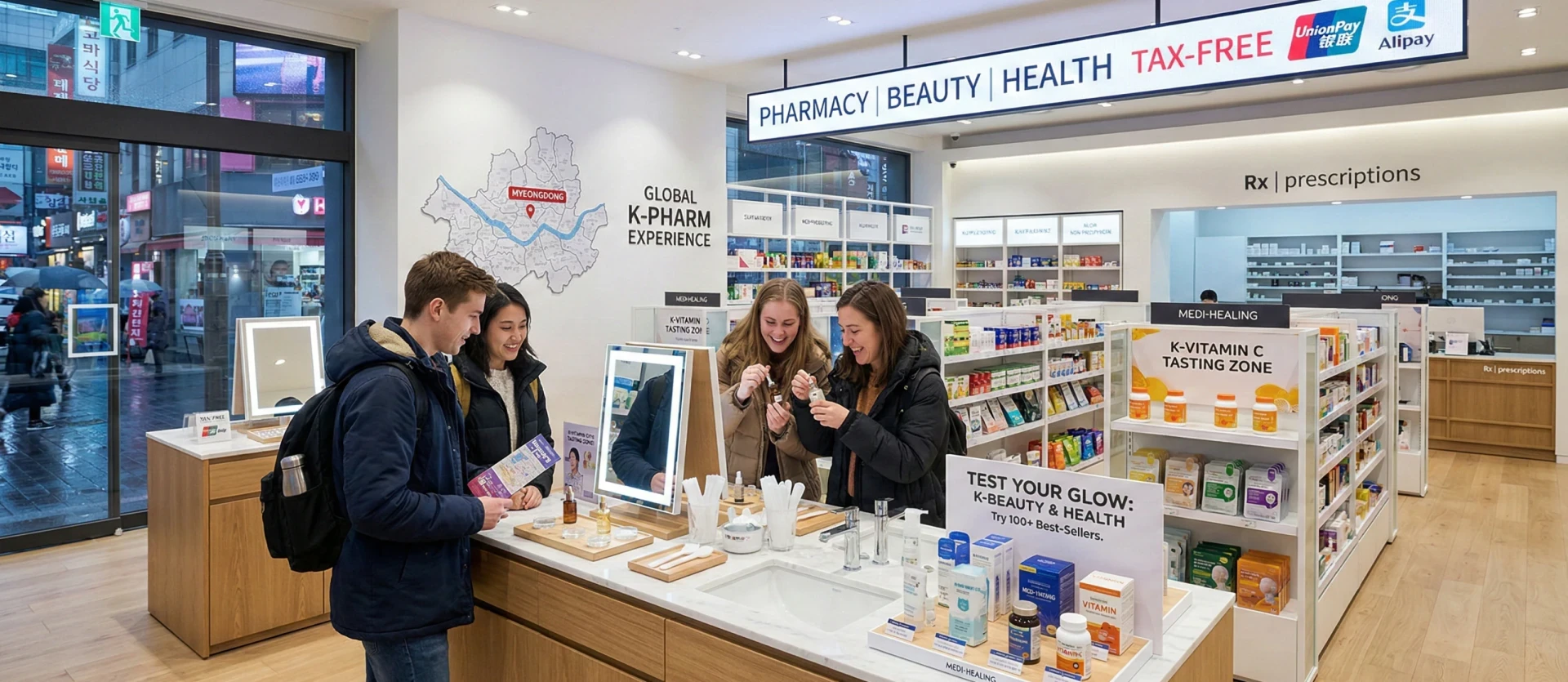
Pharmacy without prescription, is it a pharmacy or Olive Young?
The paradigm shift of Korean pharmacy retail, which combines high-profit non-covered items and experiential spaces, has rapidly emerged as an anchor tenant in core commercial areas.
Get the best of 'detail'
in your inbox, every month
Once a month, no spam
Get the best of 'detail'
in your inbox, every month
Once a month, no spam
Get the best of 'detail'
in your inbox, every month
Once a month, no spam