Back
Copy
Share
Like
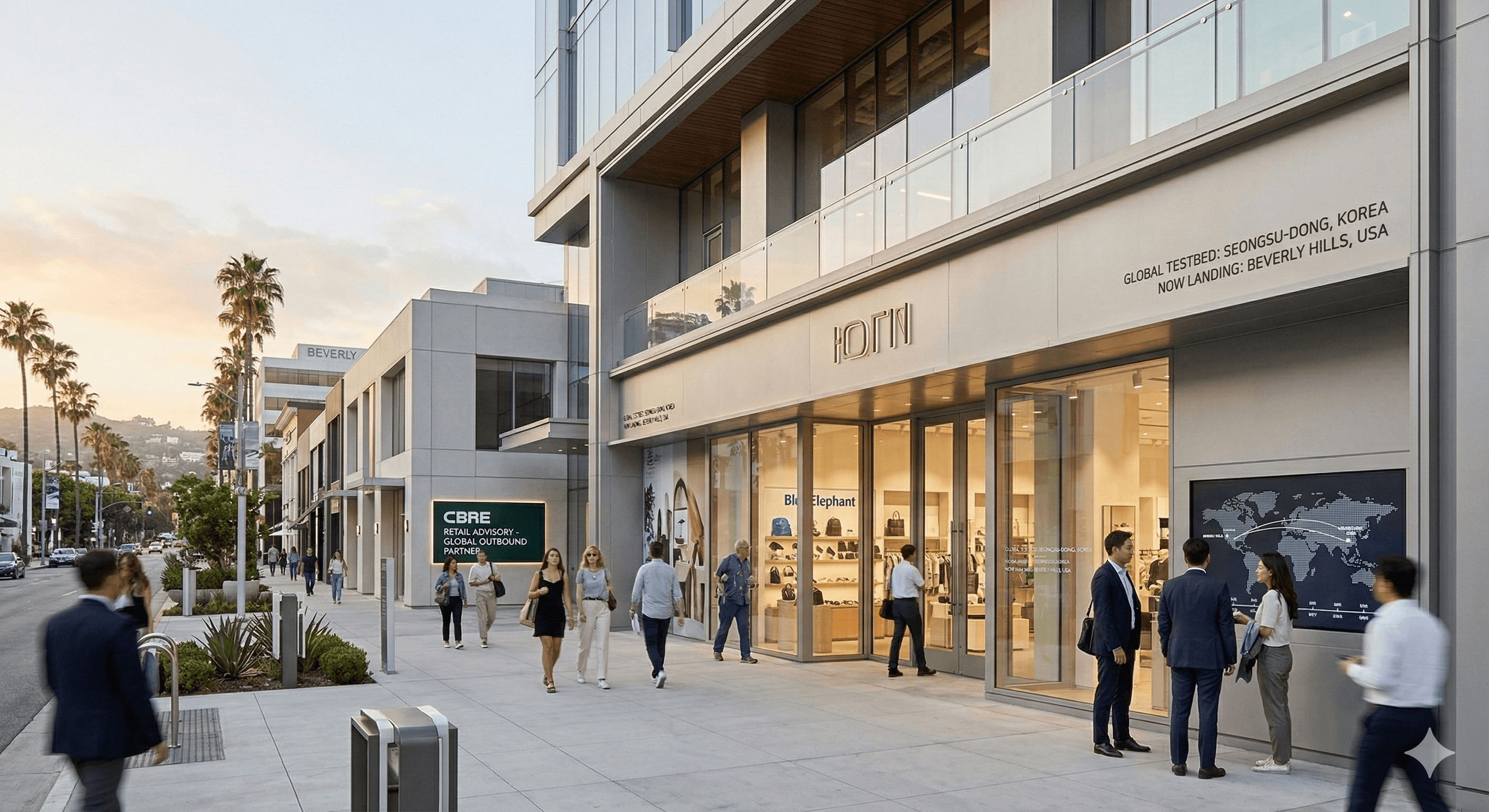
market
New Era, New Areas
New Era, New Areas
New Era, New Areas
The essential guide for Korean brands expanding into global retail markets — credit, corporate structure, negotiation, and what it actually took to open a flagship in Beverly Hills.
The essential guide for Korean brands expanding into global retail markets — credit, corporate structure, negotiation, and what it actually took to open a flagship in Beverly Hills.
The essential guide for Korean brands expanding into global retail markets — credit, corporate structure, negotiation, and what it actually took to open a flagship in Beverly Hills.
Article Highlights
Seongsu-dong now draws a visitor mix that is 80 to 90 percent international. A brand operating there is already running a live global consumer test — before committing a dollar to an overseas market.
Major landlords in New York, London, and Paris treat a ten-year lease as a financial instrument. What they need from a tenant is not a high rent offer. It is a credible credit profile — and a Korean company with no local entity and no local banking history starts from zero.
Entering an overseas retail market is not opening a store. It is establishing a company in a foreign jurisdiction. Legal entity timing, local financing structure, permit sequencing, and project management all have to be resolved concurrently.
Opening the door to the narrowed domestic market is no longer a choice but a mandatory strategy for survival. However, overseas markets beyond the home ground are a harsh stage of ‘credit’ that cannot be navigated with mere ‘passion’. What is the success formula of ‘outbound’ that maximizes corporate value beyond simply opening stores? We look into the insights of CBRE retail team leader Lee Kang-wook on building a sophisticated roadmap to connect the confidence gained in the global testbed known as Seongsu-dong with actual business outcomes.
Seongsu-dong, a Forward Base for Global Expansion
Q. Recently, the proportion of foreign tourists visiting Seongsu-dong has exploded. How is this phenomenon related to brands' overseas expansions (Outbound)?
[From Local Hotspot to Global Testbed]
Seongsu-dong has now become a miniature version of the global market, surpassing simply being a hot place. In the past, Korean visitors were the majority, but over the last 1 to 2 years, the proportion of foreigners has changed dramatically to nearly 80–90%. Interestingly, the purpose of foreign visitors to Seongsu-dong is distinctly different from that of Myeongdong. While Myeongdong is the 'last consumption stop' for purchasing souvenirs or cosmetics in bulk before departing, Seongsu-dong is a 'experience'-centred destination where visitors rush in to enjoy the culture as soon as they arrive in Korea.
From the brand's perspective, this presents a tremendous opportunity. Analyzing the consumer data collected in stores reveals the nationality, age, and preferred product categories of consumers very transparently. Data such as "Oh? So many Americans are buying our products?" and "We are getting positive responses from the Japanese?" can be gathered from a single store in Seongsu-dong. In a situation where the domestic market is stagnant, Seongsu-dong serves as the most reliable data centre to gauge success prospects in overseas markets and as a forward base that provides confidence for global expansion.
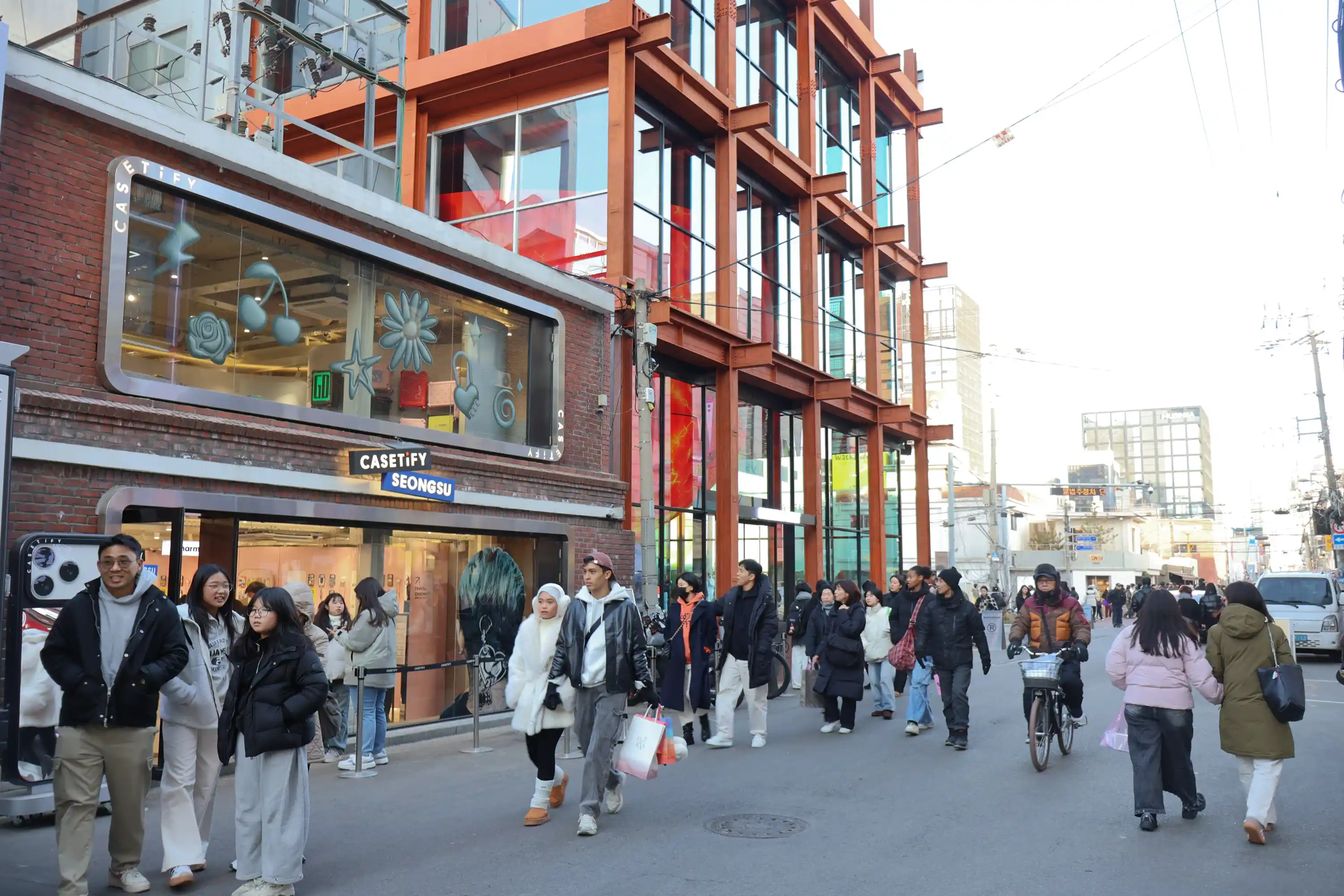
The Vitality of Seongsu-dong, Unfazed by Seasons: A Dense Flow of People Unstoppable Even by January’s Cold Snap
Who Are You (Brand)?
Q. Many brands dream of foreign expansion, but it is not easy to reach an actual contract. What is the biggest barrier our brands face in the global market?
[Credit over Cash]
The biggest difficulty faced by Korean brands knocking on the doors of overseas, especially American or European high streets, is that the market's grammar is different. In Korea, it is sometimes possible to operate under the logic of "If we raise the rent, we can get in," but the major global markets generally have a different approach.
Foreign landlords treat lease contracts not merely as rental space but as financial products. They secure financing or reinvest using the long-term 10-year contracts signed with tenants as collateral. Therefore, what matters most to them is not the high rent at the moment but proving ‘creditworthiness’ that this brand can consistently pay rent for ten years without going bankrupt.
No matter how much a large enterprise makes in sales in Korea, if it lacks a local entity and credit history, it may appear as a high-risk startup to them. Even if we offer to pay more rent when competing with global companies like Gap or Zara, landlords choose stable global companies for this reason. This is not a matter of brand capability but rather a barrier coming from structural differences. To overcome this, thorough localization strategies and credit reinforcement are essential.
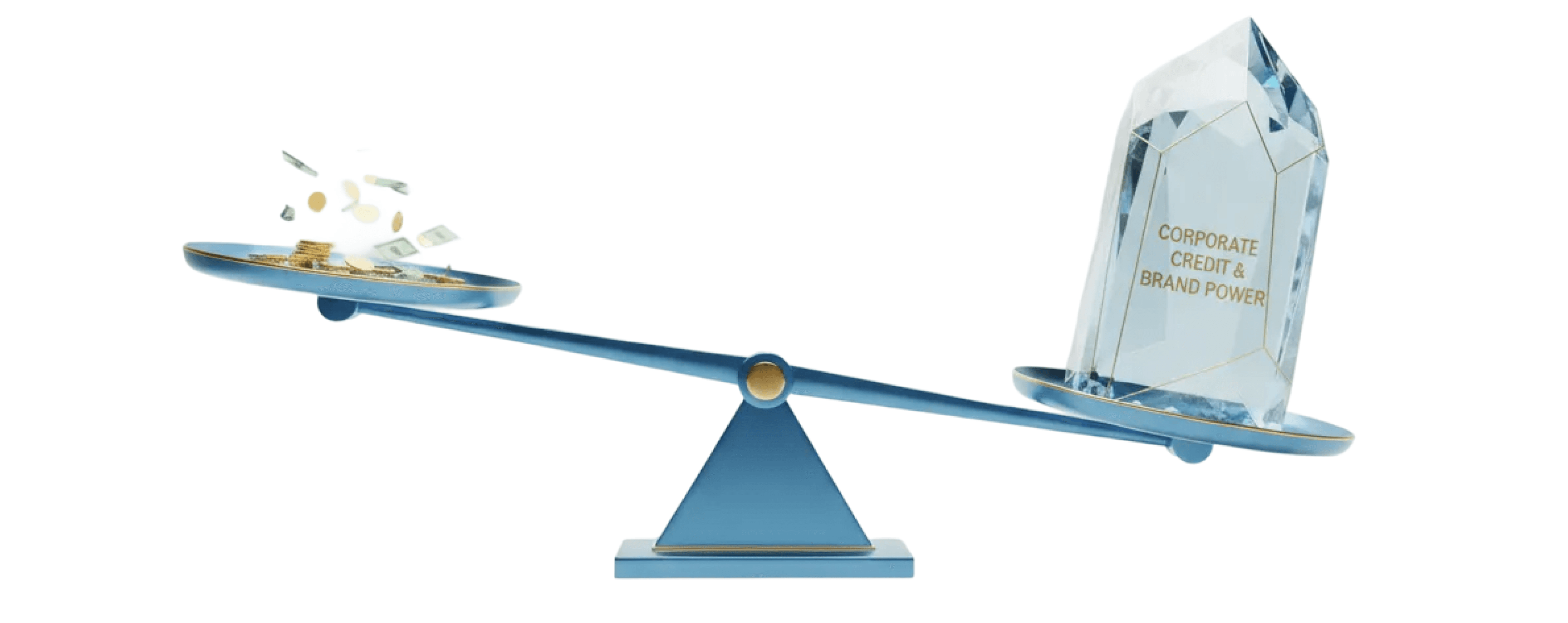
The Tenant's Creditworthiness Ensures the Long-term Stability of Assets Over Short-term Rental Income
Building a ‘New Company’ Locally
Q. So, how should brands lacking creditworthiness and local foundations overcome this barrier? What role does the CBRE retail team play?
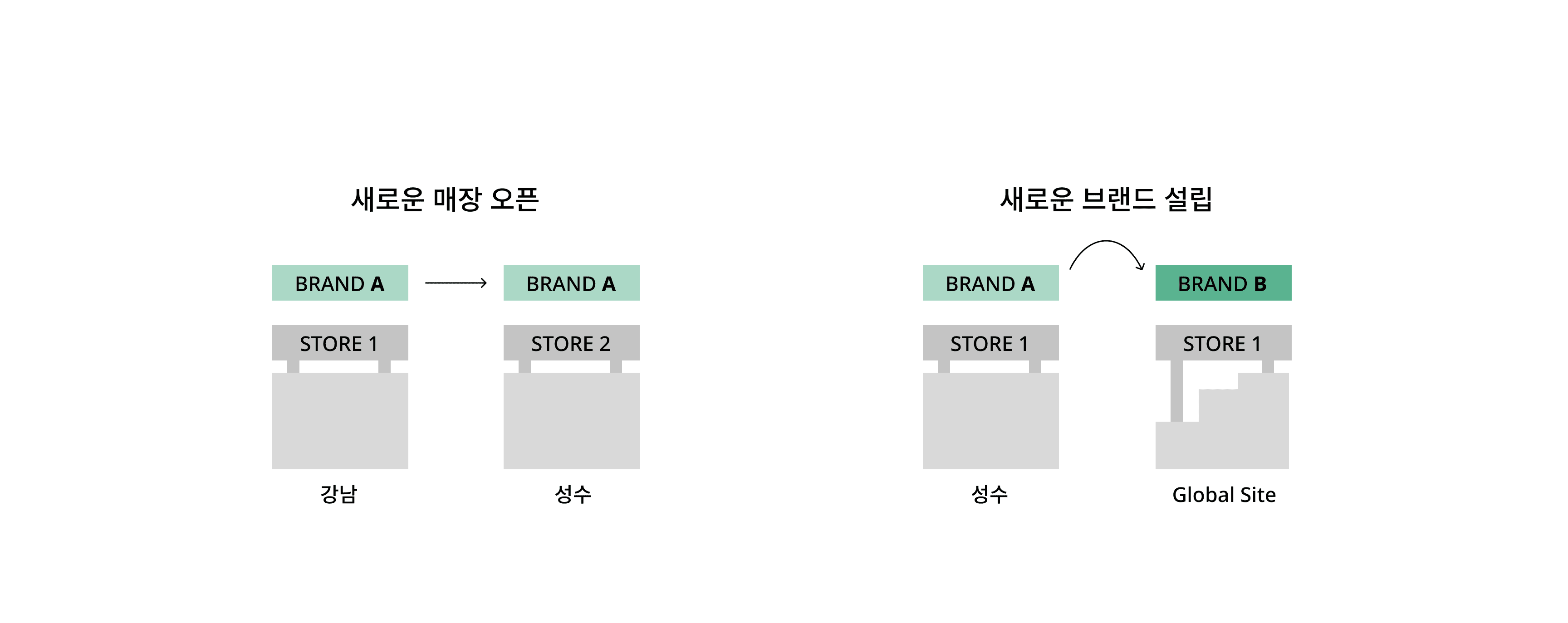
Opening a store in a global site should be approached as the concept of establishing a new brand.
[Not Just an Opening, But a New Company Creation]
Outbound expansion is not merely about opening a store; it should be viewed as the process of ‘establishing a new company’ on another's territory. All systems, including logistics, personnel, legal, and construction, must be built from zero, and the risk is certainly too high for individual brands to manage alone.
The CBRE retail team can be seen as a partner that accompanies this complex process from A to Z. First, we provide financial solutions. In cases where local credit is insufficient to secure deposits or issue letters of credit (LC), we provide advisory on financial structures and work through the process with them. Second, we offer integrated project management (PJM). Overseas, permits and construction are generally much slower and more complicated than in Korea. Our in-house PJM team closely manages the entire process from design approval to construction supervision to secure the opening schedule. Lastly, there's the CBRE guarantee. The fact that ‘CBRE is assisting this brand’s expansion’ acts as a strong signal of trust to global landlords.
Blue Elephant Enters Beverly Hills
Q. I am curious about the recent exciting case of 'Blue Elephant's' entry into the United States. What specific process led to this successful contract?
[A Strategic Victory in Beverly Hills]
The Blue Elephant Beverly Hills flagship project started in early last year and completed the contract in July, making it a rapid and successful case. However, the process was intense. In the U.S., core conditions must be confirmed through several revisions (Redline) from the letter of intent (LOI) stage, and the professional negotiation skills of CBRE shone through during this process.
The biggest obstacle was indeed ‘credit’. Unlike in Korea, obtaining a payment guarantee (LC) from overseas banks was nearly impossible. We set 20 months’ worth of rent as cash collateral, structured a financial framework linked to the Korean headquarters, and secured an LC from a local bank. We also coordinated the timing of corporate establishment to maximize the rent-free period to defend against potential losses during the stringent permitting period.
As a result, Blue Elephant has gained corporate value (Valuation) allowing them to proudly tell global investors that “We are the brand that has planted its flag in Beverly Hills.”
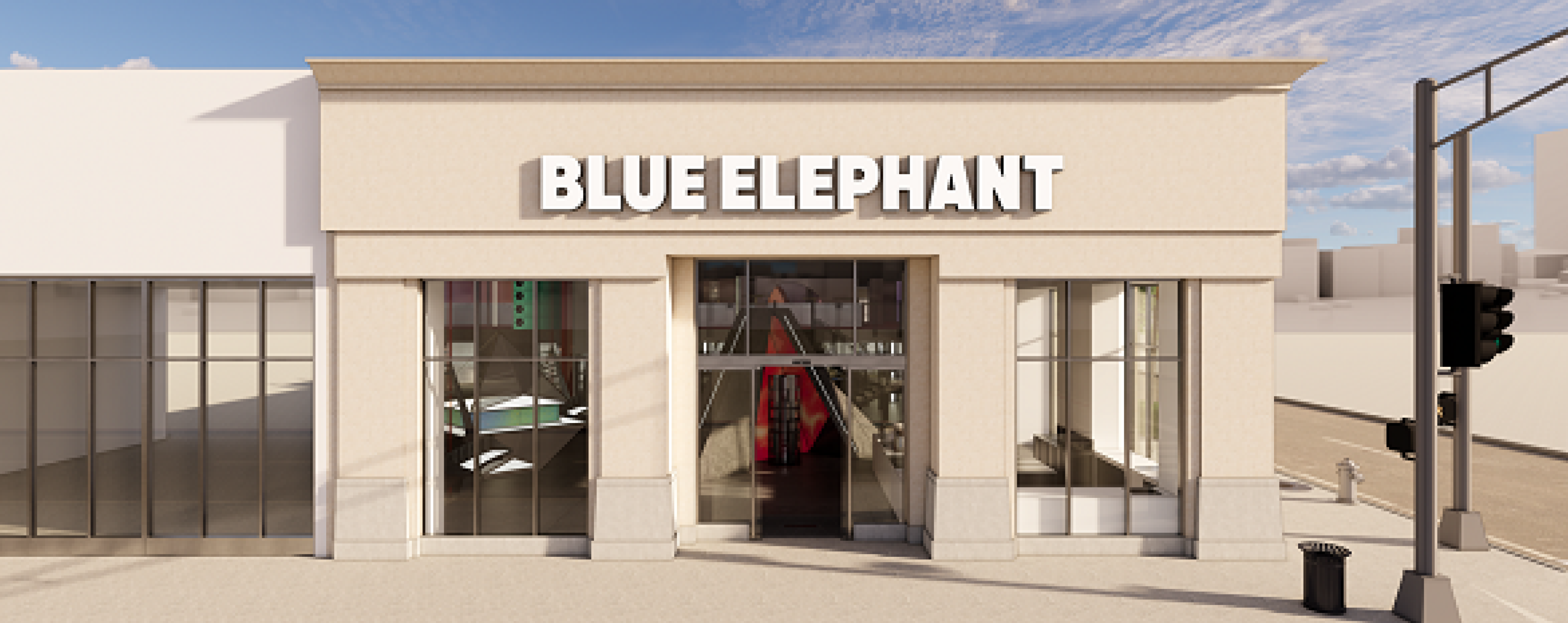
Proving overwhelming corporate value by establishing a presence in the global retail center of Beverly Hills through meticulous structural design and strategic negotiations
Outbound, What’s Next?
Q. If you have a message for brands considering overseas expansion in the future, what would it be?
[The Value of Global Standard]
Retail business is now at a point where it must be evaluated not just in the narrow market of Korea but on the global stage. Overseas expansion is the most certain momentum to change a brand’s stature and vertically elevate corporate value. However, this also requires thorough preparation and an approach that meets ‘global standards’.
Instead of heading blindly into unknown territory, brands should engage in a game that reduces risks and increases probabilities by partnering with someone who has a proven playbook. The strength that Korean brands have shown in Seongsu-dong is sufficient. CBRE will work alongside brands until the day the energy is translated into the global business language and fills the high streets of major cities around the world with our brands.
Opening the door to the narrowed domestic market is no longer a choice but a mandatory strategy for survival. However, overseas markets beyond the home ground are a harsh stage of ‘credit’ that cannot be navigated with mere ‘passion’. What is the success formula of ‘outbound’ that maximizes corporate value beyond simply opening stores? We look into the insights of CBRE retail team leader Lee Kang-wook on building a sophisticated roadmap to connect the confidence gained in the global testbed known as Seongsu-dong with actual business outcomes.
Seongsu-dong, a Forward Base for Global Expansion
Q. Recently, the proportion of foreign tourists visiting Seongsu-dong has exploded. How is this phenomenon related to brands' overseas expansions (Outbound)?
[From Local Hotspot to Global Testbed]
Seongsu-dong has now become a miniature version of the global market, surpassing simply being a hot place. In the past, Korean visitors were the majority, but over the last 1 to 2 years, the proportion of foreigners has changed dramatically to nearly 80–90%. Interestingly, the purpose of foreign visitors to Seongsu-dong is distinctly different from that of Myeongdong. While Myeongdong is the 'last consumption stop' for purchasing souvenirs or cosmetics in bulk before departing, Seongsu-dong is a 'experience'-centred destination where visitors rush in to enjoy the culture as soon as they arrive in Korea.
From the brand's perspective, this presents a tremendous opportunity. Analyzing the consumer data collected in stores reveals the nationality, age, and preferred product categories of consumers very transparently. Data such as "Oh? So many Americans are buying our products?" and "We are getting positive responses from the Japanese?" can be gathered from a single store in Seongsu-dong. In a situation where the domestic market is stagnant, Seongsu-dong serves as the most reliable data centre to gauge success prospects in overseas markets and as a forward base that provides confidence for global expansion.
The Vitality of Seongsu-dong, Unfazed by Seasons: A Dense Flow of People Unstoppable Even by January’s Cold Snap
Who Are You (Brand)?
Q. Many brands dream of foreign expansion, but it is not easy to reach an actual contract. What is the biggest barrier our brands face in the global market?
[Credit over Cash]
The biggest difficulty faced by Korean brands knocking on the doors of overseas, especially American or European high streets, is that the market's grammar is different. In Korea, it is sometimes possible to operate under the logic of "If we raise the rent, we can get in," but the major global markets generally have a different approach.
Foreign landlords treat lease contracts not merely as rental space but as financial products. They secure financing or reinvest using the long-term 10-year contracts signed with tenants as collateral. Therefore, what matters most to them is not the high rent at the moment but proving ‘creditworthiness’ that this brand can consistently pay rent for ten years without going bankrupt.
No matter how much a large enterprise makes in sales in Korea, if it lacks a local entity and credit history, it may appear as a high-risk startup to them. Even if we offer to pay more rent when competing with global companies like Gap or Zara, landlords choose stable global companies for this reason. This is not a matter of brand capability but rather a barrier coming from structural differences. To overcome this, thorough localization strategies and credit reinforcement are essential.
The Tenant's Creditworthiness Ensures the Long-term Stability of Assets Over Short-term Rental Income
Building a ‘New Company’ Locally
Q. So, how should brands lacking creditworthiness and local foundations overcome this barrier? What role does the CBRE retail team play?
Opening a store in a global site should be approached as the concept of establishing a new brand.
[Not Just an Opening, But a New Company Creation]
Outbound expansion is not merely about opening a store; it should be viewed as the process of ‘establishing a new company’ on another's territory. All systems, including logistics, personnel, legal, and construction, must be built from zero, and the risk is certainly too high for individual brands to manage alone.
The CBRE retail team can be seen as a partner that accompanies this complex process from A to Z. First, we provide financial solutions. In cases where local credit is insufficient to secure deposits or issue letters of credit (LC), we provide advisory on financial structures and work through the process with them. Second, we offer integrated project management (PJM). Overseas, permits and construction are generally much slower and more complicated than in Korea. Our in-house PJM team closely manages the entire process from design approval to construction supervision to secure the opening schedule. Lastly, there's the CBRE guarantee. The fact that ‘CBRE is assisting this brand’s expansion’ acts as a strong signal of trust to global landlords.
Blue Elephant Enters Beverly Hills
Q. I am curious about the recent exciting case of 'Blue Elephant's' entry into the United States. What specific process led to this successful contract?
[A Strategic Victory in Beverly Hills]
The Blue Elephant Beverly Hills flagship project started in early last year and completed the contract in July, making it a rapid and successful case. However, the process was intense. In the U.S., core conditions must be confirmed through several revisions (Redline) from the letter of intent (LOI) stage, and the professional negotiation skills of CBRE shone through during this process.
The biggest obstacle was indeed ‘credit’. Unlike in Korea, obtaining a payment guarantee (LC) from overseas banks was nearly impossible. We set 20 months’ worth of rent as cash collateral, structured a financial framework linked to the Korean headquarters, and secured an LC from a local bank. We also coordinated the timing of corporate establishment to maximize the rent-free period to defend against potential losses during the stringent permitting period.
As a result, Blue Elephant has gained corporate value (Valuation) allowing them to proudly tell global investors that “We are the brand that has planted its flag in Beverly Hills.”
Proving overwhelming corporate value by establishing a presence in the global retail center of Beverly Hills through meticulous structural design and strategic negotiations
Outbound, What’s Next?
Q. If you have a message for brands considering overseas expansion in the future, what would it be?
[The Value of Global Standard]
Retail business is now at a point where it must be evaluated not just in the narrow market of Korea but on the global stage. Overseas expansion is the most certain momentum to change a brand’s stature and vertically elevate corporate value. However, this also requires thorough preparation and an approach that meets ‘global standards’.
Instead of heading blindly into unknown territory, brands should engage in a game that reduces risks and increases probabilities by partnering with someone who has a proven playbook. The strength that Korean brands have shown in Seongsu-dong is sufficient. CBRE will work alongside brands until the day the energy is translated into the global business language and fills the high streets of major cities around the world with our brands.
More in
More in
market
market
market
Apr 2, 2026
From Supporting Role to Lead: Office Retail
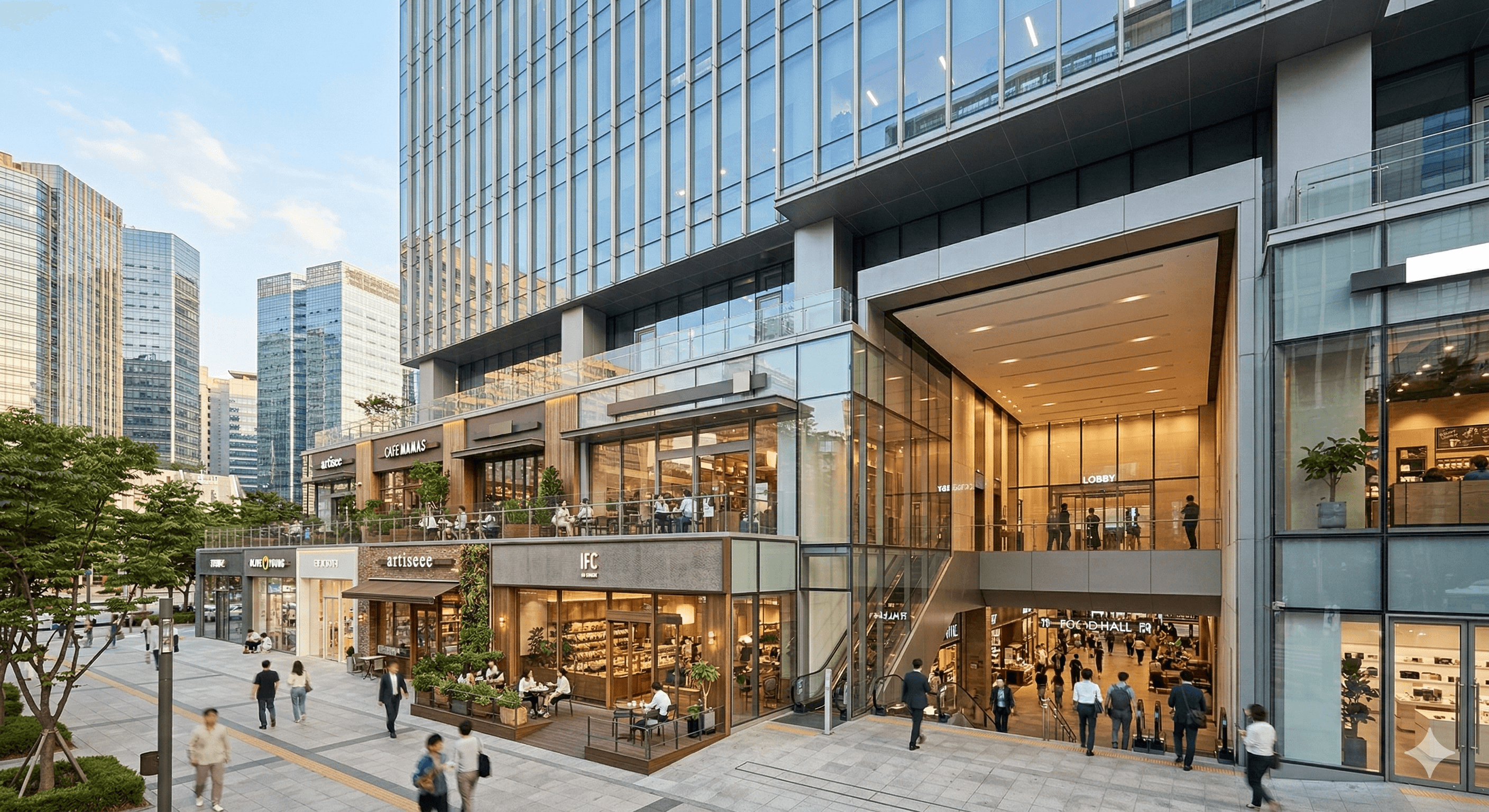
From basement canteen to asset value driver — fifteen years of structural change in Seoul's office building retail, from Centre One to Olive Young N Seongsu.
market
Mar 4, 2026
Why Gut Instinct Kills Your Flagship Store
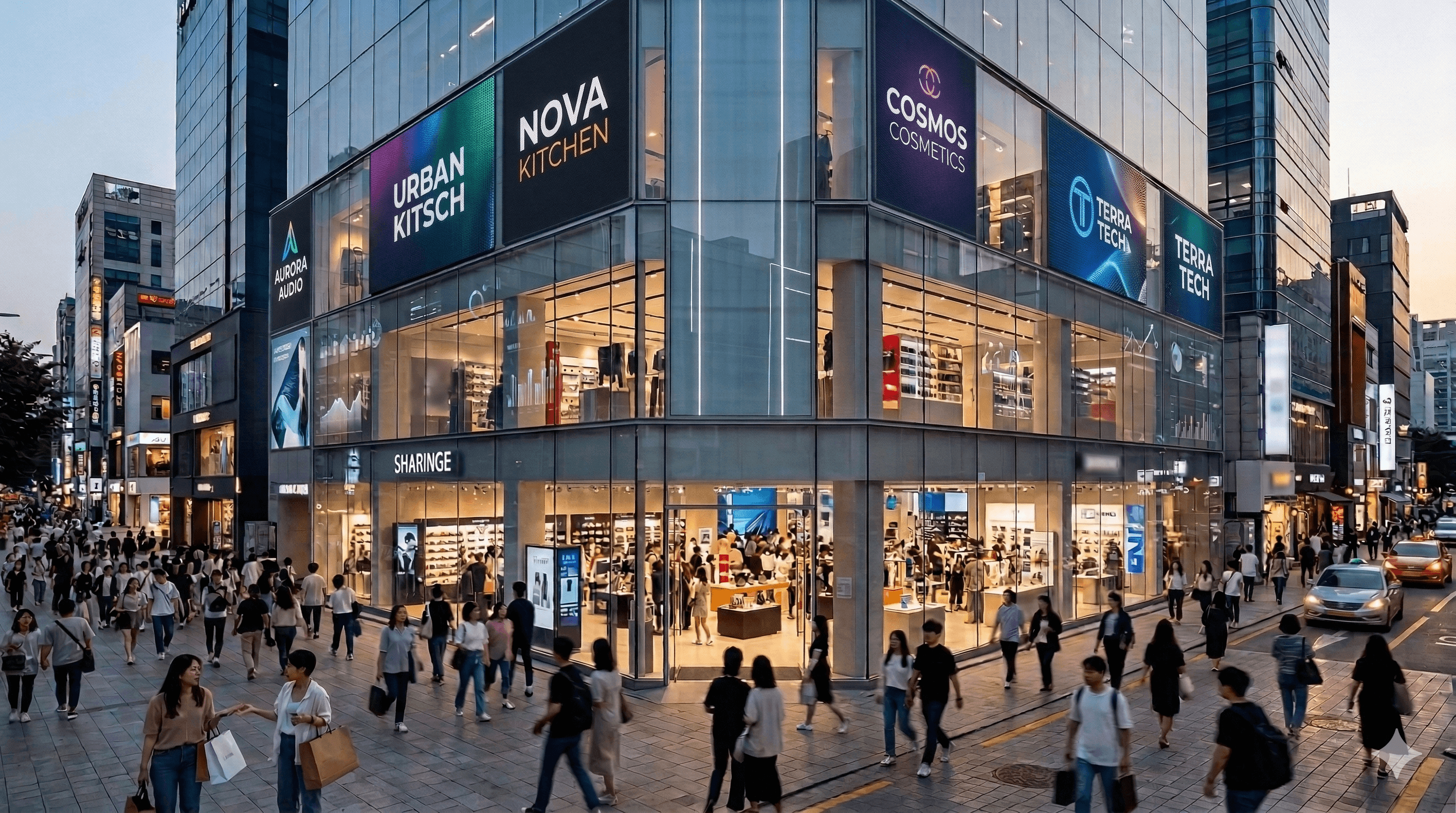
Thirty-one retail real estate practitioners rank what actually determines flagship store performance.
Get the best of 'detail'
in your inbox, every month
Once a month, no spam
Get the best of 'detail'
in your inbox, every month
Once a month, no spam
Get the best of 'detail'
in your inbox, every month
Once a month, no spam