Back
Copy
Share
Like
street
Hannam-dong, Seoul's private club. ②
Hannam-dong, Seoul's private club. ②
Hannam-dong, Seoul's private club. ②
The vacancy rate for first-floor spaces in Hannam-dong is effectively 0%. The market’s key indicator is now not rent, but key money (lease premium). It has been completely reshaped into a highly competitive, brand-selective market where "who moves in" matters more than "how much they can pay."
The vacancy rate for first-floor spaces in Hannam-dong is effectively 0%. The market’s key indicator is now not rent, but key money (lease premium). It has been completely reshaped into a highly competitive, brand-selective market where "who moves in" matters more than "how much they can pay."
The vacancy rate for first-floor spaces in Hannam-dong is effectively 0%. The market’s key indicator is now not rent, but key money (lease premium). It has been completely reshaped into a highly competitive, brand-selective market where "who moves in" matters more than "how much they can pay."
Article Highlights
The 'Shift in Occupancy Rights' Driven by a 0% Vacancy Rate: As a state of excess demand—where supply cannot keep up with demand at all—has become entrenched, Hannam-dong has been reorganized into a specialized, replacement-driven market where newcomers must buy out existing tenants’ positions to enter.
Beyond Cost: Key Money as a Strategic Ticket of Entry: Here, key money is not simply the recovery of fit-out costs; it functions as a 'premium claim' for preempting scarce locations and as 'capital expenditure (CAPEX)' that proves the brand power needed to absorb high entry costs.
Transformation into a Hub for Brand Worldviews: Through 'selective evolution'—in which simple F&B units are replaced by global contemporary and high-sensitivity K-brands—Hannam-dong has risen beyond a food-and-drink alley to the pinnacle of a retail ecosystem where brand status and prestige are ultimately validated.
Hannam Series
Part 2: The Price of a Ticket Called Hannam
③ There are no vacancies, only turnover.
④ Key money cases on main roads and back alleys, and competition to preempt locations
⑤ Qualitative changes in foot traffic and redefinition of categories
⑥ Eat, see, and wear.
③ There are no vacancies, only turnover.
The keyword currently cutting through Hannam-dong’s leasing market is not “vacancy.” More precisely, rather than vacancy, it is “movement of occupancy rights (Turnover).” The ground-floor vacancy rate in the main zones now referred to as Hannam-dong’s retail district is effectively converging toward 0%. This is a phenomenon seen only in global high-end retail districts such as Omotesando or Ginza’s main streets in Japan, indicating that a state of “excess demand”—where supply cannot keep up with demand at all—has become entrenched.
This supply-demand imbalance has shifted the center of market indicators from rent to “key money.” Whereas key money in the past was largely about recovering facility investment between self-employed tenants, key money in Hannam-dong today is closer to a “premium claim” for preempting locations. The fact that key money formation has become common not only on main boulevards but also for small back-street units proves that Hannam-dong has already moved beyond a simple rental market into a competitive retail asset market.

Key money no longer remains merely a means for existing tenants to recover their investment. In the actual market, it functions as both a competitive cost for securing a specific location and an indicator of the strategic position a brand seeks within the trade area. In particular, brands planning global flagship stores clearly tend to recognize key money not as a sunk cost, but as “capital expenditure (CAPEX)” for entering high-end commercial districts.
Location preemption cost (Location Premium): A competitive cost willingly paid to occupy a specific address.
Brand Qualification: Proof of having the capital strength and brand power to afford high key money.
Reduction of time cost: Opportunity cost to eliminate the uncertainty of waiting for vacancies and immediately enjoy spillover effects from the district.
④ On-site key money case examples on main roads and back alleys
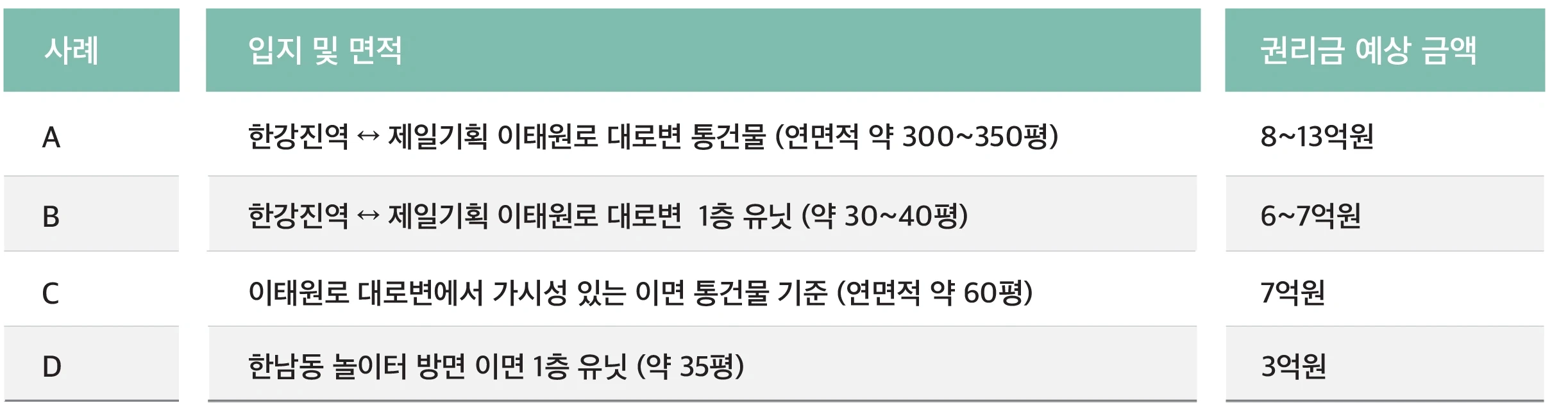
For some listings in strategic strongholds, the key money amount itself is a core competitive factor determining whether brand entry is possible. A transaction structure similar to an auction, in the form of pre-bidding, can also arise between landlords and prospective tenants. This shows that key money, beyond being a simple cost, is functioning as the most direct market signal for securing location.
In fact, in major Hannam-dong commercial districts, cases of paying and demanding key money continue to be observed regardless of whether on main roads or back streets, simultaneously reflecting listing scarcity and intensified competition among brands. The very fact that key money is formed means market expectations for the district have risen, while also showing that Hannam-dong is changing from a “rent-centered market” to a “brand-competition-centered market.” In Hannam-dong, key money is no longer just a simple sunk cost; it functions as a strategic investment to preempt scarce locations and as an entry ticket proving a brand’s caliber. In particular, Hannam-dong has recently been evolving beyond a simple F&B-centered consumption area into a massive platform where purpose-driven, high-involvement consumers and foreign tourists mix. This qualitative change in foot traffic signals a fundamental reset of tenant composition and leads to the next discussion on how Hannam-dong is redefining Seoul’s retail map.
Expert's Insight
“As you can see from the key money case status in Hannam-dong presented above, Hannam-dong today is a trade area where, more than ‘how much can you pay,’ ‘who comes in’ matters more, and the formation and expansion of key money can be said to be the most direct market signal of this structural change. In Hannam-dong, key money currently plays a role as a kind of admission fee. For example, when a certain overseas contemporary brand recently entered a back alley, the key money it paid to the existing tenant was effectively a premium on the location’s ‘scarcity’. A 0% ground-floor vacancy rate in Hannam-dong means there’s no space even if you have money. The reason brands offer key money first to secure a spot is that the moment they plant their flag in Hannam-dong, Hannam-dong’s scarcity gives the brand tangible marketing effects.”
⑤ Qualitative changes in foot traffic and redefinition of categories
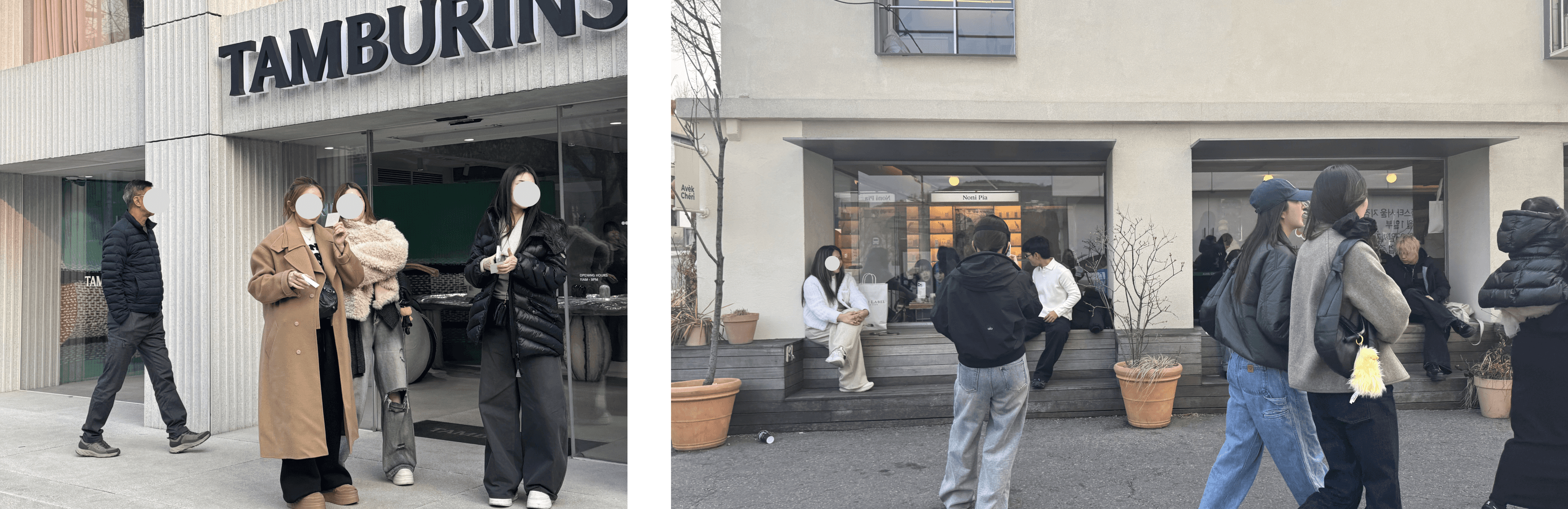
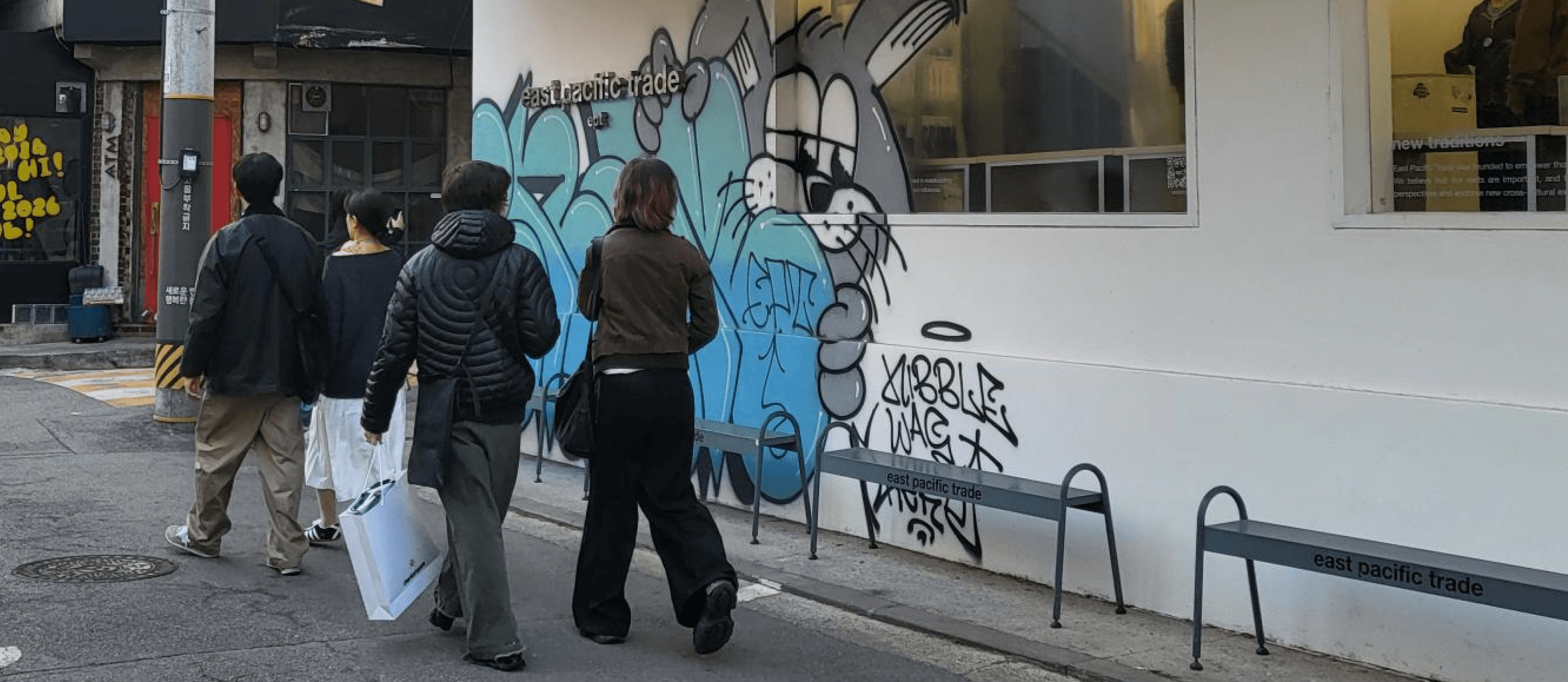
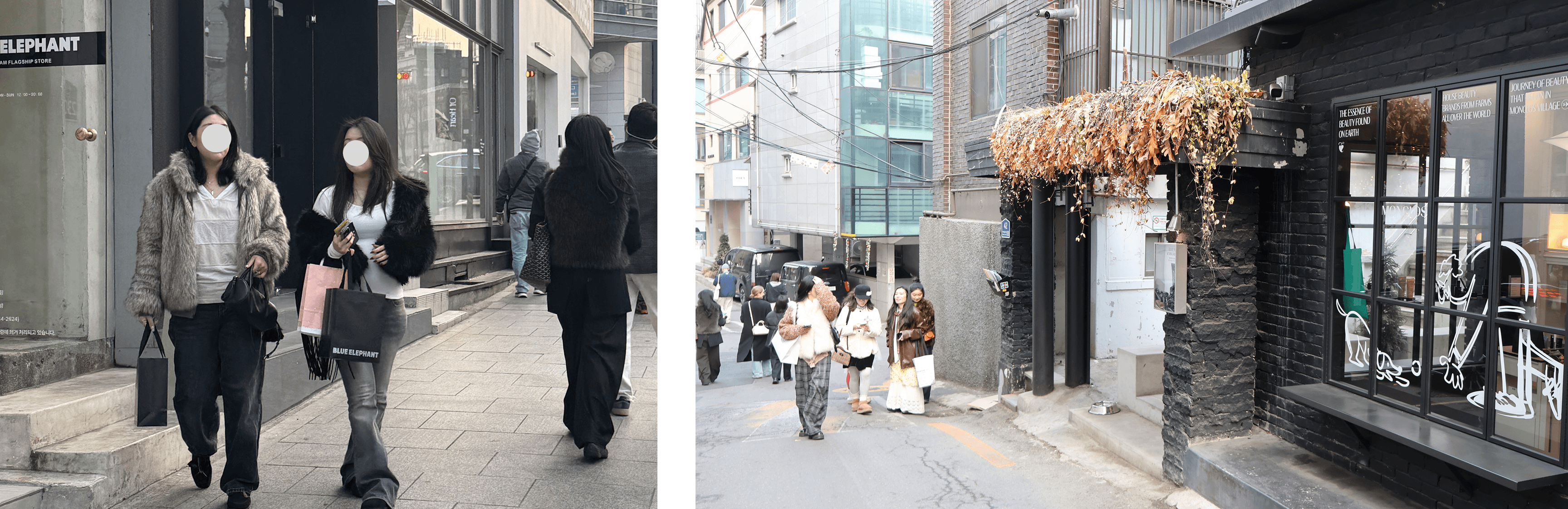
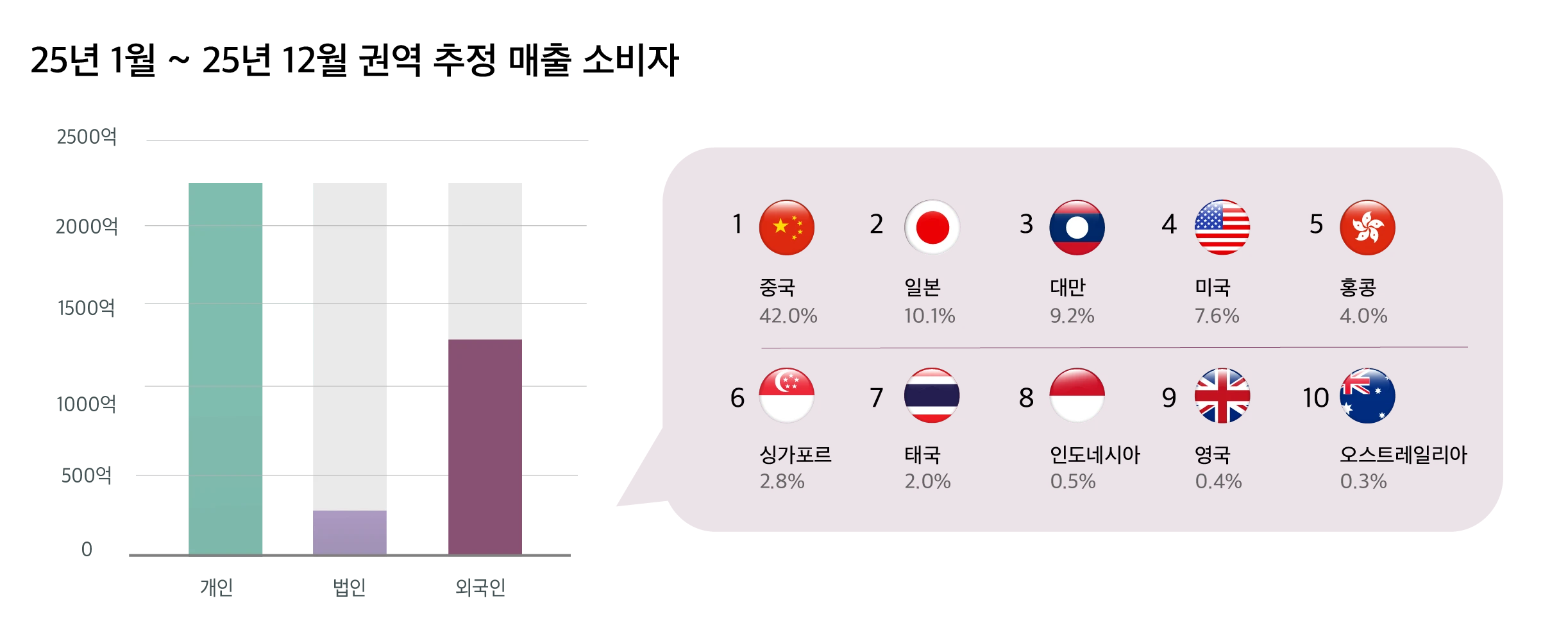
The key factor explaining Hannam-dong is the qualitative change in floating population. While simple pass-through traffic has decreased, visit-and-stay traffic with specific purposes has clearly increased. A consumption path has taken root in which people link flagship stores with cafes, exhibitions, and select shops. In particular, the daytime weekday foreign visitor share comes not for Myeong-dong-style shopping, but to experience K-fashion and Seoul’s distinctive lifestyle—that is, ‘local hipness.’ Domestic visitors are mainly a high-sensitivity consumer group in their 20s to 40s, consuming Hannam-dong as the ‘next stage after Seongsu.’ Although Chinese tourists make up an overwhelming share of foreigners visiting areas near Hannam-dong, visits by Japanese and Southeast Asian tourists, as well as independent travelers from Europe and the Americas, are also steadily increasing.
⑥ Eat, see, and wear.
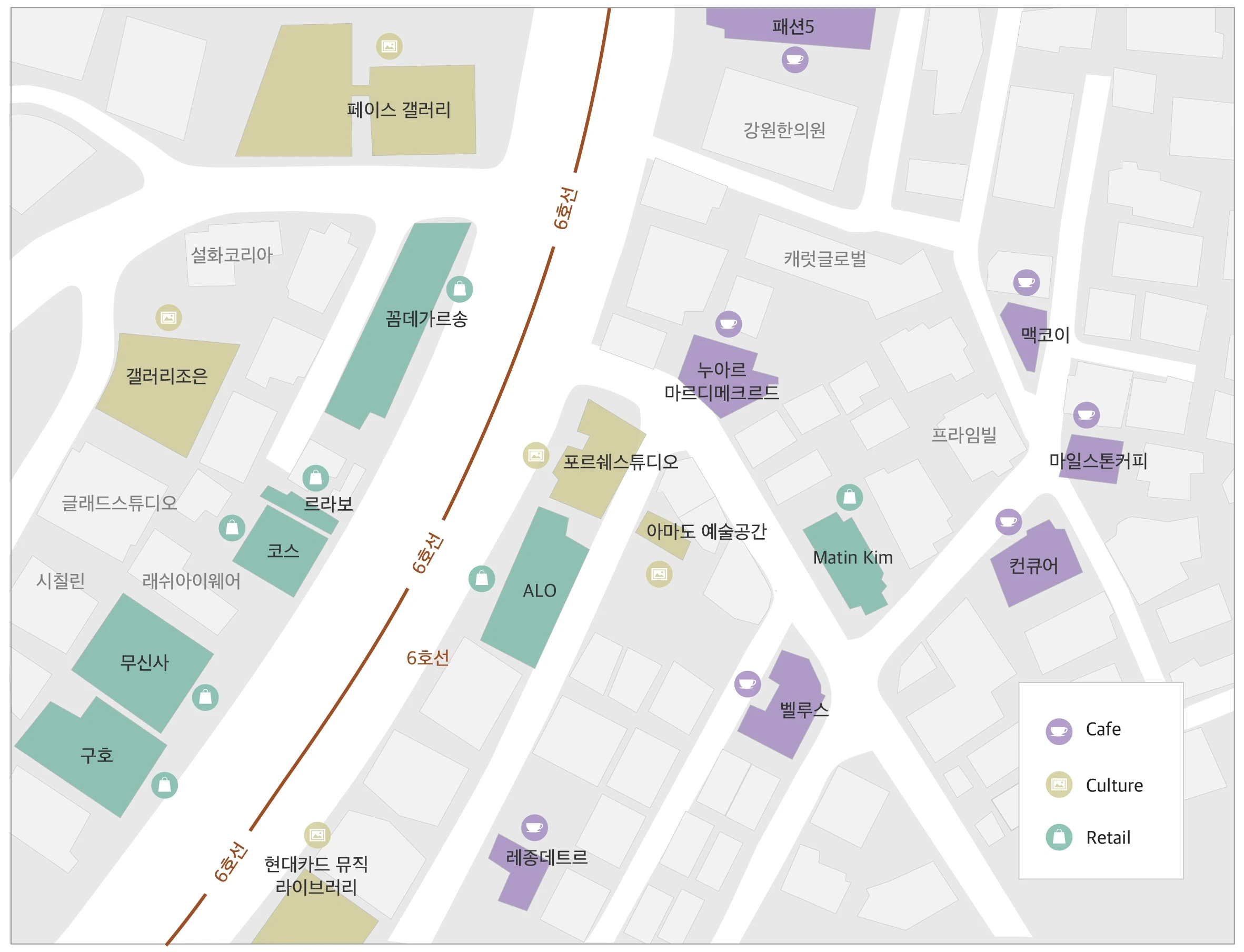
Domestic visitors are fashion- and lifestyle-savvy consumers in their 20s to 40s, showing a pattern of consuming Hannam-dong as the “next stage after Seongsu,” while foreign visitors come to experience K-fashion and K-lifestyle, consuming purchasing, photos, and experiences all at once. Hannam-dong’s real strength, as seen on the map, is that the domains of eating, seeing, and wearing are tightly interwoven.
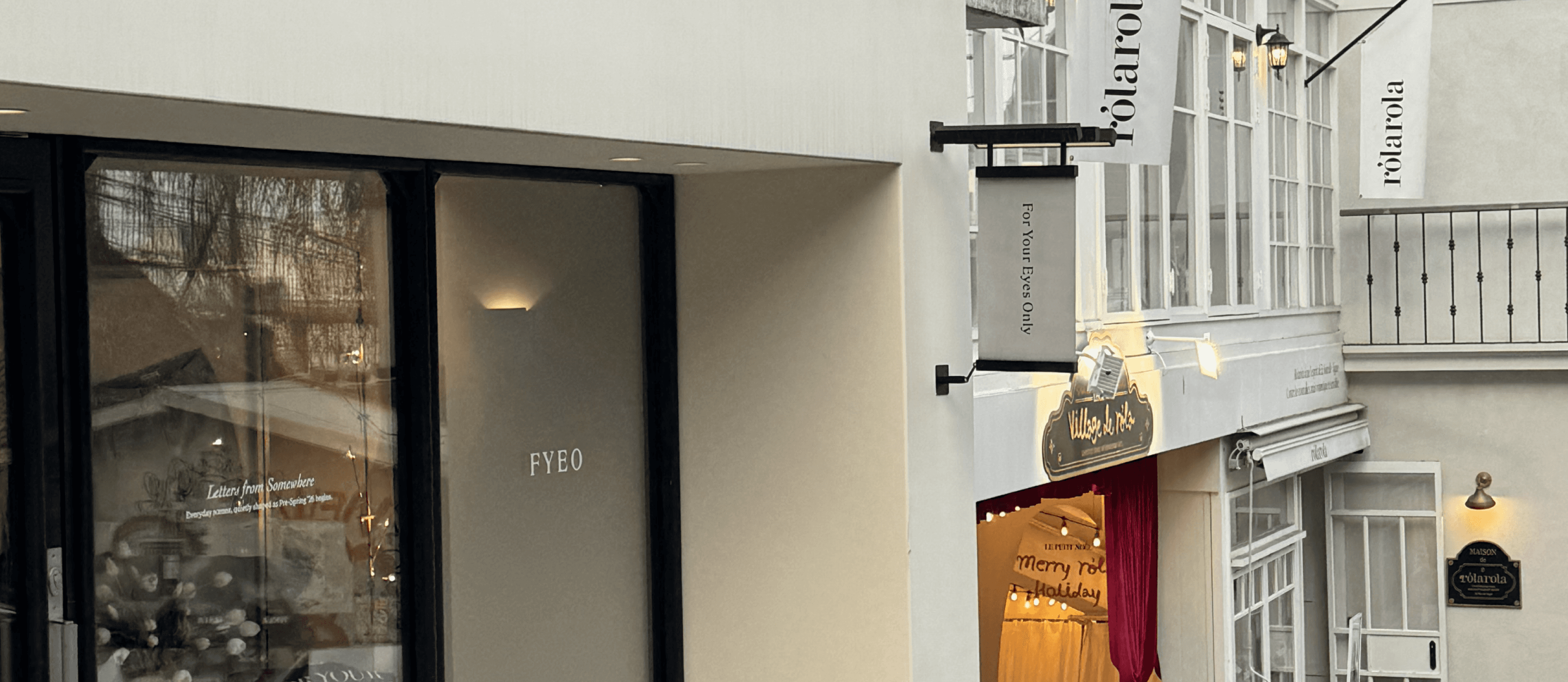
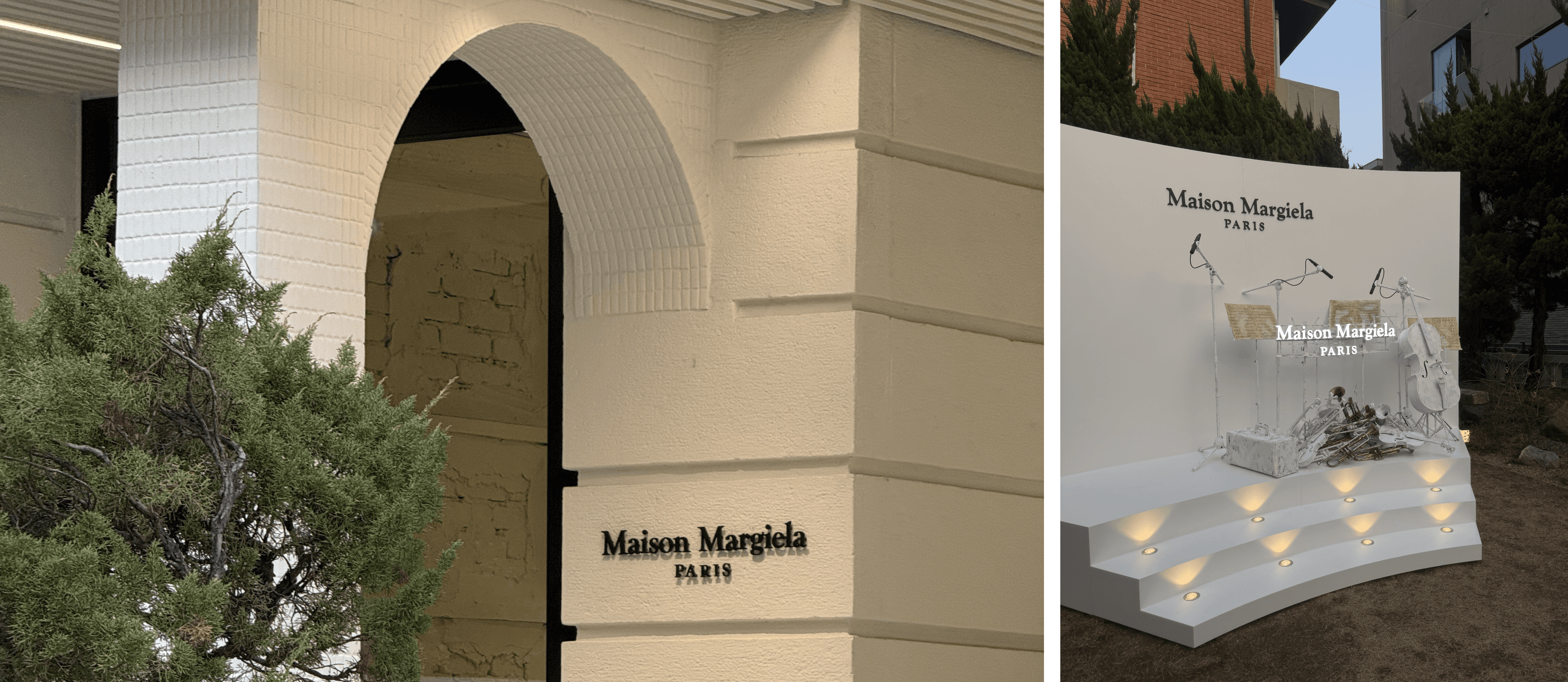
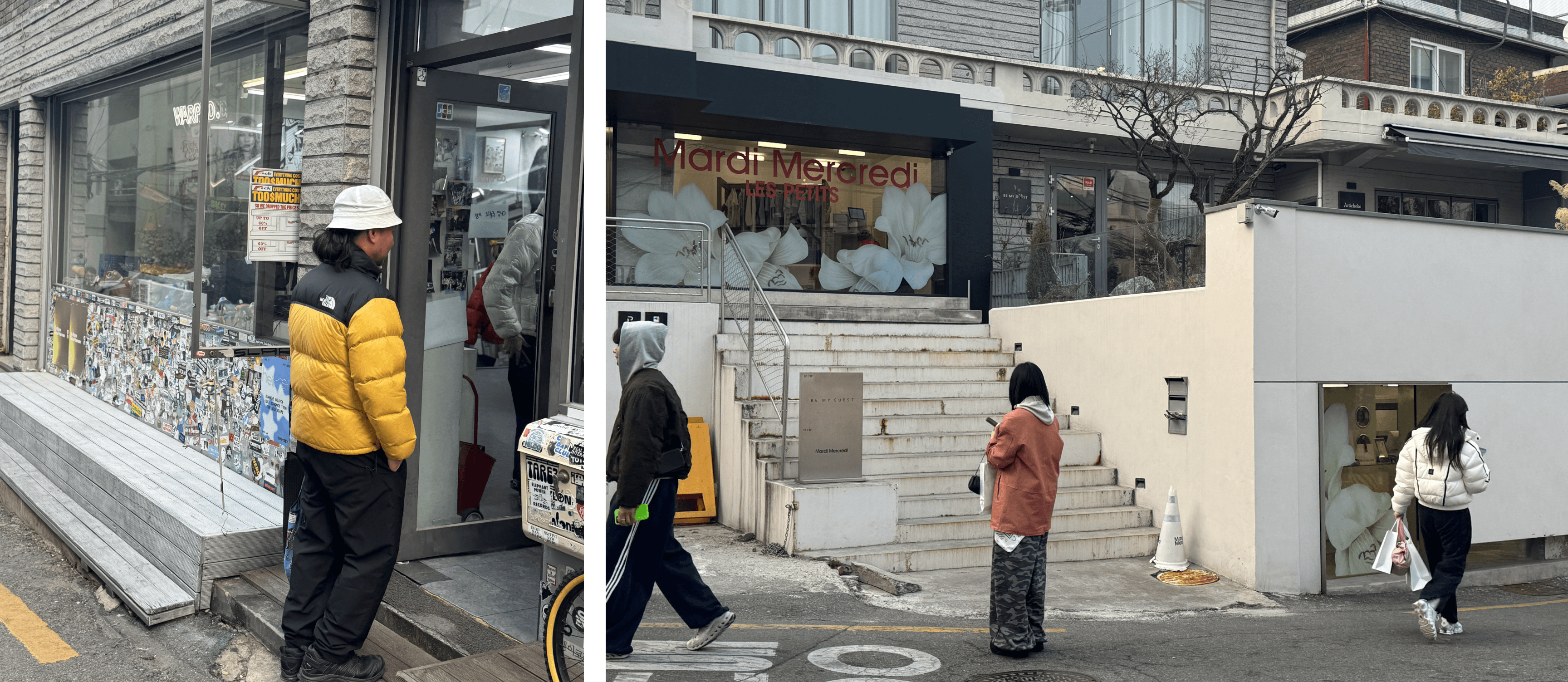
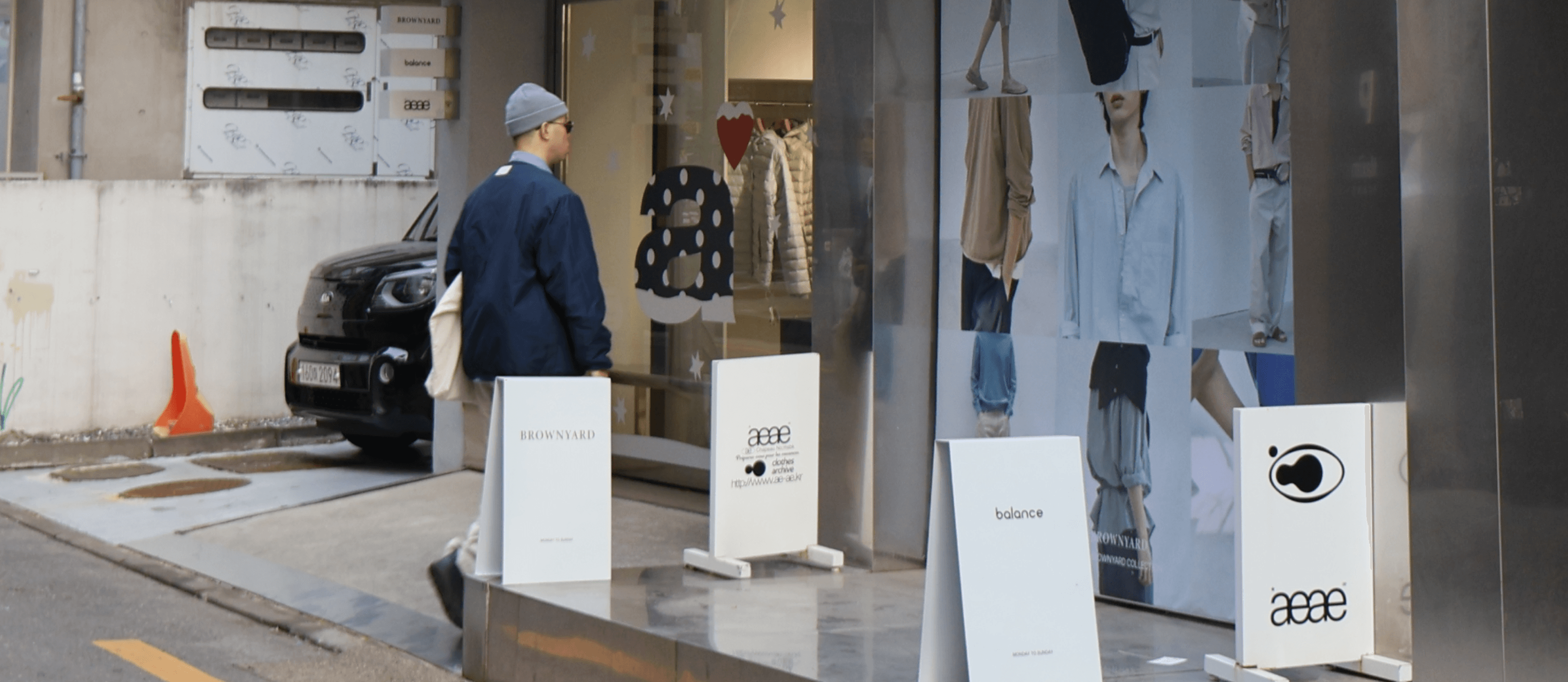
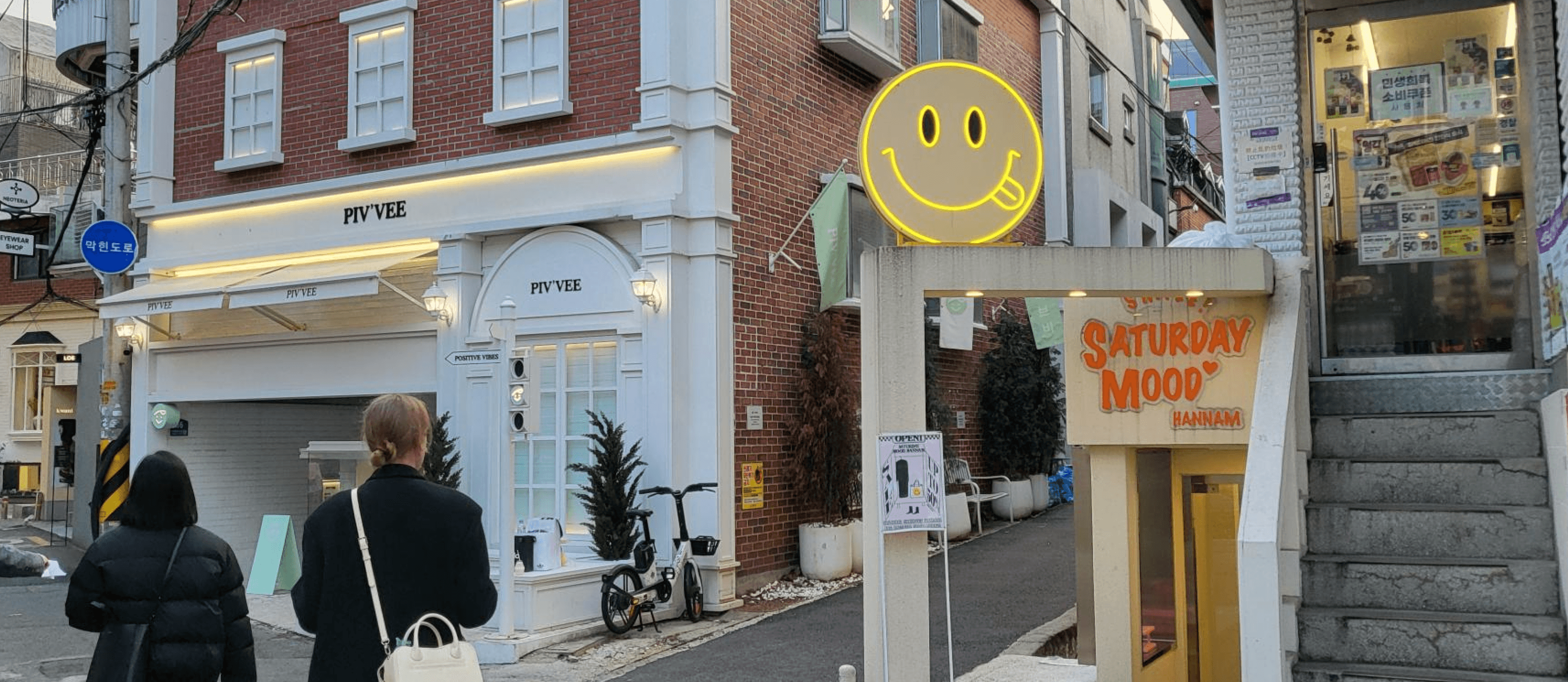
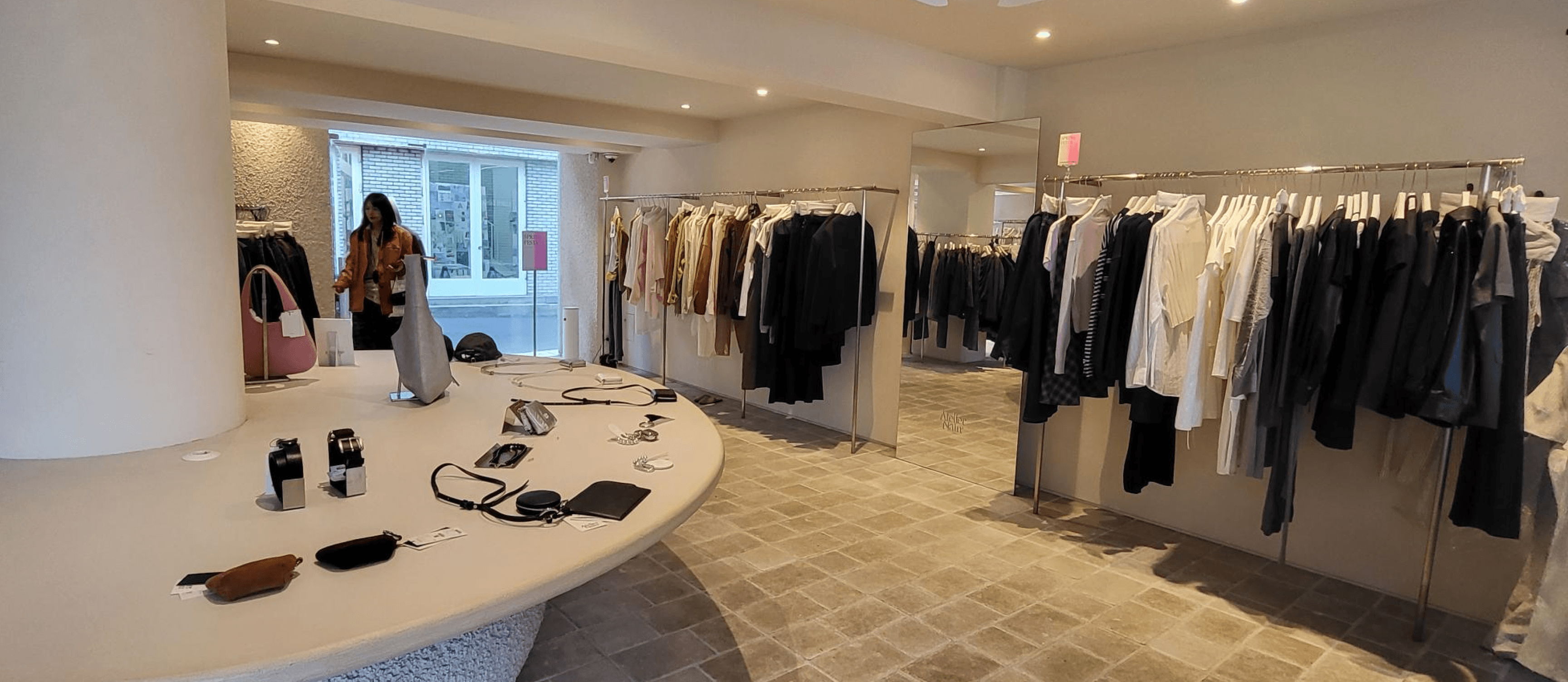
The direction of Hannam-dong shown by In & Out brands
Recently, tenant turnover (In & Out) in Hannam-dong does not simply mean the end and start of lease contracts; it means a reset of the commercial district. The common traits of incoming brands are clear. They prioritize spatial experience over sales and brand message over product. In particular, the replacement of existing F&B units with global fashion and hybrid lifestyle brands shows that Hannam-dong has upgraded from a “food-and-drink alley” to a “hub of brand worldviews.”
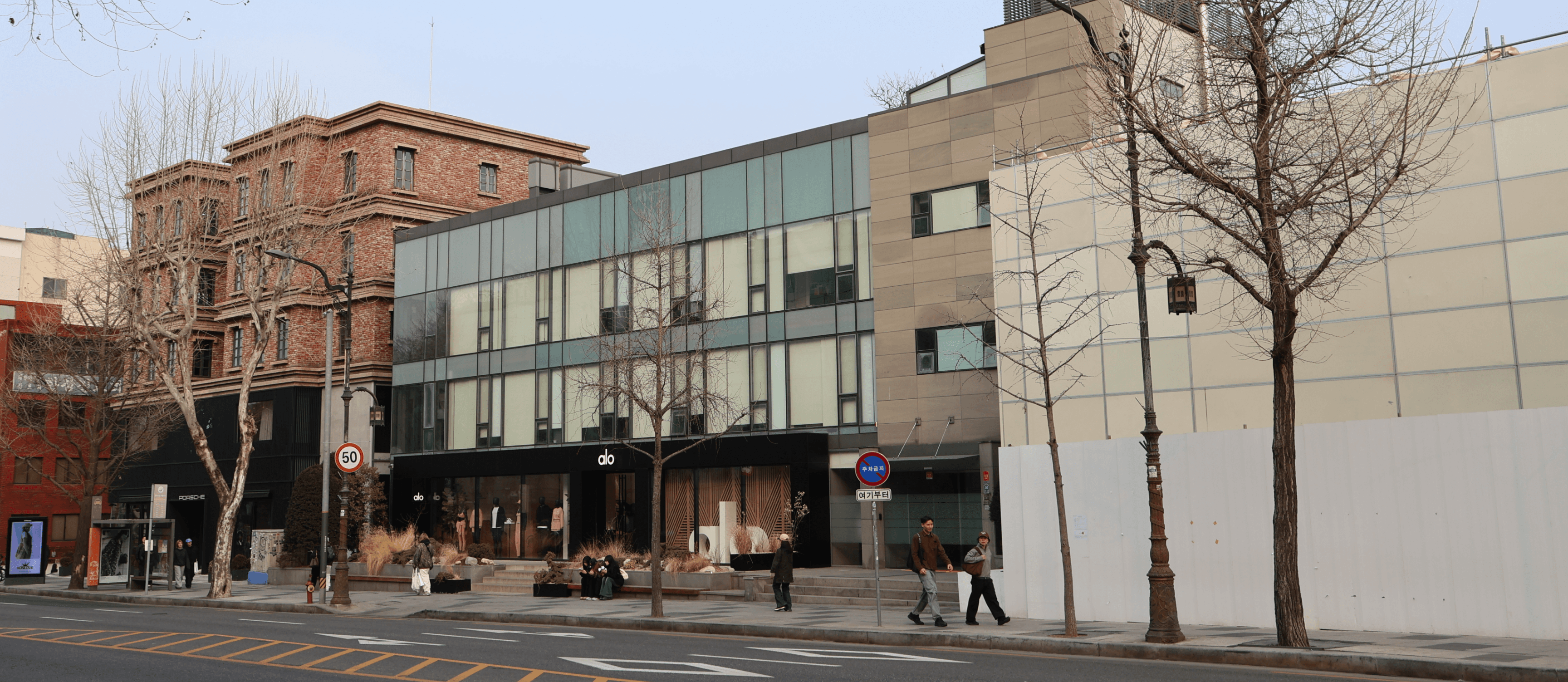
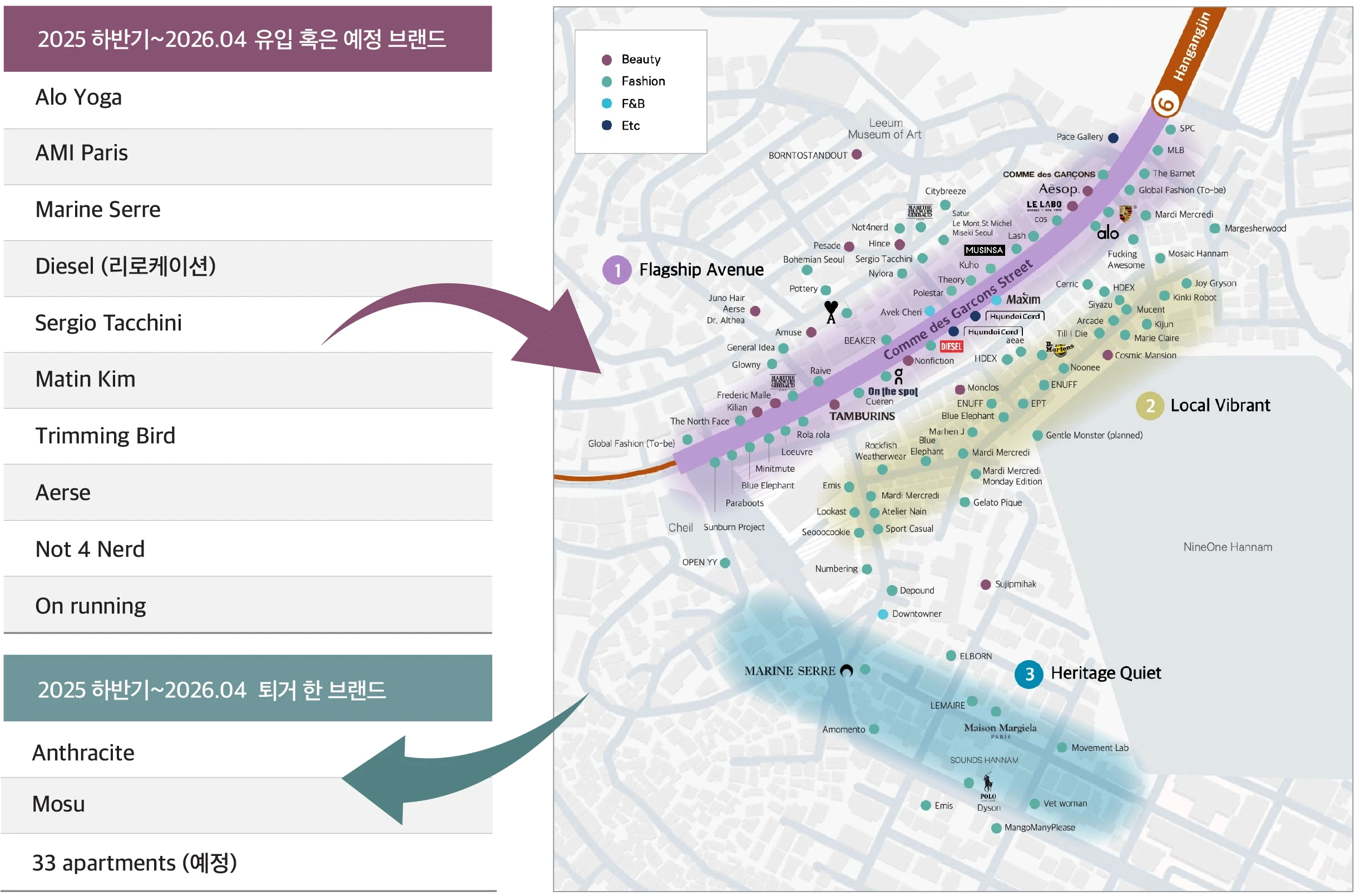
In (Incoming): Alo Yoga, AMI Paris, Marine Serre, Diesel (relocation), Sergio Tacchini, Matin Kim, Trimming Bird, Aerse, Not 4 Nerd, On running, etc. Global contemporary and rising local brands are mixing to increase the district’s density.
Out (Exiting): Anthracite, Mosu, Kasina, 33 apartments (planned), etc. The departure of some symbolic brands is not a decline of the district, but closer to selective evolution occurring in the process of being replaced by brands with greater capital power and clearer concepts.
The meaning of Hannam-dong: Where Seoul’s sensibility receives final approval
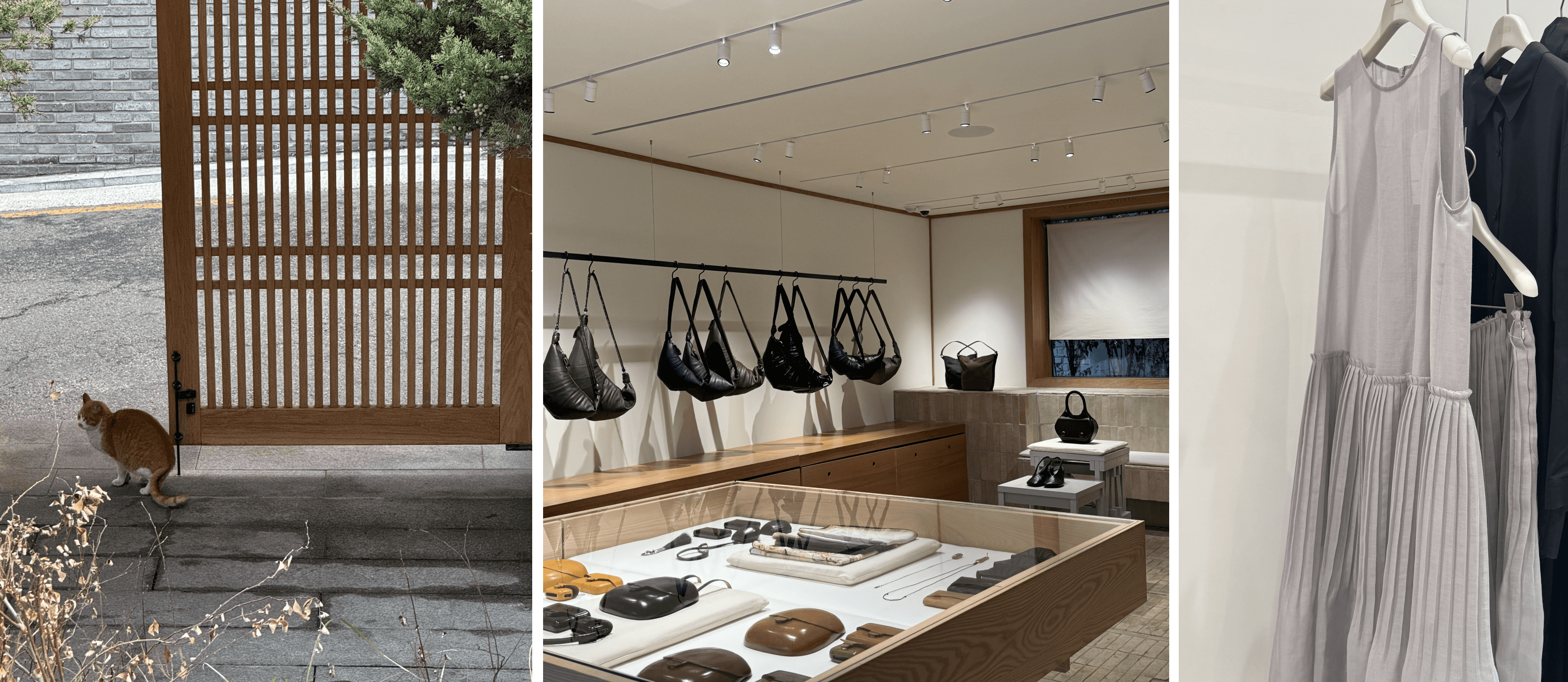
Even the scene at the lease negotiation table is changing. In the past, the key questions were how much could be sold and whether a tenant had the stamina to pay monthly rent, but Hannam-dong is different now. How powerful the brand is, how clear the concept is, and whether there is visible potential for global expansion are the real criteria that move landlords.
The category mix is also becoming more advanced. If it used to be just clothing stores and cafes, now it has evolved into a complex ecosystem mixing global contemporary fashion, art, cultural content, beauty, and lifestyle experimental stores. For domestic brands, it is a proving ground to stand shoulder-to-shoulder with global giants and prove their caliber; for overseas brands, it is a powerful first impression cast into the Asian market.
In this flow, Hannam-dong does not bother comparing itself with Seongsu or Myeong-dong. Rather than competing with them, it simply holds its own place as a stage marking the peak of Seoul’s retail ecosystem. Hannam-dong’s unique mood—exotic yet refined in a deeply Korean way—will remain an unparalleled cluster where high-end brands want to plant their flag first.
Hannam-dong is a unique zone where global trends and local sentiment are filtered with the greatest density. As we enter an era where opening in the district itself becomes a brand insignia, the battle among global fashion and lifestyle brands to enter is expected to become even fiercer.
Hannam Series
Part 2: The Price of a Ticket Called Hannam
③ There are no vacancies, only turnover.
④ Key money cases on main roads and back alleys, and competition to preempt locations
⑤ Qualitative changes in foot traffic and redefinition of categories
⑥ Eat, see, and wear.
③ There are no vacancies, only turnover.
The keyword currently cutting through Hannam-dong’s leasing market is not “vacancy.” More precisely, rather than vacancy, it is “movement of occupancy rights (Turnover).” The ground-floor vacancy rate in the main zones now referred to as Hannam-dong’s retail district is effectively converging toward 0%. This is a phenomenon seen only in global high-end retail districts such as Omotesando or Ginza’s main streets in Japan, indicating that a state of “excess demand”—where supply cannot keep up with demand at all—has become entrenched.
This supply-demand imbalance has shifted the center of market indicators from rent to “key money.” Whereas key money in the past was largely about recovering facility investment between self-employed tenants, key money in Hannam-dong today is closer to a “premium claim” for preempting locations. The fact that key money formation has become common not only on main boulevards but also for small back-street units proves that Hannam-dong has already moved beyond a simple rental market into a competitive retail asset market.
Key money no longer remains merely a means for existing tenants to recover their investment. In the actual market, it functions as both a competitive cost for securing a specific location and an indicator of the strategic position a brand seeks within the trade area. In particular, brands planning global flagship stores clearly tend to recognize key money not as a sunk cost, but as “capital expenditure (CAPEX)” for entering high-end commercial districts.
Location preemption cost (Location Premium): A competitive cost willingly paid to occupy a specific address.
Brand Qualification: Proof of having the capital strength and brand power to afford high key money.
Reduction of time cost: Opportunity cost to eliminate the uncertainty of waiting for vacancies and immediately enjoy spillover effects from the district.
④ On-site key money case examples on main roads and back alleys
For some listings in strategic strongholds, the key money amount itself is a core competitive factor determining whether brand entry is possible. A transaction structure similar to an auction, in the form of pre-bidding, can also arise between landlords and prospective tenants. This shows that key money, beyond being a simple cost, is functioning as the most direct market signal for securing location.
In fact, in major Hannam-dong commercial districts, cases of paying and demanding key money continue to be observed regardless of whether on main roads or back streets, simultaneously reflecting listing scarcity and intensified competition among brands. The very fact that key money is formed means market expectations for the district have risen, while also showing that Hannam-dong is changing from a “rent-centered market” to a “brand-competition-centered market.” In Hannam-dong, key money is no longer just a simple sunk cost; it functions as a strategic investment to preempt scarce locations and as an entry ticket proving a brand’s caliber. In particular, Hannam-dong has recently been evolving beyond a simple F&B-centered consumption area into a massive platform where purpose-driven, high-involvement consumers and foreign tourists mix. This qualitative change in foot traffic signals a fundamental reset of tenant composition and leads to the next discussion on how Hannam-dong is redefining Seoul’s retail map.
Expert's Insight
“As you can see from the key money case status in Hannam-dong presented above, Hannam-dong today is a trade area where, more than ‘how much can you pay,’ ‘who comes in’ matters more, and the formation and expansion of key money can be said to be the most direct market signal of this structural change. In Hannam-dong, key money currently plays a role as a kind of admission fee. For example, when a certain overseas contemporary brand recently entered a back alley, the key money it paid to the existing tenant was effectively a premium on the location’s ‘scarcity’. A 0% ground-floor vacancy rate in Hannam-dong means there’s no space even if you have money. The reason brands offer key money first to secure a spot is that the moment they plant their flag in Hannam-dong, Hannam-dong’s scarcity gives the brand tangible marketing effects.”
⑤ Qualitative changes in foot traffic and redefinition of categories
The key factor explaining Hannam-dong is the qualitative change in floating population. While simple pass-through traffic has decreased, visit-and-stay traffic with specific purposes has clearly increased. A consumption path has taken root in which people link flagship stores with cafes, exhibitions, and select shops. In particular, the daytime weekday foreign visitor share comes not for Myeong-dong-style shopping, but to experience K-fashion and Seoul’s distinctive lifestyle—that is, ‘local hipness.’ Domestic visitors are mainly a high-sensitivity consumer group in their 20s to 40s, consuming Hannam-dong as the ‘next stage after Seongsu.’ Although Chinese tourists make up an overwhelming share of foreigners visiting areas near Hannam-dong, visits by Japanese and Southeast Asian tourists, as well as independent travelers from Europe and the Americas, are also steadily increasing.
⑥ Eat, see, and wear.
Domestic visitors are fashion- and lifestyle-savvy consumers in their 20s to 40s, showing a pattern of consuming Hannam-dong as the “next stage after Seongsu,” while foreign visitors come to experience K-fashion and K-lifestyle, consuming purchasing, photos, and experiences all at once. Hannam-dong’s real strength, as seen on the map, is that the domains of eating, seeing, and wearing are tightly interwoven.
The direction of Hannam-dong shown by In & Out brands
Recently, tenant turnover (In & Out) in Hannam-dong does not simply mean the end and start of lease contracts; it means a reset of the commercial district. The common traits of incoming brands are clear. They prioritize spatial experience over sales and brand message over product. In particular, the replacement of existing F&B units with global fashion and hybrid lifestyle brands shows that Hannam-dong has upgraded from a “food-and-drink alley” to a “hub of brand worldviews.”
In (Incoming): Alo Yoga, AMI Paris, Marine Serre, Diesel (relocation), Sergio Tacchini, Matin Kim, Trimming Bird, Aerse, Not 4 Nerd, On running, etc. Global contemporary and rising local brands are mixing to increase the district’s density.
Out (Exiting): Anthracite, Mosu, Kasina, 33 apartments (planned), etc. The departure of some symbolic brands is not a decline of the district, but closer to selective evolution occurring in the process of being replaced by brands with greater capital power and clearer concepts.
The meaning of Hannam-dong: Where Seoul’s sensibility receives final approval
Even the scene at the lease negotiation table is changing. In the past, the key questions were how much could be sold and whether a tenant had the stamina to pay monthly rent, but Hannam-dong is different now. How powerful the brand is, how clear the concept is, and whether there is visible potential for global expansion are the real criteria that move landlords.
The category mix is also becoming more advanced. If it used to be just clothing stores and cafes, now it has evolved into a complex ecosystem mixing global contemporary fashion, art, cultural content, beauty, and lifestyle experimental stores. For domestic brands, it is a proving ground to stand shoulder-to-shoulder with global giants and prove their caliber; for overseas brands, it is a powerful first impression cast into the Asian market.
In this flow, Hannam-dong does not bother comparing itself with Seongsu or Myeong-dong. Rather than competing with them, it simply holds its own place as a stage marking the peak of Seoul’s retail ecosystem. Hannam-dong’s unique mood—exotic yet refined in a deeply Korean way—will remain an unparalleled cluster where high-end brands want to plant their flag first.
Hannam-dong is a unique zone where global trends and local sentiment are filtered with the greatest density. As we enter an era where opening in the district itself becomes a brand insignia, the battle among global fashion and lifestyle brands to enter is expected to become even fiercer.
More in
More in
street
street
street
Mar 4, 2026
Cheongdam: The Art of Elegant Detachment
A place where discomfort becomes authority, a Cheongdam-dong retail space calculated even to a ray of sunlight.
street
Mar 2, 2026
Hannam-dong, a private club in Seoul. ①
Hannam: The sophisticated sweet spot between the experimentalism of Seongsu and the luxury of Dosan, where global brands are lining up to plant their flags.
Get the best of 'detail'
in your inbox, every month
Once a month, no spam
Get the best of 'detail'
in your inbox, every month
Once a month, no spam
Get the best of 'detail'
in your inbox, every month
Once a month, no spam