Back
Copy
Share
Like
street
Same Bukchon, Different Strategy ①
Same Bukchon, Different Strategy ①
Same Bukchon, Different Strategy ①
Bukchon is not a single commercial district, but five independent micro-markets. By area, the flow of visitors, consumption patterns, and the principles behind rent formation are completely different. Anguk Station is a battleground of capital strength and speed, while Gyedong-gil is Bukchon’s most resilient food-and-beverage district, with stable foot traffic guaranteed seven days a week.
Bukchon is not a single commercial district, but five independent micro-markets. By area, the flow of visitors, consumption patterns, and the principles behind rent formation are completely different. Anguk Station is a battleground of capital strength and speed, while Gyedong-gil is Bukchon’s most resilient food-and-beverage district, with stable foot traffic guaranteed seven days a week.
Bukchon is not a single commercial district, but five independent micro-markets. By area, the flow of visitors, consumption patterns, and the principles behind rent formation are completely different. Anguk Station is a battleground of capital strength and speed, while Gyedong-gil is Bukchon’s most resilient food-and-beverage district, with stable foot traffic guaranteed seven days a week.
Article Highlights
Bukchon is now a stage for "high-end experiential consumption": Beyond a simple hanok preservation district, it has been reorganized into an experience-driven commercial area where global capital and high-sensitivity K-brands converge, requiring sophisticated entry strategies tailored to five distinct micro-markets.
Anguk Station, the prime gateway of capital and speed: As Bukchon’s entry point and the area with the strongest customer draw, the Anguk Station vicinity has transformed into a battleground of full-building flagship stores led by large corporations, becoming a strategic hub that maximizes marketing efficiency.
Gyedong-gil, an F&B hub secured by seven-day stability: With overlapping demand from offices, school districts, and tourism, Gyedong-gil—centered on mega anchor tenants such as London Bagel Museum—features a coexistence of trendy F&B and gift retail, generating stable sales based on high turnover during daytime peak hours.
Is there only a Hanok Village in Bukchon?
The hottest keywords in the retail market are 'local' and 'experience'. The Bukchon commercial area, at the pinnacle, is rapidly being transformed from a simple traditional preservation district into a venue for 'high-end experiential consumption' combining global capital and high-sensitivity K-brands. If you cannot understand the current state of Bukchon, where rental prices do not simply correlate with location but move according to the marketing scale and asset strategies of brands, your entry strategy is bound to fail. This article discards the vague term 'Bukchon' and delves into five sub-markets to present practical entry strategies.
Redefining 'Heritage' — From Scenic Appreciation to 'Experiential Consumption'
Now, if you describe Bukchon as "a neighborhood with Hanoks," it's incorrect. While maintaining the essence of heritage that is central to the commercial area, consumption patterns have shifted from simple scenic appreciation to experiences and purchases centered around scent, beauty, fashion, and F&B.
Advanced Structure of Commercial Areas: 5 Different Markets
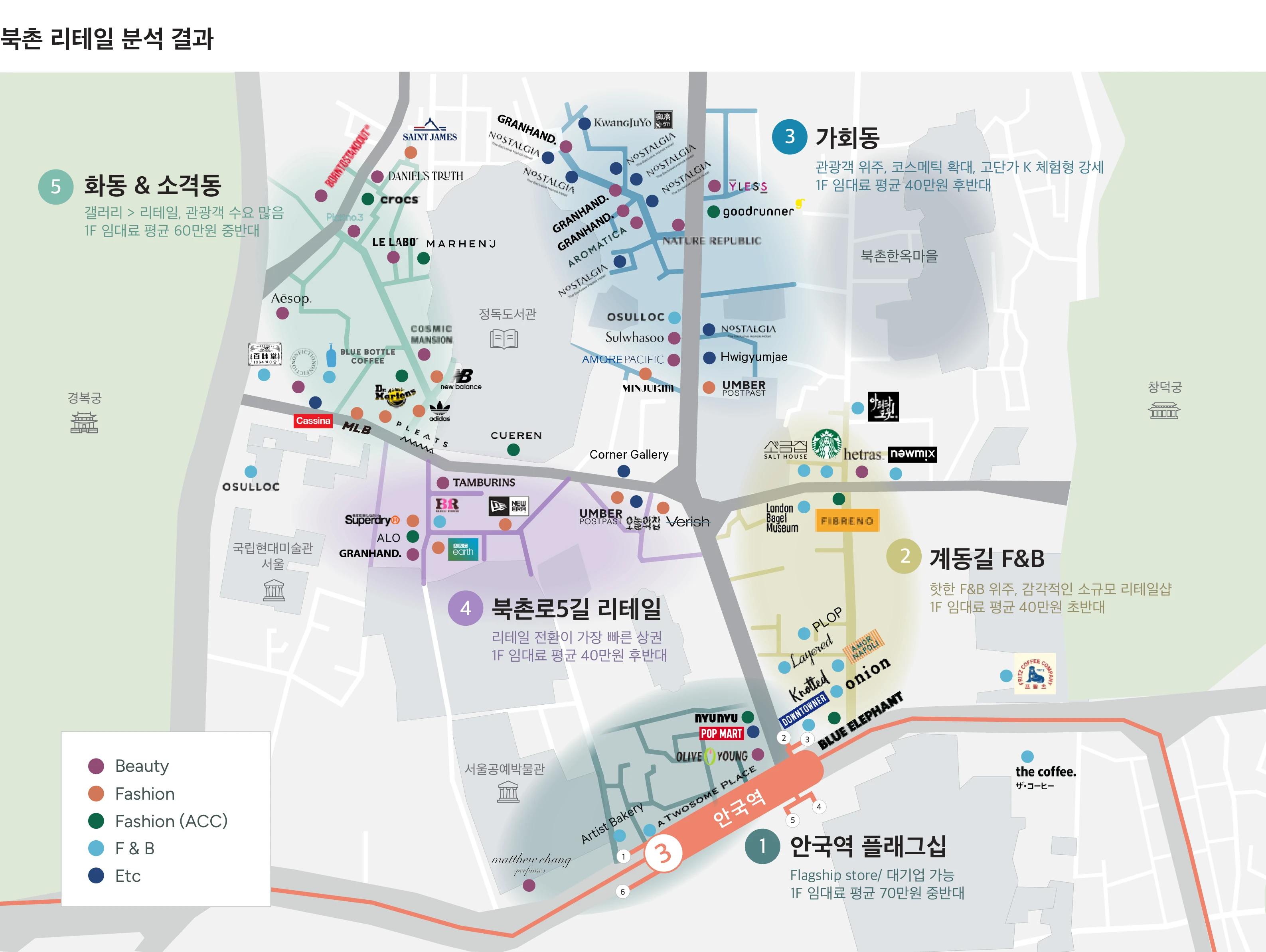
The Bukchon commercial area is being advanced as the growth of specific axes expands to surrounding alleys. Since the nature of flow, consumption styles, and rental price formation principles vary by region, Bukchon should be interpreted not as a single commercial area but as 'five independent markets'.
Key Questions in Decision-Making for Store Openings
The core of the current Bukchon opening strategy is not "Will we enter Bukchon?" but rather, "In which of the 5 micro-regions (Locality) will we define the role of the brand through which neighboring (Neighboring)?" This question will determine success or failure.
5 Micro-Regions
This series distinguishes Bukchon into five micro-regions and presents practical opening judgment criteria from the perspectives of demand, flow, and rental prices.
① Anguk Station: Corporate-type multi-story building openings, prime commercial area for entering Bukchon
② Gye-dong Street: Based on 7-day foot traffic, an F&B commercial area expanding categories
③ Gaehwa-dong: A high-end commercial area combining tourist inflow and high-value consumption
④ Bukchon-ro 5-gil: Acceleration of conversion from F&B to retail, K-brands opening battleground
⑤ Hwadong & Sogyeokdong: A retail main commercial area mixed with global and local brands
Bukchon Series
Part 1. Gateway to the Commercial Area and F&B Living Zone (① Anguk Station Flagship, ② Gye-dong Street F&B)
① Anguk Station Flagship: A prime commercial area centered on multi-story buildings and the first choice for major retailers' openings
② Gye-dong Street F&B: A place where hip F&B and gift retail coexist, based on stable traffic throughout the week
Part 2. Capitalization of Heritage and K-Retail Battleground (③ Gaehwa-dong, ④ Bukchon-ro 5-gil Retail)
③ Gaehwa-dong: The main base for premium experiences utilizing large Hanok parcels and a trend period of corporate acquisitions (capitalization)
④ Bukchon-ro 5-gil Retail: The K-brand battleground where the transition from F&B to high-sensitivity retail is happening the fastest
Part 3. Global Mainstream (⑤ Hwadong & Sogyeokdong)
⑤ Hwadong & Sogyeokdong: A retail main commercial area where global brands and local content mix, competing for brand worldview
The Bukchon commercial area has now entered a sophisticated market where the fate of a brand is determined by 'where and next to whom' they stand. Understanding the unique demands and flows of each region rather than vague expectations is a prerequisite for successful openings. Through the upcoming three-part series, we will delve deeply into Anguk Station's overwhelming foot traffic, the premium asset value of Gaehwa-dong, and the global branding strategies of Hwadong. This will provide practical insights for deriving optimal Bukchon entry strategies that align with each brand's objectives.
① Anguk Station: The 'Face' of Bukchon, A Place Where Brand Power is Tested
The area around Anguk Station is the entry point of the Bukchon commercial area, where prime commercial areas congregate with flagship multi-story buildings. It has emerged as a must-visit destination for foreign tourists and has become the number one opening location for major retailers. A quick decision speed is crucial, exceeding the rental price market rates, while large brands like Olive Young and New New have joined, further strengthening the scale and marketing power of the commercial area.
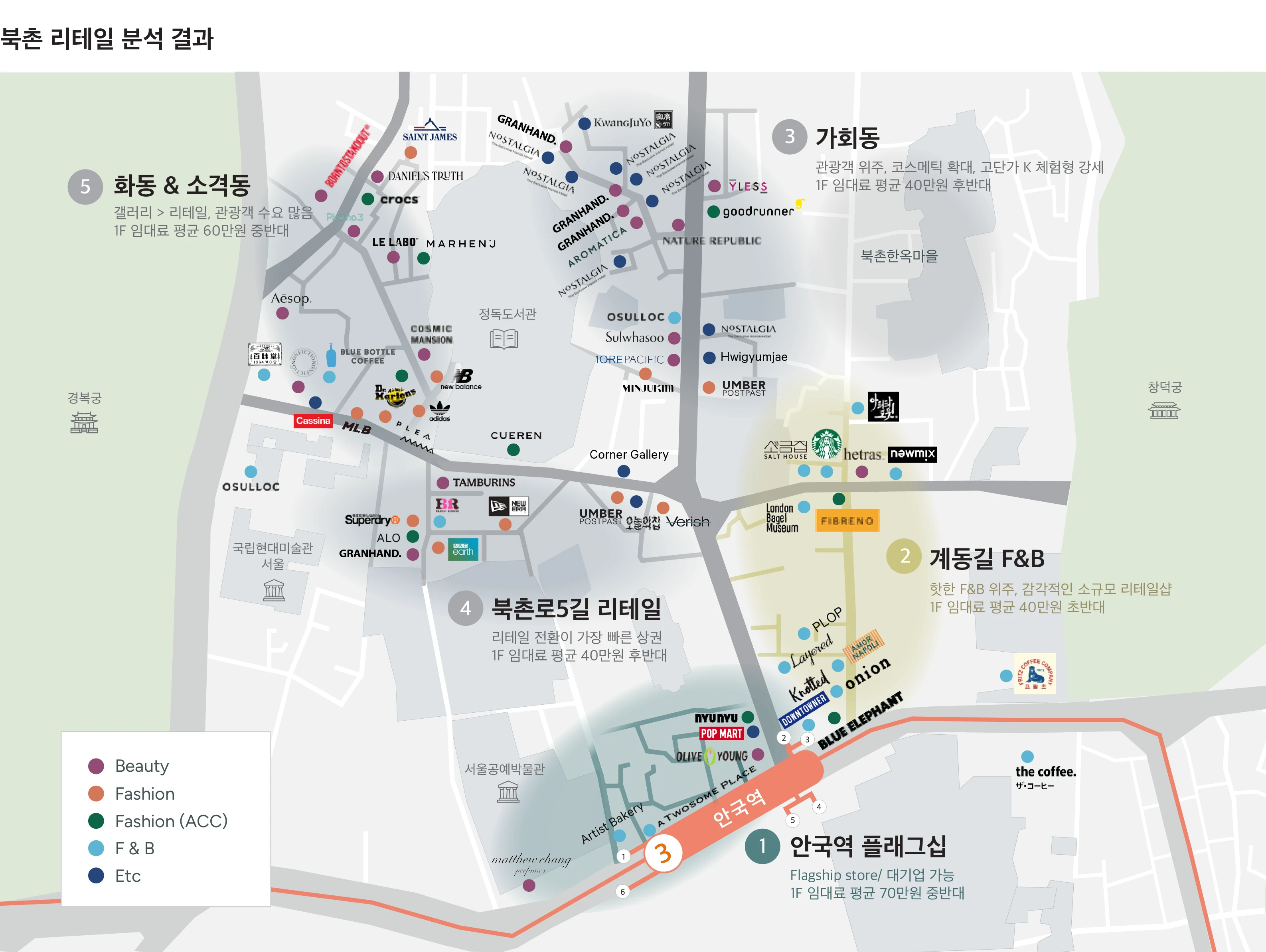
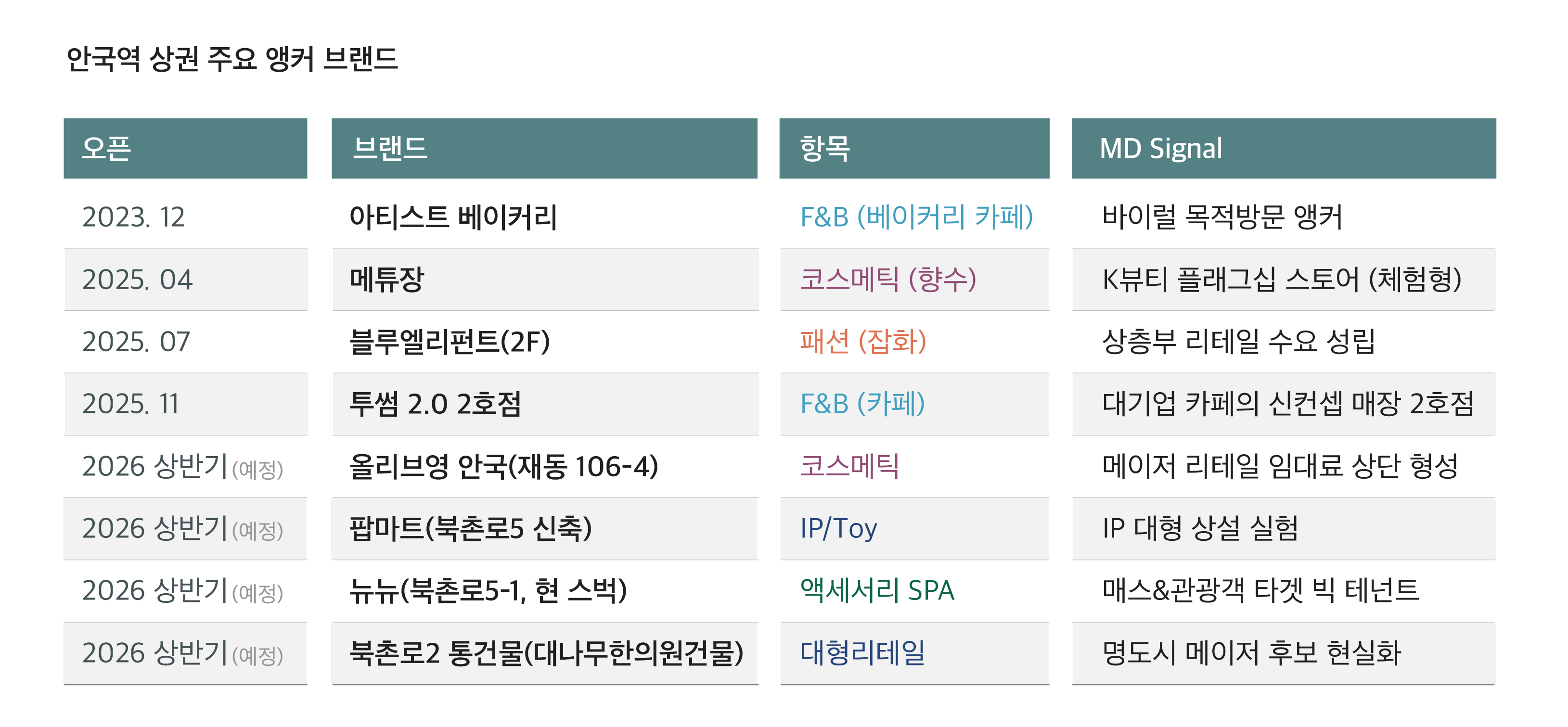

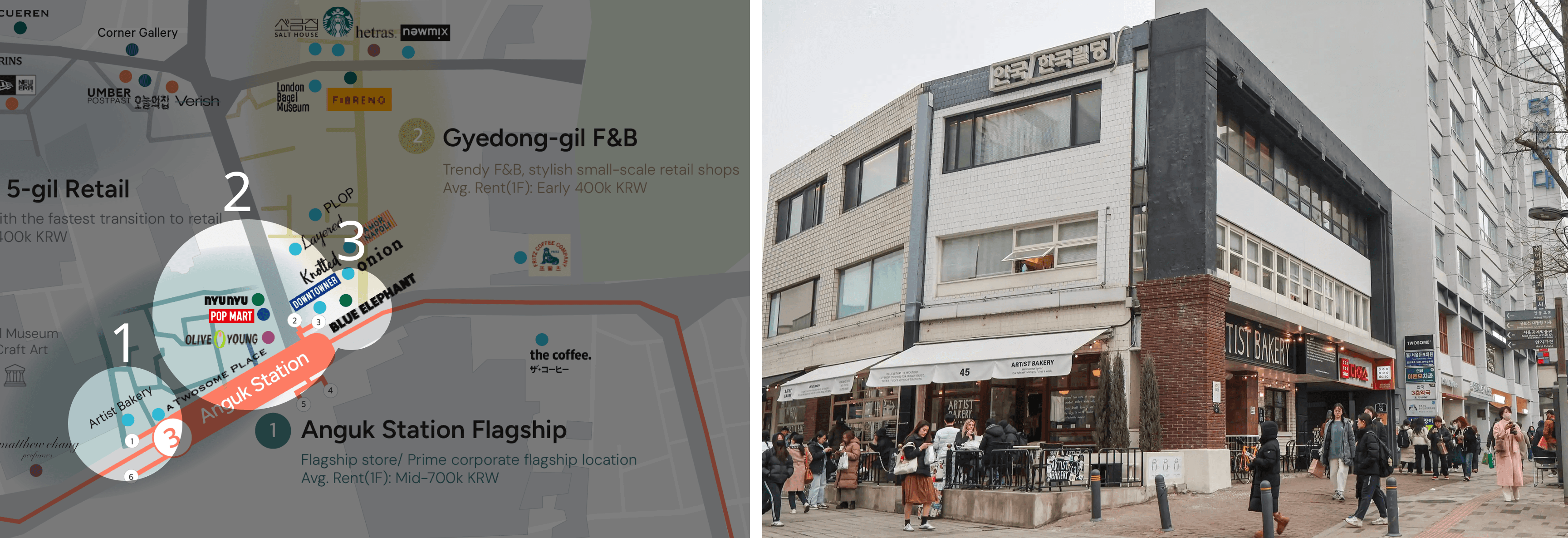
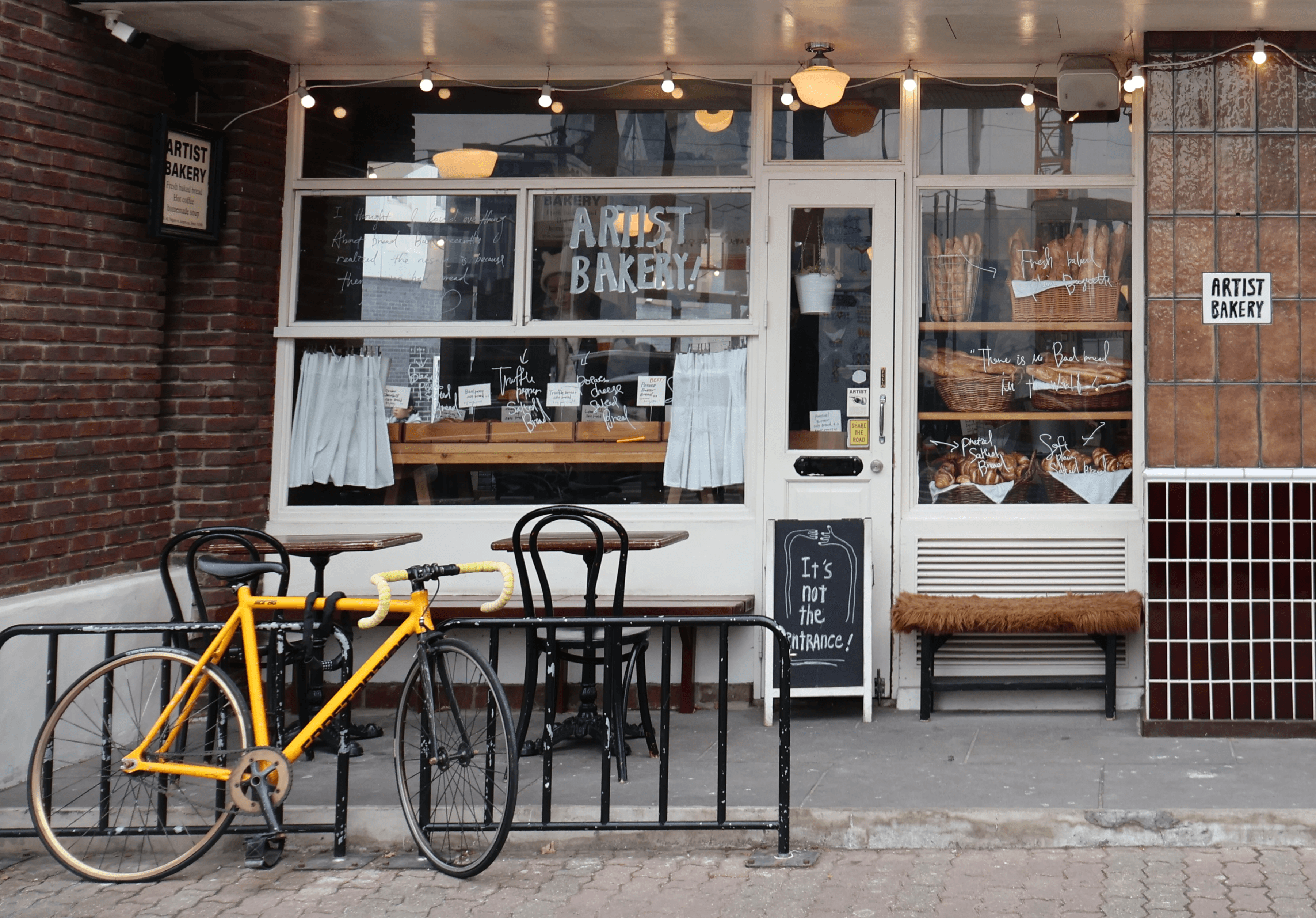
Image 1: Artist Bakery and Daiso, which can be seen immediately after coming out of Anguk Station Exit 1. To the right of Daiso is Twosome 2.0.
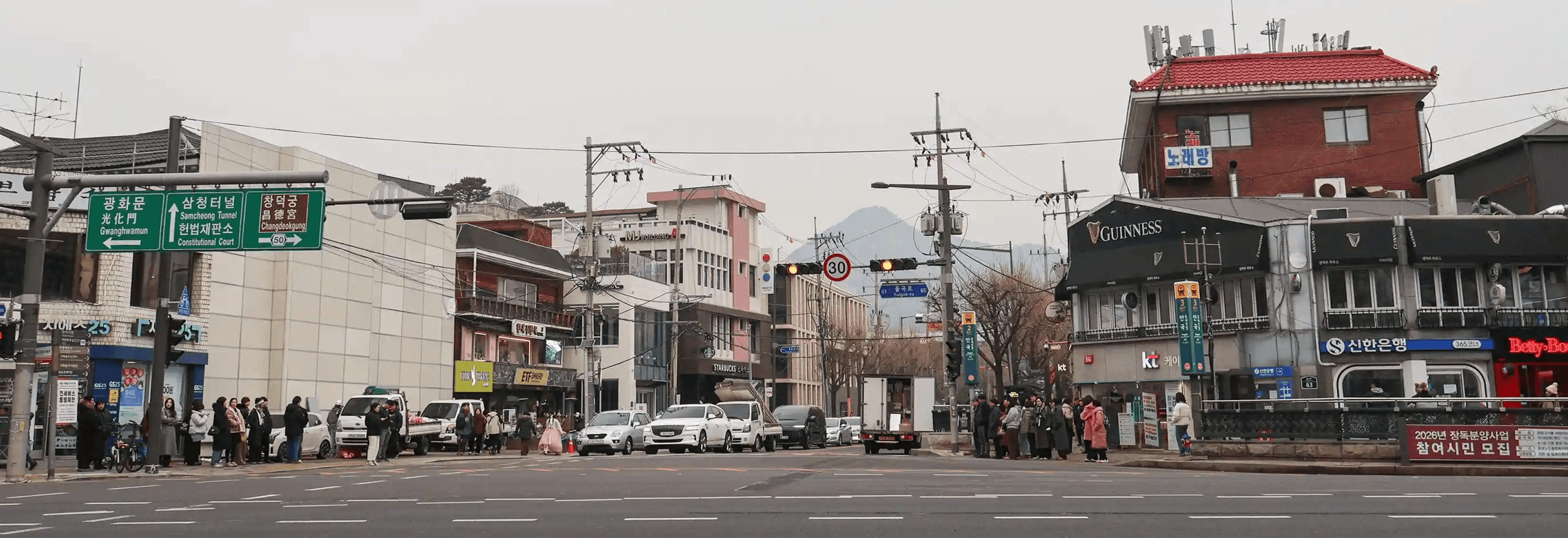
Image 2: The construction site on the left will host Olive Young, which is set to open in the first half of the year. Anguk Station has already passed the maturation stage of the commercial area, becoming a place viewed by large corporations and global brands.
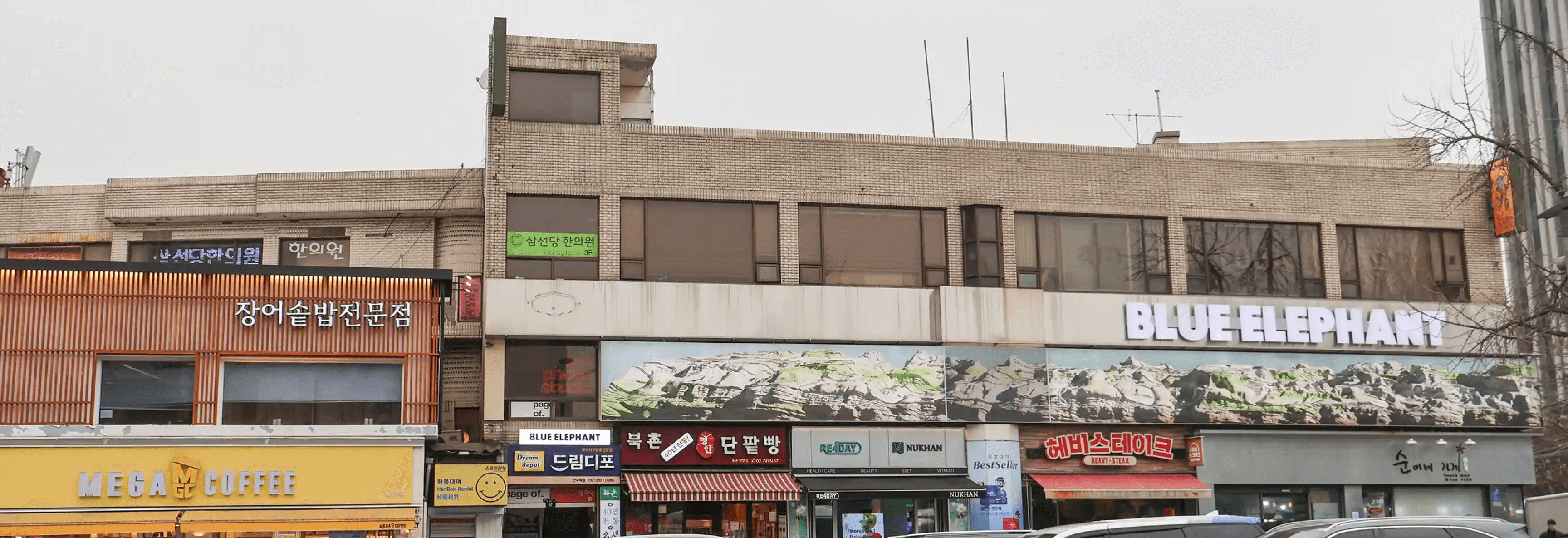
Image 3: The area near Anguk Station is now seeing industries that require large corporations' scales, such as major beauty, health, and flagship multi-story stores, rather than emotional D2C (Direct-to-Consumer) brands. Blue Elephant is also located on the second floor of the building near Anguk Station.
Expert's Insight
The area near the Hyundai Construction building at Anguk Station is a gateway that determines the first impression of Bukchon and boasts the strongest attraction power. This is the entrance to the Bukchon commercial area, where a 'war of scale and speed' is taking place. Retailers like Olive Young are gathering here, leading to overall attraction in the area, and major retailers are occupying large spaces, making it difficult to enter without sufficient capital and quick decision-making. Therefore, strong capital considering marketing efficiency rather than just sales is essential.
Decision Notes
Category | Notes | ||
Pros (Strengths) | The only all-weather hub in Bukchon, where local office demands intersect with global tourists. | ||
Cons (Weaknesses) | Each tenant must bear fixed costs of 50 million to 100 million won per month. | ||
Target (Recommended Sectors) | Large beauty and health stores, global IP/character permanent stores, lifestyle/SPA, etc. Prime Retail. | ||
② Gye-dong Street: The Most Stable Alley with Strong 7-Day Flow
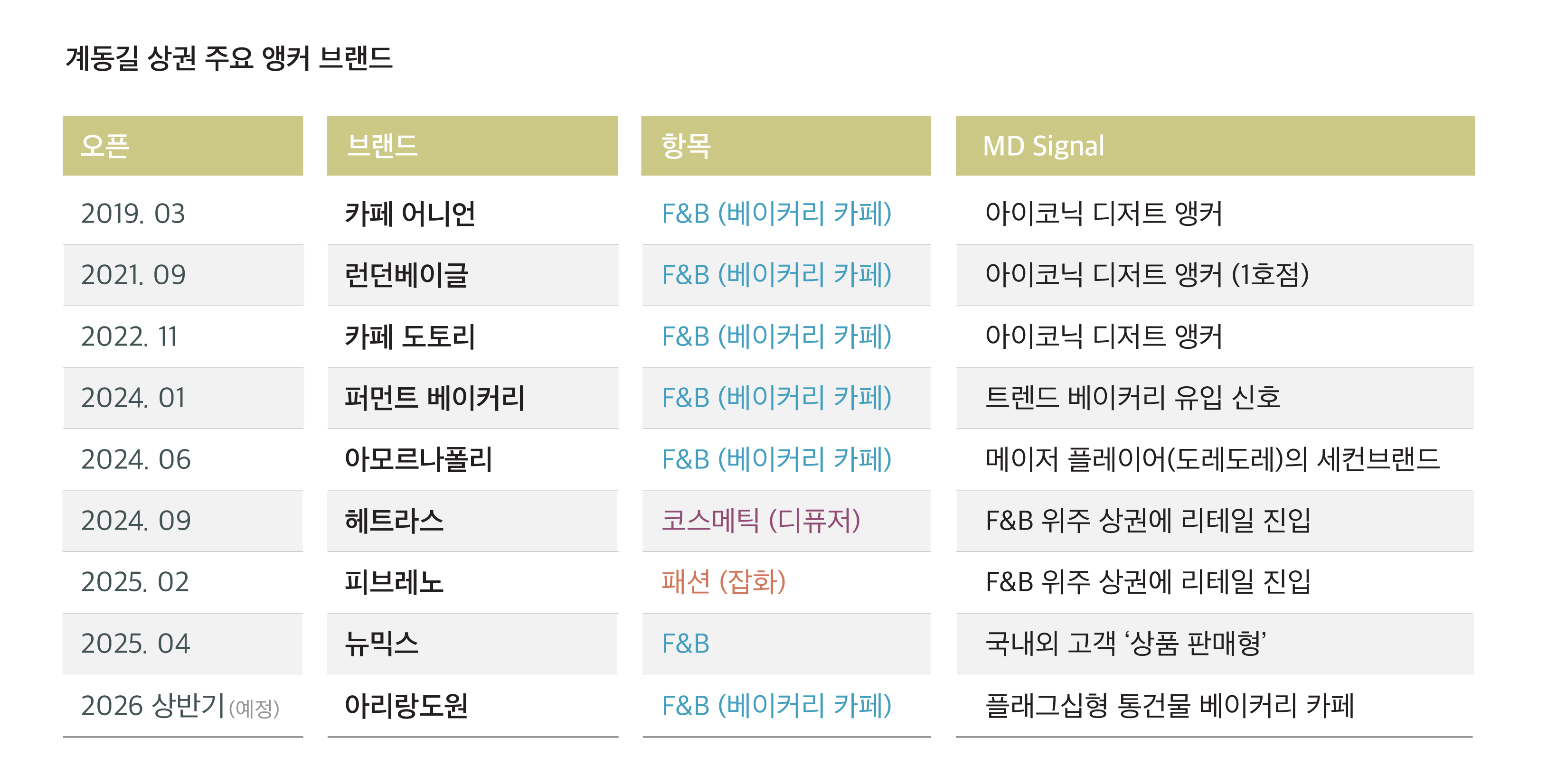
Gye-dong Street has office, commuting, and tourist demands overlapping, securing the most stable 7-day flow in Bukchon as an F&B-focused commercial area. Due to small land parcels and business regulations, self-sustaining expansions focused on hip F&B and high-sensitivity retail shops are ongoing rather than large capital investments. The heavy hurdles of rights payment, compared to the absolute rental market rate, create a barrier to entry, but based on the attraction created by mega anchor tenants like London Bagel, the category of gift retail is diversifying recently, including scents and accessories.

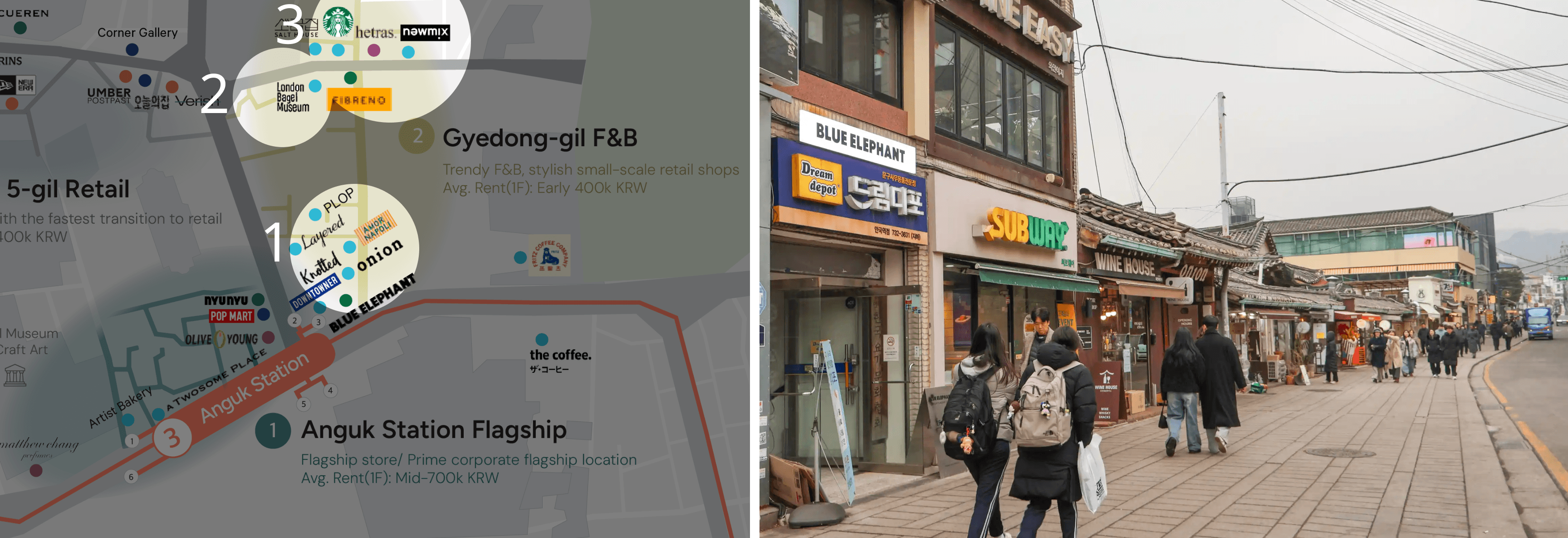
On the right side of the entrance to Gye-dong Street is Onion and Amor Napoli (the second brand of Dore Dore).
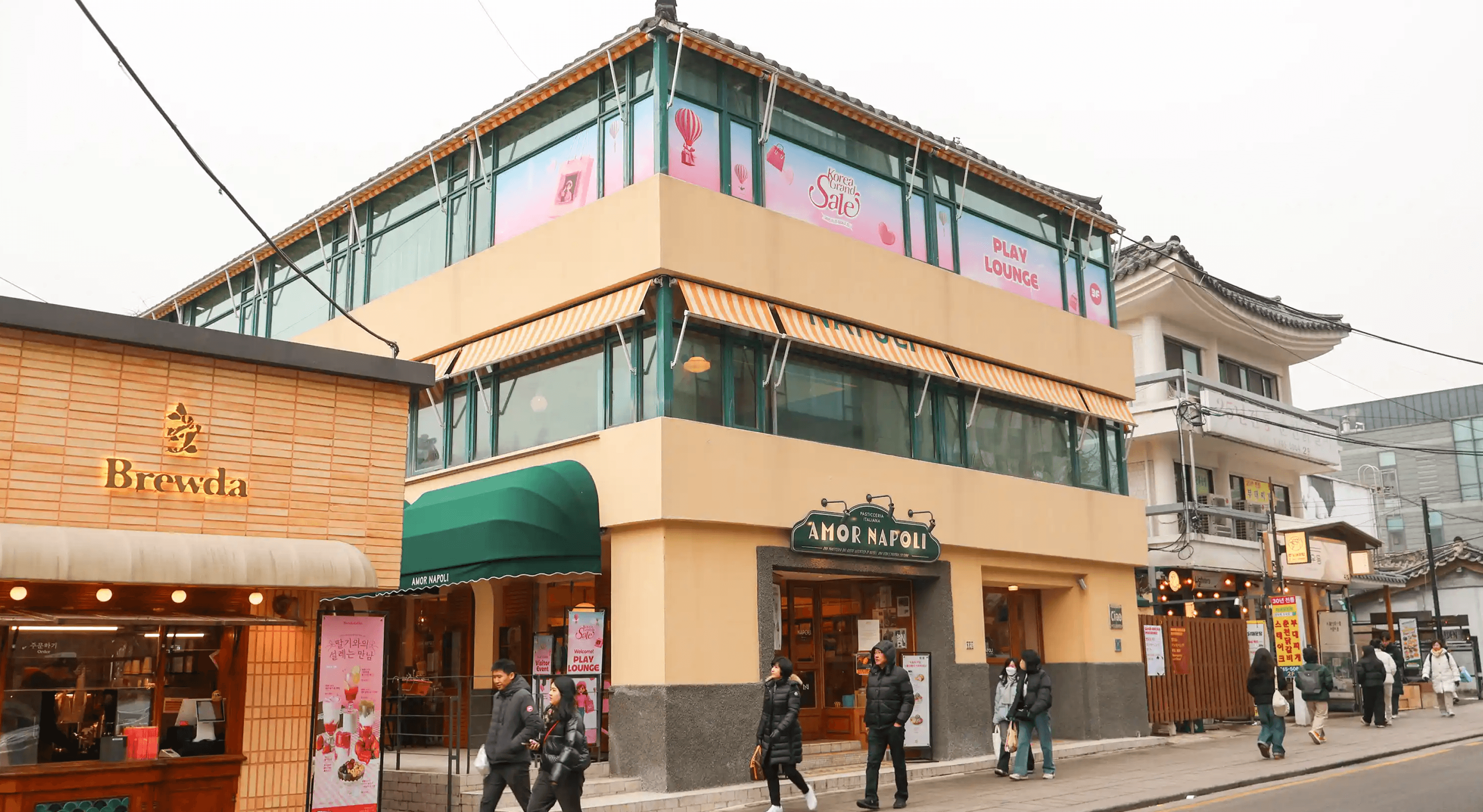
Image 1: Amor Napoli (the second brand of Dore Dore) has opened its first store in Bukchon and expanded to places like Yongsan Ipark Mall and Gangnam Galleria Luxury Hall.
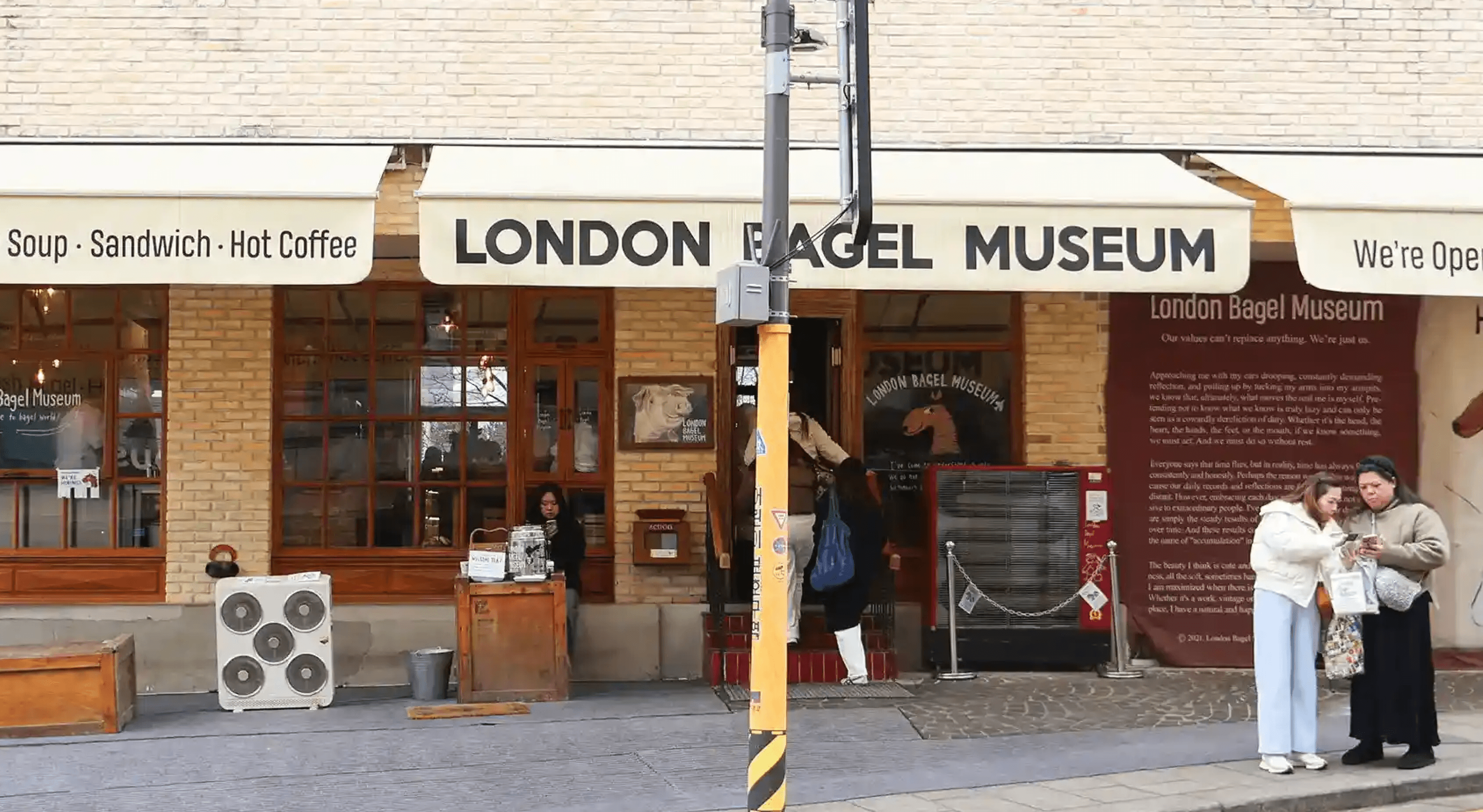
Image 2: On weekdays in the afternoon, the foreign customer ratio at London Bagel is overwhelming compared to locals. Across the street, you can find the Salt House, creating a competitive structure between two stores.
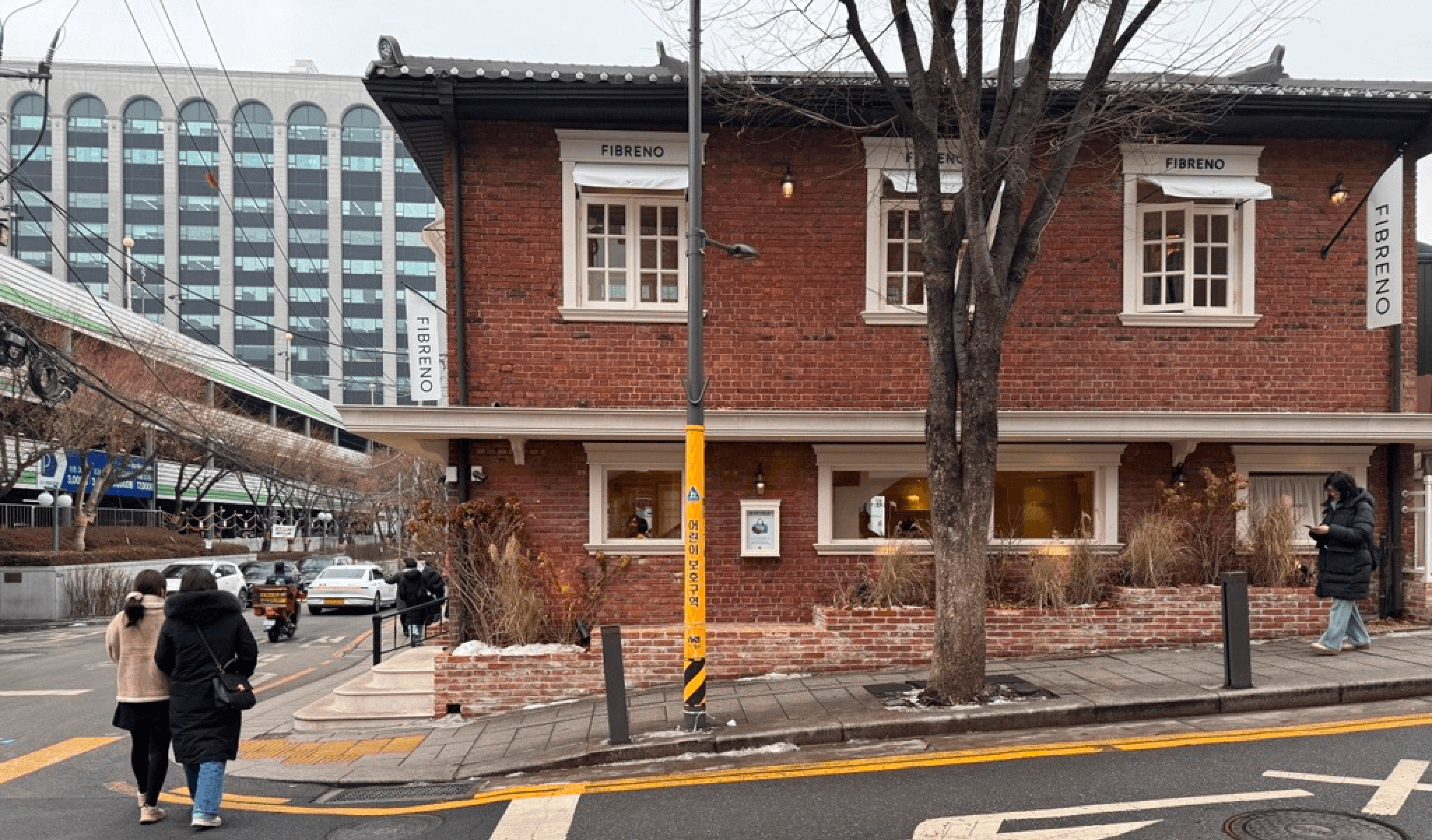
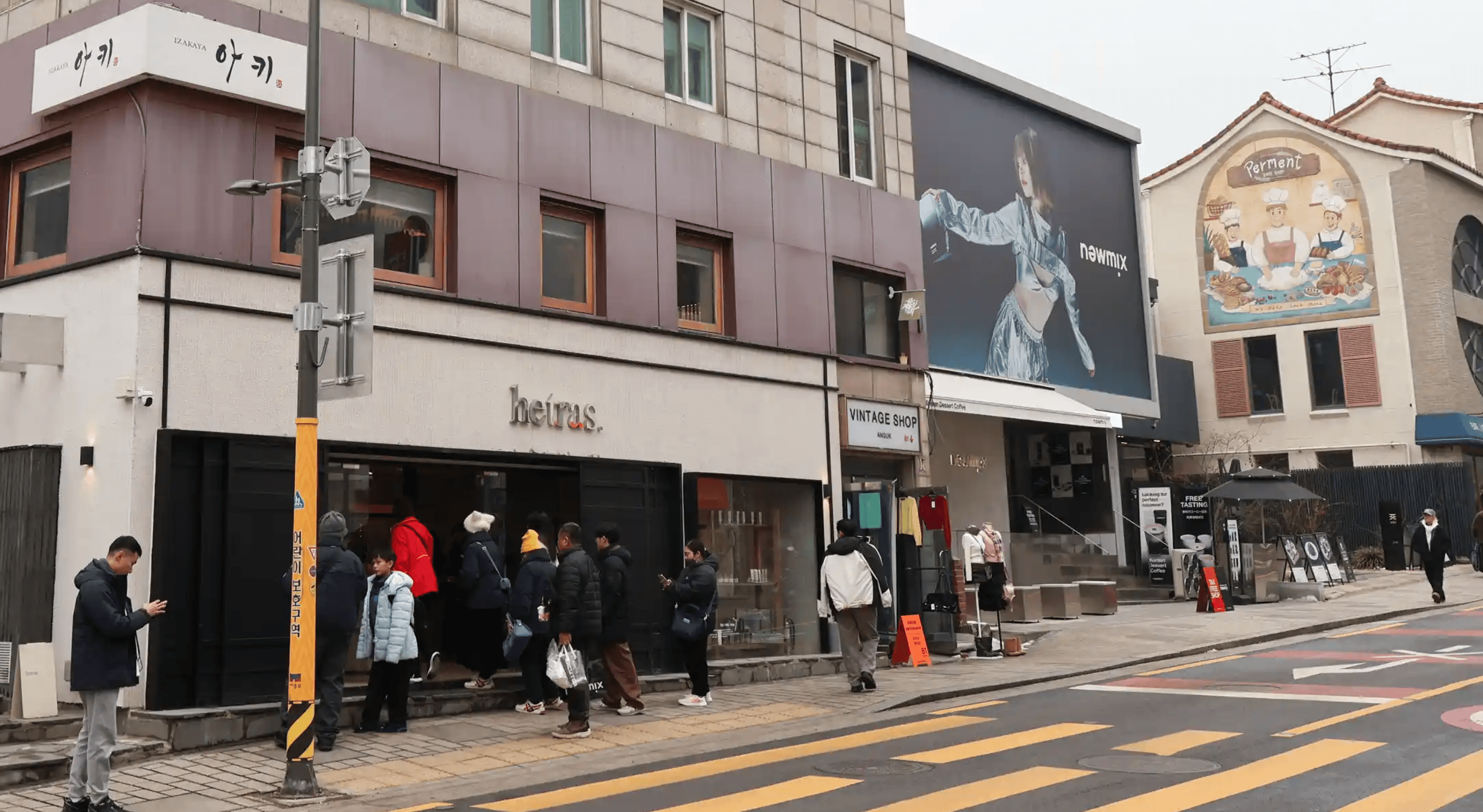
Image 3: Passing through a bakery cafe cluster area, fashion retail emerges, changing the character of the street. The former Buer Buer ice cream site has been newly occupied after the acquisition of the Fibreno building, while Hetrasse and New Mix are positioned across from it, acting as retail anchors targeting foreign tourists. Despite being a cold snap in early February, an overwhelming flow of visitors was observed at the Hetrasse store.
Expert's Insight
While stable flow is guaranteed 7 days a week, the key is the daytime peak and turnover. Since the area includes local residents and tourists, the harmony between F&B and gift retail holds the key to sales.
Decision Notes
Category | Notes |
Pros (Strengths) | With a 7-day flow, operating well during daytime peaks can reliably absorb traffic. |
Cons (Weaknesses) | Due to permit/facility restrictions and the small parcel characteristics, there is a narrow selection of business types, and there are limits to evening expansions. |
Target (Recommended Sectors) | Bakery/dessert/brunch, gift-oriented lifestyle (scent, accessories, goods), second brand testbed. |
Bukchon Retail Analysis: The Practical Operating Principles of Anguk Station and Gye-dong Street
The overwhelming flow of Anguk Station and the stable week-long flow of Gye-dong Street become the solid foundation for Bukchon. However, the true appeal of Bukchon is completed not merely at a place where many people gather but where tangible and intangible assets like Hanoks enhance the caliber of brands.
Recommendations for Entrants Near Anguk Station and Gye-dong Street
Currently, the areas near Anguk Station and Gye-dong Street need an 'expansion of experiences' that goes beyond simple consumption. Particularly, the entry of businesses such as the following is projected to create synergy within the context of Bukchon.
Near Anguk Station: Here, a flagship store backed by capital capable of withstanding high rental systems and gentrification pace must open or premium retail targeting overseas inbound customers to maintain the weight of the commercial area.
Gye-dong Street: Given the coexistence of residential and commercial areas and the long flow characteristics, brands with a clear repeat visit cycle are suitable, rather than one-time visitors. The key will be to integrate a long-term space for lifestyle brands that facilitates in-depth brand philosophy experience or to place scarce tenants that can induce purposeful visits.
Ask us
Bukchon has unique regulations per parcel and the specificity of being a Hanok preservation district, making a strategic approach essential. If you are interested in such business opportunities or are considering securing optimal locations within the Bukchon commercial area, please contact us. Our team of retail experts, who understand the asset value of Bukchon most deeply, will support the successful establishment of your brand.
What’s up Next: Analysis of Retail Battleground in Gaehwa-dong and Bukchon-ro 5-gil
In the upcoming Part 2, we will focus on the strategy of Gaehwa-dong, which utilizes large Hanok parcels to capitalize on premium experiences, and the retail battleground of Bukchon-ro 5-gil, where K-brands fiercely compete.
Is there only a Hanok Village in Bukchon?
The hottest keywords in the retail market are 'local' and 'experience'. The Bukchon commercial area, at the pinnacle, is rapidly being transformed from a simple traditional preservation district into a venue for 'high-end experiential consumption' combining global capital and high-sensitivity K-brands. If you cannot understand the current state of Bukchon, where rental prices do not simply correlate with location but move according to the marketing scale and asset strategies of brands, your entry strategy is bound to fail. This article discards the vague term 'Bukchon' and delves into five sub-markets to present practical entry strategies.
Redefining 'Heritage' — From Scenic Appreciation to 'Experiential Consumption'
Now, if you describe Bukchon as "a neighborhood with Hanoks," it's incorrect. While maintaining the essence of heritage that is central to the commercial area, consumption patterns have shifted from simple scenic appreciation to experiences and purchases centered around scent, beauty, fashion, and F&B.
Advanced Structure of Commercial Areas: 5 Different Markets
The Bukchon commercial area is being advanced as the growth of specific axes expands to surrounding alleys. Since the nature of flow, consumption styles, and rental price formation principles vary by region, Bukchon should be interpreted not as a single commercial area but as 'five independent markets'.
Key Questions in Decision-Making for Store Openings
The core of the current Bukchon opening strategy is not "Will we enter Bukchon?" but rather, "In which of the 5 micro-regions (Locality) will we define the role of the brand through which neighboring (Neighboring)?" This question will determine success or failure.
5 Micro-Regions
This series distinguishes Bukchon into five micro-regions and presents practical opening judgment criteria from the perspectives of demand, flow, and rental prices.
① Anguk Station: Corporate-type multi-story building openings, prime commercial area for entering Bukchon
② Gye-dong Street: Based on 7-day foot traffic, an F&B commercial area expanding categories
③ Gaehwa-dong: A high-end commercial area combining tourist inflow and high-value consumption
④ Bukchon-ro 5-gil: Acceleration of conversion from F&B to retail, K-brands opening battleground
⑤ Hwadong & Sogyeokdong: A retail main commercial area mixed with global and local brands
Bukchon Series
Part 1. Gateway to the Commercial Area and F&B Living Zone (① Anguk Station Flagship, ② Gye-dong Street F&B)
① Anguk Station Flagship: A prime commercial area centered on multi-story buildings and the first choice for major retailers' openings
② Gye-dong Street F&B: A place where hip F&B and gift retail coexist, based on stable traffic throughout the week
Part 2. Capitalization of Heritage and K-Retail Battleground (③ Gaehwa-dong, ④ Bukchon-ro 5-gil Retail)
③ Gaehwa-dong: The main base for premium experiences utilizing large Hanok parcels and a trend period of corporate acquisitions (capitalization)
④ Bukchon-ro 5-gil Retail: The K-brand battleground where the transition from F&B to high-sensitivity retail is happening the fastest
Part 3. Global Mainstream (⑤ Hwadong & Sogyeokdong)
⑤ Hwadong & Sogyeokdong: A retail main commercial area where global brands and local content mix, competing for brand worldview
The Bukchon commercial area has now entered a sophisticated market where the fate of a brand is determined by 'where and next to whom' they stand. Understanding the unique demands and flows of each region rather than vague expectations is a prerequisite for successful openings. Through the upcoming three-part series, we will delve deeply into Anguk Station's overwhelming foot traffic, the premium asset value of Gaehwa-dong, and the global branding strategies of Hwadong. This will provide practical insights for deriving optimal Bukchon entry strategies that align with each brand's objectives.
① Anguk Station: The 'Face' of Bukchon, A Place Where Brand Power is Tested
The area around Anguk Station is the entry point of the Bukchon commercial area, where prime commercial areas congregate with flagship multi-story buildings. It has emerged as a must-visit destination for foreign tourists and has become the number one opening location for major retailers. A quick decision speed is crucial, exceeding the rental price market rates, while large brands like Olive Young and New New have joined, further strengthening the scale and marketing power of the commercial area.
Image 1: Artist Bakery and Daiso, which can be seen immediately after coming out of Anguk Station Exit 1. To the right of Daiso is Twosome 2.0.
Image 2: The construction site on the left will host Olive Young, which is set to open in the first half of the year. Anguk Station has already passed the maturation stage of the commercial area, becoming a place viewed by large corporations and global brands.
Image 3: The area near Anguk Station is now seeing industries that require large corporations' scales, such as major beauty, health, and flagship multi-story stores, rather than emotional D2C (Direct-to-Consumer) brands. Blue Elephant is also located on the second floor of the building near Anguk Station.
Expert's Insight
The area near the Hyundai Construction building at Anguk Station is a gateway that determines the first impression of Bukchon and boasts the strongest attraction power. This is the entrance to the Bukchon commercial area, where a 'war of scale and speed' is taking place. Retailers like Olive Young are gathering here, leading to overall attraction in the area, and major retailers are occupying large spaces, making it difficult to enter without sufficient capital and quick decision-making. Therefore, strong capital considering marketing efficiency rather than just sales is essential.
Decision Notes
Category | Notes | ||
Pros (Strengths) | The only all-weather hub in Bukchon, where local office demands intersect with global tourists. | ||
Cons (Weaknesses) | Each tenant must bear fixed costs of 50 million to 100 million won per month. | ||
Target (Recommended Sectors) | Large beauty and health stores, global IP/character permanent stores, lifestyle/SPA, etc. Prime Retail. | ||
② Gye-dong Street: The Most Stable Alley with Strong 7-Day Flow
Gye-dong Street has office, commuting, and tourist demands overlapping, securing the most stable 7-day flow in Bukchon as an F&B-focused commercial area. Due to small land parcels and business regulations, self-sustaining expansions focused on hip F&B and high-sensitivity retail shops are ongoing rather than large capital investments. The heavy hurdles of rights payment, compared to the absolute rental market rate, create a barrier to entry, but based on the attraction created by mega anchor tenants like London Bagel, the category of gift retail is diversifying recently, including scents and accessories.
On the right side of the entrance to Gye-dong Street is Onion and Amor Napoli (the second brand of Dore Dore).
Image 1: Amor Napoli (the second brand of Dore Dore) has opened its first store in Bukchon and expanded to places like Yongsan Ipark Mall and Gangnam Galleria Luxury Hall.
Image 2: On weekdays in the afternoon, the foreign customer ratio at London Bagel is overwhelming compared to locals. Across the street, you can find the Salt House, creating a competitive structure between two stores.
Image 3: Passing through a bakery cafe cluster area, fashion retail emerges, changing the character of the street. The former Buer Buer ice cream site has been newly occupied after the acquisition of the Fibreno building, while Hetrasse and New Mix are positioned across from it, acting as retail anchors targeting foreign tourists. Despite being a cold snap in early February, an overwhelming flow of visitors was observed at the Hetrasse store.
Expert's Insight
While stable flow is guaranteed 7 days a week, the key is the daytime peak and turnover. Since the area includes local residents and tourists, the harmony between F&B and gift retail holds the key to sales.
Decision Notes
Category | Notes |
Pros (Strengths) | With a 7-day flow, operating well during daytime peaks can reliably absorb traffic. |
Cons (Weaknesses) | Due to permit/facility restrictions and the small parcel characteristics, there is a narrow selection of business types, and there are limits to evening expansions. |
Target (Recommended Sectors) | Bakery/dessert/brunch, gift-oriented lifestyle (scent, accessories, goods), second brand testbed. |
Bukchon Retail Analysis: The Practical Operating Principles of Anguk Station and Gye-dong Street
The overwhelming flow of Anguk Station and the stable week-long flow of Gye-dong Street become the solid foundation for Bukchon. However, the true appeal of Bukchon is completed not merely at a place where many people gather but where tangible and intangible assets like Hanoks enhance the caliber of brands.
Recommendations for Entrants Near Anguk Station and Gye-dong Street
Currently, the areas near Anguk Station and Gye-dong Street need an 'expansion of experiences' that goes beyond simple consumption. Particularly, the entry of businesses such as the following is projected to create synergy within the context of Bukchon.
Near Anguk Station: Here, a flagship store backed by capital capable of withstanding high rental systems and gentrification pace must open or premium retail targeting overseas inbound customers to maintain the weight of the commercial area.
Gye-dong Street: Given the coexistence of residential and commercial areas and the long flow characteristics, brands with a clear repeat visit cycle are suitable, rather than one-time visitors. The key will be to integrate a long-term space for lifestyle brands that facilitates in-depth brand philosophy experience or to place scarce tenants that can induce purposeful visits.
Ask us
Bukchon has unique regulations per parcel and the specificity of being a Hanok preservation district, making a strategic approach essential. If you are interested in such business opportunities or are considering securing optimal locations within the Bukchon commercial area, please contact us. Our team of retail experts, who understand the asset value of Bukchon most deeply, will support the successful establishment of your brand.
What’s up Next: Analysis of Retail Battleground in Gaehwa-dong and Bukchon-ro 5-gil
In the upcoming Part 2, we will focus on the strategy of Gaehwa-dong, which utilizes large Hanok parcels to capitalize on premium experiences, and the retail battleground of Bukchon-ro 5-gil, where K-brands fiercely compete.
More in
More in
street
street
street
Mar 4, 2026
Cheongdam: The Art of Elegant Detachment
A place where discomfort becomes authority, a Cheongdam-dong retail space calculated even to a ray of sunlight.
street
Mar 2, 2026
Hannam-dong, Seoul's private club. ②
0% vacancy rate, key money in the hundreds of millions of won, and fierce competition to get selected as a brand — "who" matters more than money.
Get the best of 'detail'
in your inbox, every month
Once a month, no spam
Get the best of 'detail'
in your inbox, every month
Once a month, no spam
Get the best of 'detail'
in your inbox, every month
Once a month, no spam