Back
Copy
Share
Like
place
CBD Retail: The Evolution of a 7-Day Asset
CBD Retail: The Evolution of a 7-Day Asset
CBD Retail: The Evolution of a 7-Day Asset
Ground-floor retail in Seoul’s CBD is no longer a secondary amenity for lunch—it is now a primary destination that defines a building’s grade and justifies premium office rents. Assets like D Tower and KT WEST are proving that strategic retail curation is the key to maximizing asset valuation.
Ground-floor retail in Seoul’s CBD is no longer a secondary amenity for lunch—it is now a primary destination that defines a building’s grade and justifies premium office rents. Assets like D Tower and KT WEST are proving that strategic retail curation is the key to maximizing asset valuation.
Ground-floor retail in Seoul’s CBD is no longer a secondary amenity for lunch—it is now a primary destination that defines a building’s grade and justifies premium office rents. Assets like D Tower and KT WEST are proving that strategic retail curation is the key to maximizing asset valuation.
Article Highlights
"From Space to Brand" – D Tower "Replace": D Tower redefined office retail by launching its proprietary "Replace" platform. Through terrace-style curation and a unique MD mix, it transformed a traditional lobby into a 24/7 Urban Lifestyle Platform, successfully capturing weekend and evening traffic.
Experience Design – KT WEST Heritage: KT WEST regenerated an aging asset by monetizing its exclusive view of Gwanghwamun Square. Instead of standard leasing, it curated a "heritage-led experience," turning a legacy building into a high-traffic retail landmark.
Data-Driven "7-Day Districts" – Gran Seoul: Starfield Avenue at Gran Seoul utilized precise floor planning to eliminate "Weekend Hollowing." By curating destination-driven F&B, even high-freshness categories like sushi now peak on weekends, overcoming the temporal limits of the CBD.
The rules of CBD office retail are changing. In the past, success depended on how much lunchtime foot traffic and corporate card demand you could absorb, but now the key capability is designing an answer, at the scale of the entire asset, to the question: “Why does it have to be this building?” Going beyond simple podium retail, we analyze the strategies of three assets that are transforming into destination “Places” with clear visit purposes, and examine the evolving flow of CBD office retail.
PLACE: Changes in Gwanghwamun’s pedestrian environment and retail influence
Reorganized from a vehicle-centered space to a pedestrian-centered one
With the Gwanghwamun Square restructuring project completed in 2022, the west-side sidewalk (toward Sejong Center) was incorporated into the square
The pedestrian axis running from Gwanghwamun Square along Sejong-daero, past D Tower and Gran Seoul, to Cheonggyecheon is a core element of Seoul’s “everyday walkable district” strategy
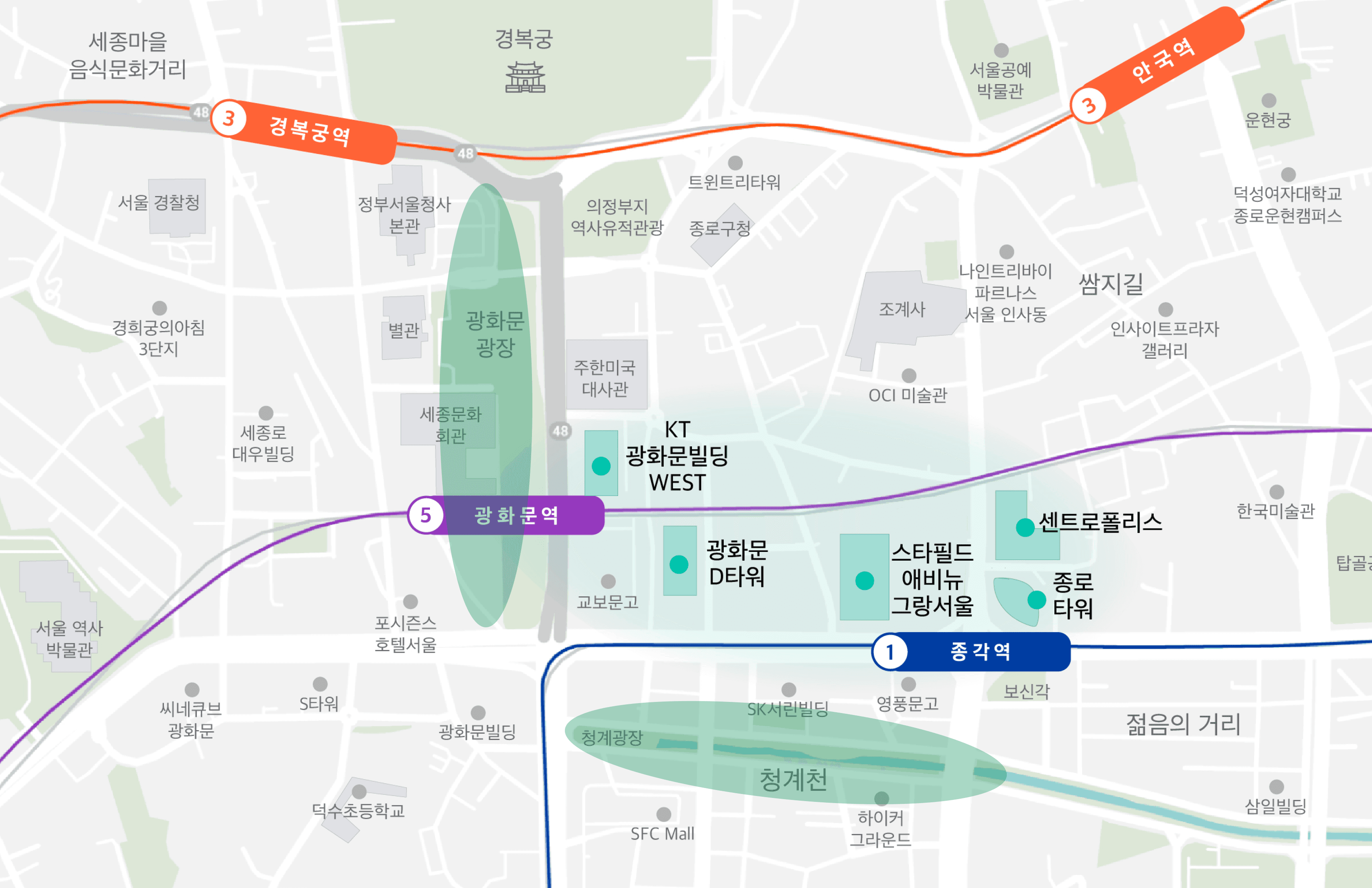
With the Gwanghwamun Square restructuring project completed in 2022, the west-side sidewalk (toward Sejong Center) was incorporated into the square, reorganizing the area from a vehicle-centered to a pedestrian-centered space. The pedestrian axis from Gwanghwamun Square along Sejong-daero, past D Tower and Gran Seoul, to Cheonggyecheon is a core element of Seoul’s “everyday walkable district” strategy
Gwanghwamun D Tower: A pioneer of the urban lifestyle platform
D Tower changed the definition of office retail from “shopping arcade” to “asset branding”
Category | Key Content |
|---|---|
Strategy | From the planning stage, Daelim Industrial directly designed a clear concept: “retailization of spatial experience” |
Target | Existing office customers + weekend and evening demand based on CBD landmark symbolism. Top choice for CBD meetups |
MD Layout | Daelim Industrial directly branded the 1st–5th floor commercial space as “Replace.” Some restaurants were designed with open terraces, and full-height glass allows indoor spaces to feel outdoors—creating a rare “linger mood” for office retail. |
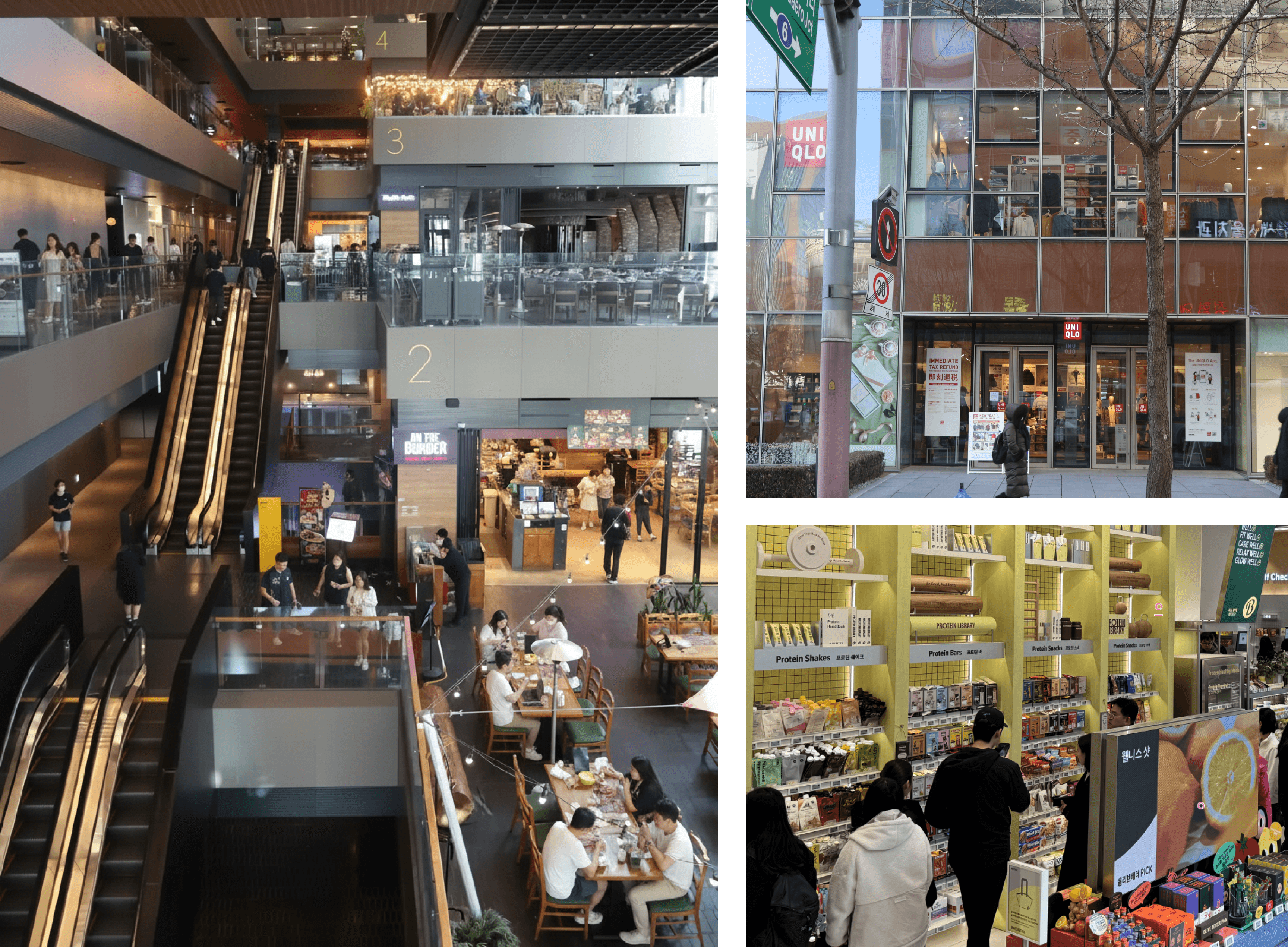
From left to right: inside D Tower, UNIQLO, and the recently opened Olive Better
Q. How did D Tower break the conventional rules of CBD office retail?
Expert's Insight
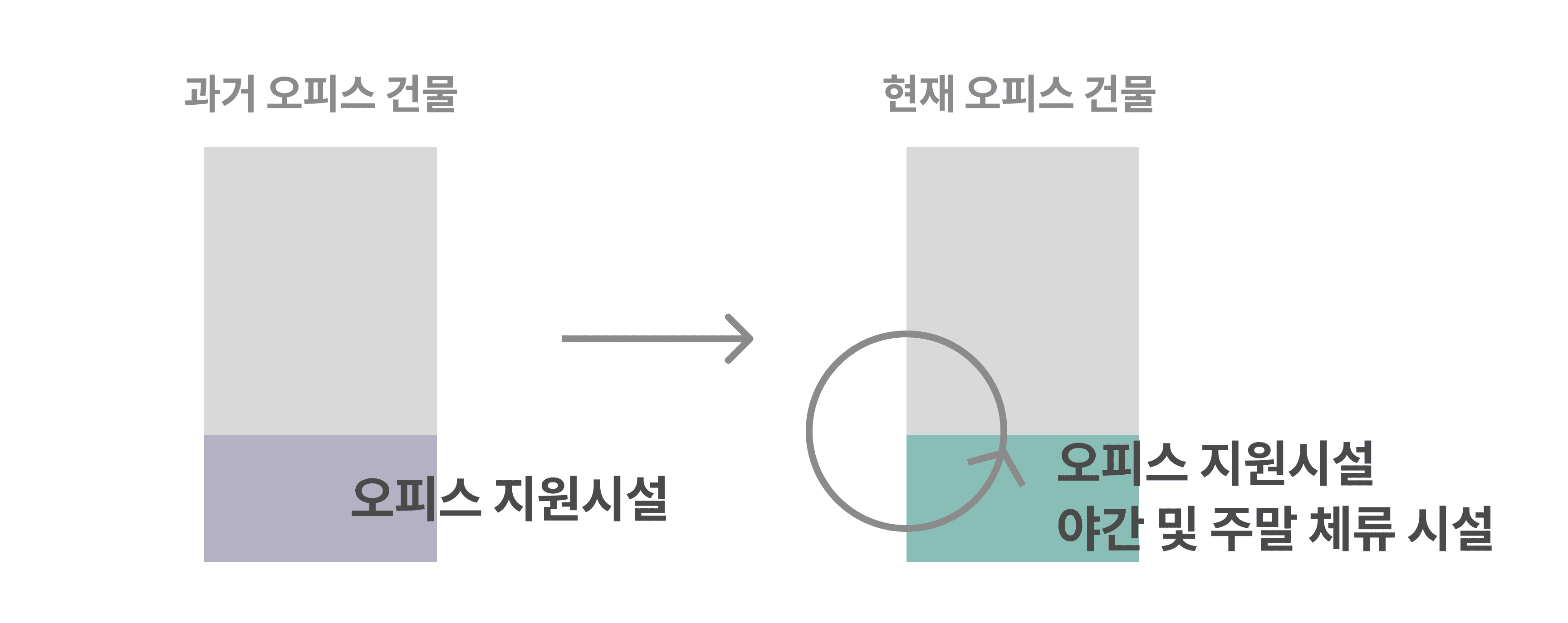
Traditional office retail has served only as office support facilities.
It was essentially a welfare function for office infrastructure—restaurants, cafes, banks, pharmacies, and the like. But D Tower changed that entire structure. From an MD perspective, it introduced features rarely seen in urban office retail: a two-floor UNIQLO flagship, large-scale meetup-oriented F&B content leveraging interior terraces, and a 1F SOHO street composition that reflects the identity of Gwanghwamun Pimat-gil. Even 10 years later, it still realizes a space that feels both “trendy and classic.”
Recently, amid intensifying office retail competition, Olive Young Global Flagship (Olive Better) opened in the former 1st–2nd floor Starbucks space. This can be read as a strategy to go beyond basic CBD office and nearby demand, absorb growing demand from international tourists, and further strengthen D Tower’s status as a CBD landmark.
KT WEST: Dressing headquarters symbolism with “Gwanghwamun heritage”
KT WEST’s planning leadership beyond the limits of renovation
Category | Key Content |
|---|---|
Strategy | From the start of renovation, KT Estate set the concept of “view utilization – KT identity – Gwanghwamun heritage” and consistently designed MD, space, and operations |
Target | Beyond office users, capture view-based dining/cafe visits plus tourism and weekend demand |
MD Layout | Implemented “how to enjoy Gwanghwamun from the best seat” through MD (2F corner, 15F dining), while utilizing the generous spatial qualities unique to a headquarters building (voids, signage, etc.) |
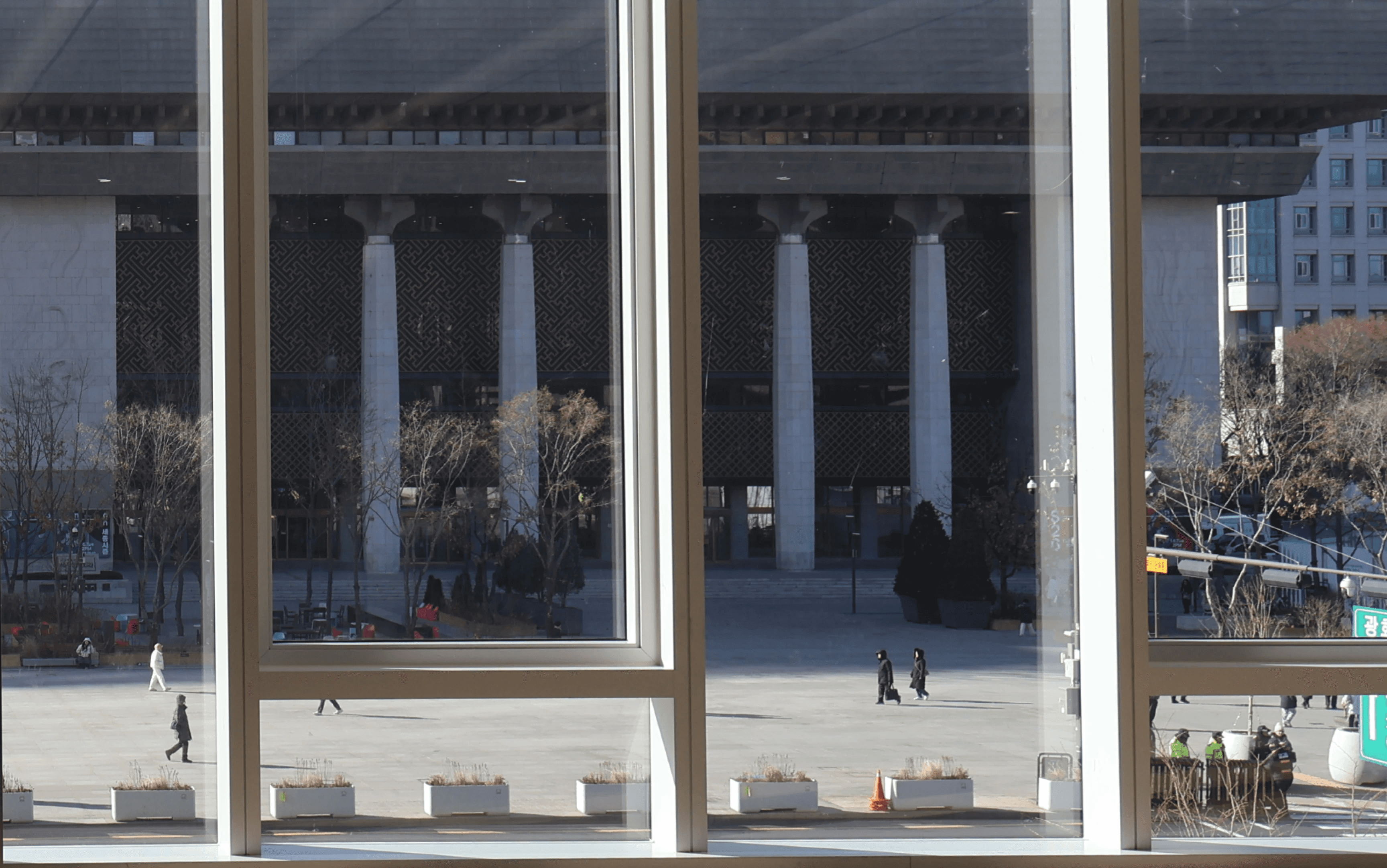
Full-window design framing Gwanghwamun (view of Gwanghwamun Square from the 2nd floor)
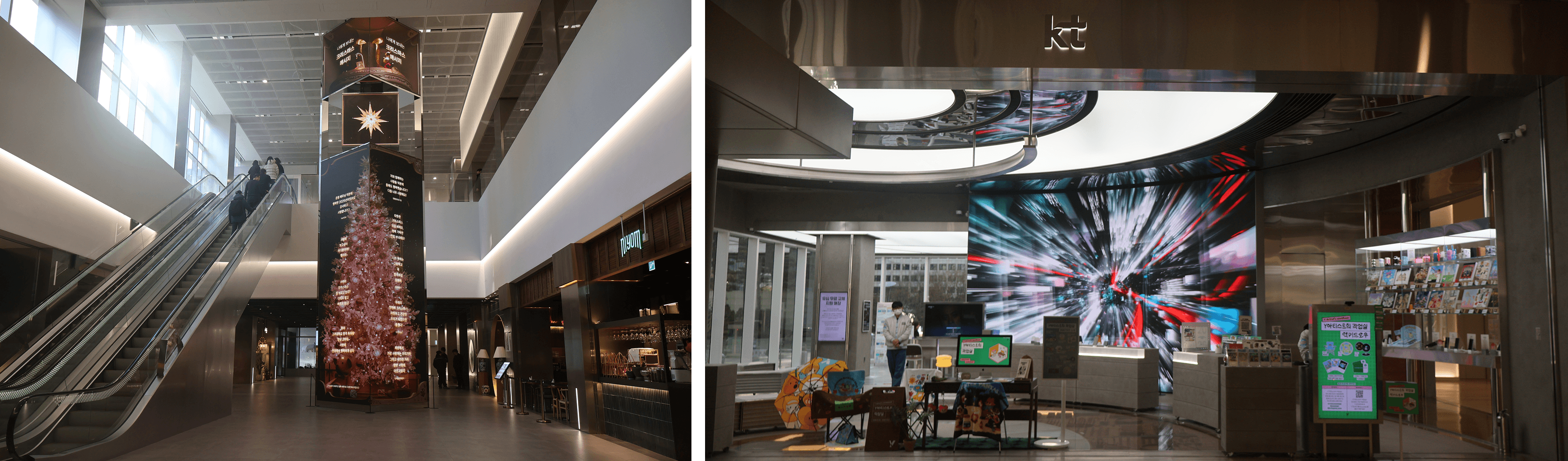
From left: an open-feeling void structure and a 1F flagship expressing the headquarters’ identity
Q. How were the limitations of a building completed in 1986 overcome?
Expert's Insight
KT WEST is a case where the limitations of an aging asset completed in 1986 were overcome through the planning capability of a clear execution主体, KT Estate. Rather than simply gathering popular restaurants, they directly connected Gwanghwamun’s permanent view rights and the headquarters’ symbolism to MD points. Bold structural changes like a new build are difficult, but by using high-ceiling voids and full-window design, they drew the view deep indoors and maximized spatial openness.
Especially impressive is how the giant media wall on the building exterior and the ground-floor flagship store were linked with retail to complete a uniquely premium character possible only for headquarters-type assets. Ultimately, the power of planning—consistently carrying location advantages through operations and spatial expression in one direction—was the key driver that rebirthed this old building into Gwanghwamun’s new retail hotspot.
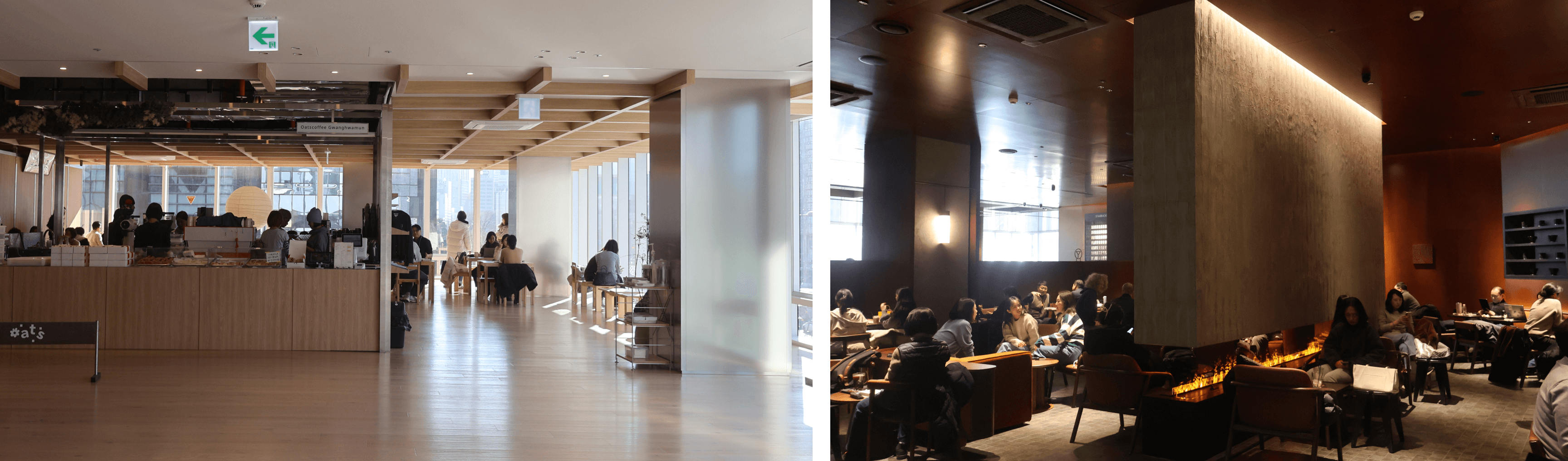
From left: refined F&B inflow linking in-building office population and outside visitors (Oat Coffee), and Starbucks Reserve located in a prime site directly facing Gwanghwamun Square
Q. Why is KT WEST’s retail special?
Expert's Insight
The core of KT WEST’s MD strategy is not simply attracting popular eateries, but a design that maximizes the permanent view rights and symbolism of Gwanghwamun as a location. By placing Oat Coffee and Dourum in prime corner spots on the 2nd floor, it offers Gyeongbokgung views to both employees and visitors; on the 15th floor, in collaboration with Hanwha Food Tech, it provides a hotel-grade dining experience, elevating the reason to visit by another level.
Also, it goes beyond just bringing in famous brands and embodies “Gwanghwamun heritage.” Starbucks Reserve’s exclusive menu and Paris Baguette’s “Gwanghwamun 1945” new-concept store are differentiated points where consumers can experience the symbolic value of the location. Even the basement Original Pancake House operates in a “diner” format with strengthened alcohol offerings in consideration of nighttime stay demand. In the end, KT WEST is effectively selling not brands, but the “way” to enjoy Gwanghwamun most elegantly.
Starfield Avenue Gran Seoul: Planning leadership with added “sensibility”
An urban “dining destination” created by Shinsegae Property
Category | Key Content |
|---|---|
Strategy | Based on Starfield’s operational capabilities, clearly designed each floor’s role as an “urban Dining Destination” |
Target | Capture office lunch demand while expanding to gatherings, dates, evenings, and weekend visits. Starfield’s unique MD and operational capabilities are the biggest driver of target expansion |
MD Layout | A composition that makes high-density F&B feel like “choice,” not “crowding.” Even in an office trade area, it delivers “the value of staying” through dining, like a shopping mall |
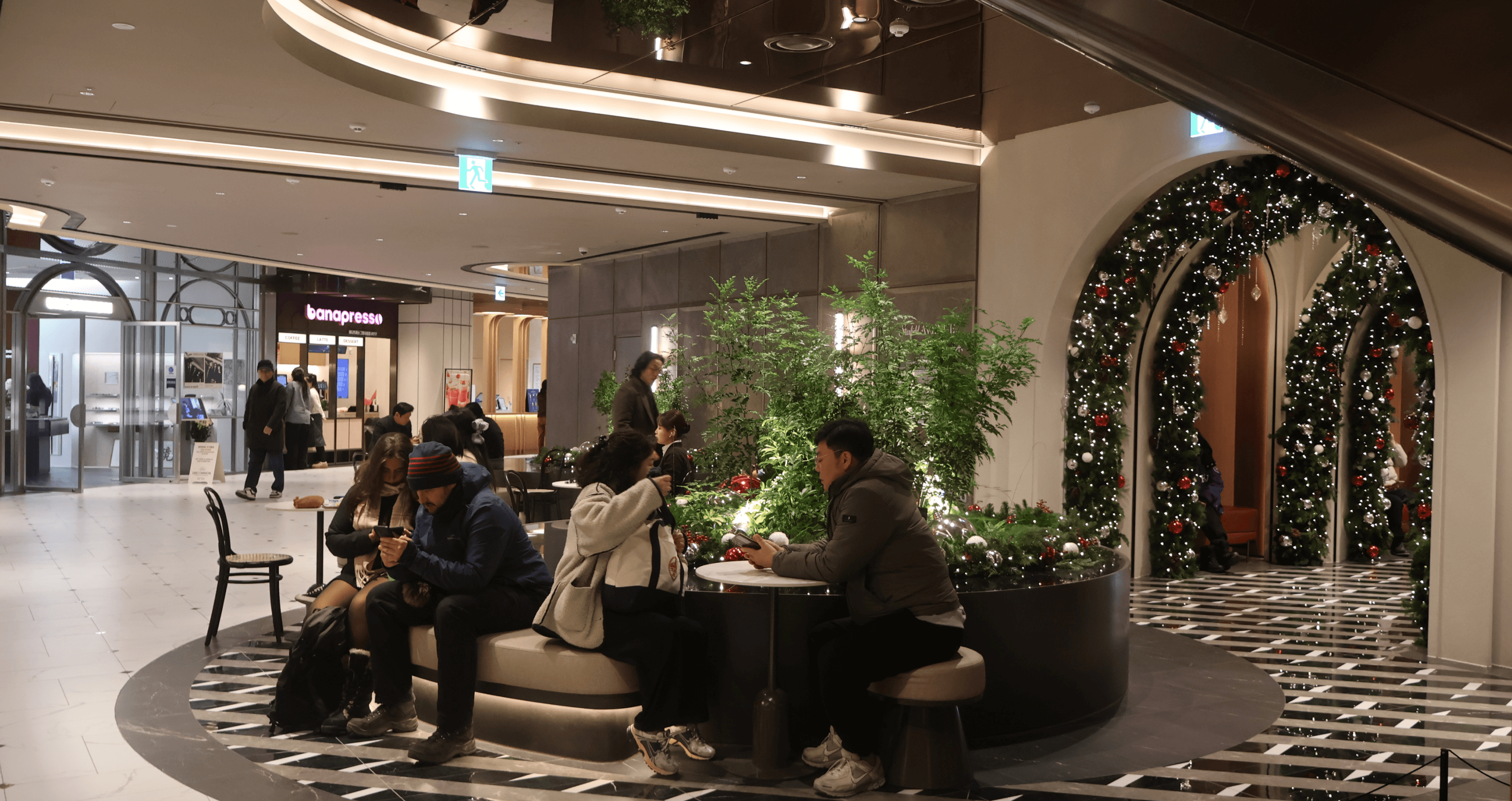
Reconfigured into a place to stay with common areas previously seen only in shopping malls
“The Dining Destination” — turning high-density F&B into consumer choice.
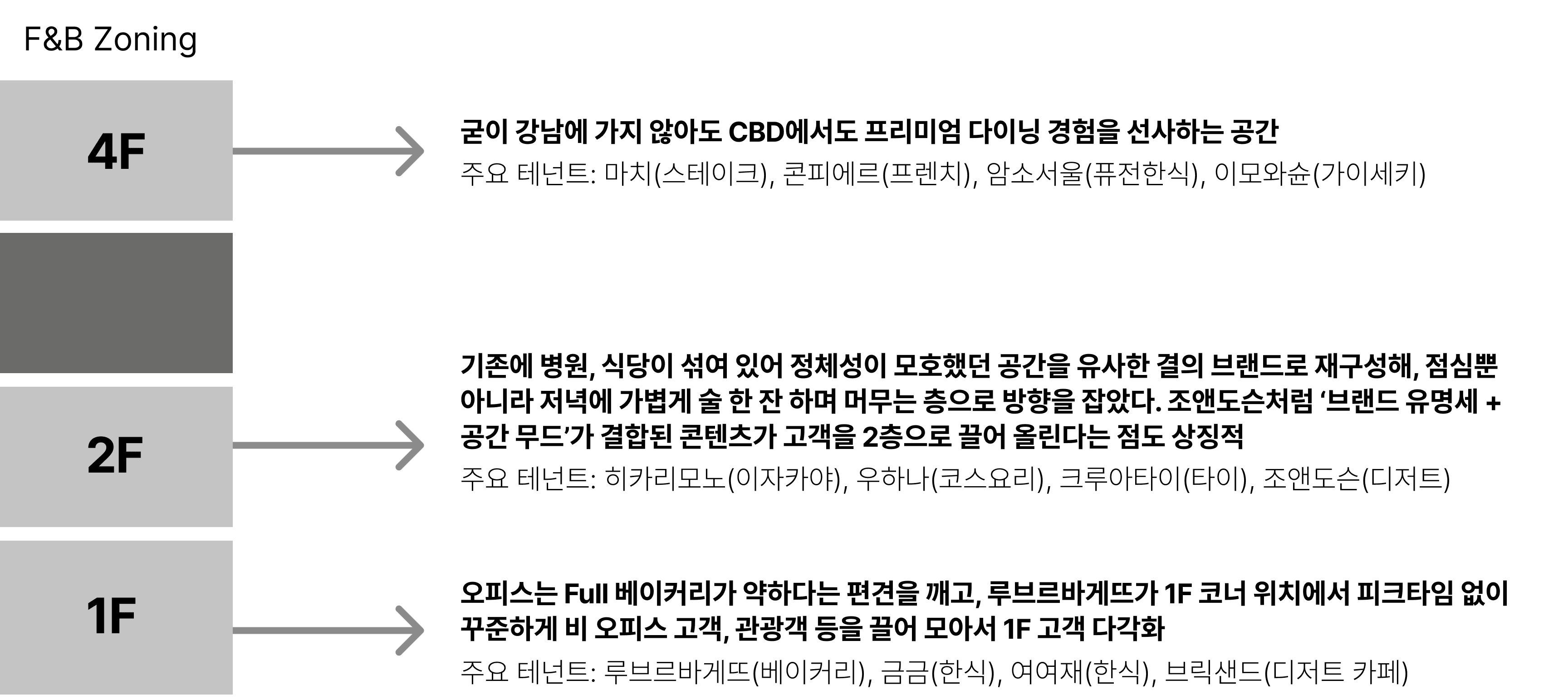
Q. From an operational strategy perspective, how was it able to establish itself as a CBD landmark active through weekends?
Expert's Insight
Clarification of floor-by-floor concepts (Navigation): Starfield Avenue intuitively designed the identity of culinary experiences by floor. By implementing culinary diversity so visitors can choose without hesitation according to their situation (lunch, business meeting, date, etc.), it prevented unnecessary competition between stores.
Expanding the overall pie through integrated management (Operation):It did not stop at simple brand attraction; even after opening, it focused on operations that grow total visitor volume through continuous integrated and linked marketing. This becomes an engine that raises activation across the entire asset beyond individual tenant sales.
Redefinition of trade area characteristics (Transformation): As a result of this strategic operation, Gran Seoul moved beyond a welfare facility for “a single lunch.” It successfully anchored itself as a CBD-type F&B landmark shopping mall that keeps evening demand—once leaking to street trade areas—within the asset and accommodates weekend gatherings and dates.
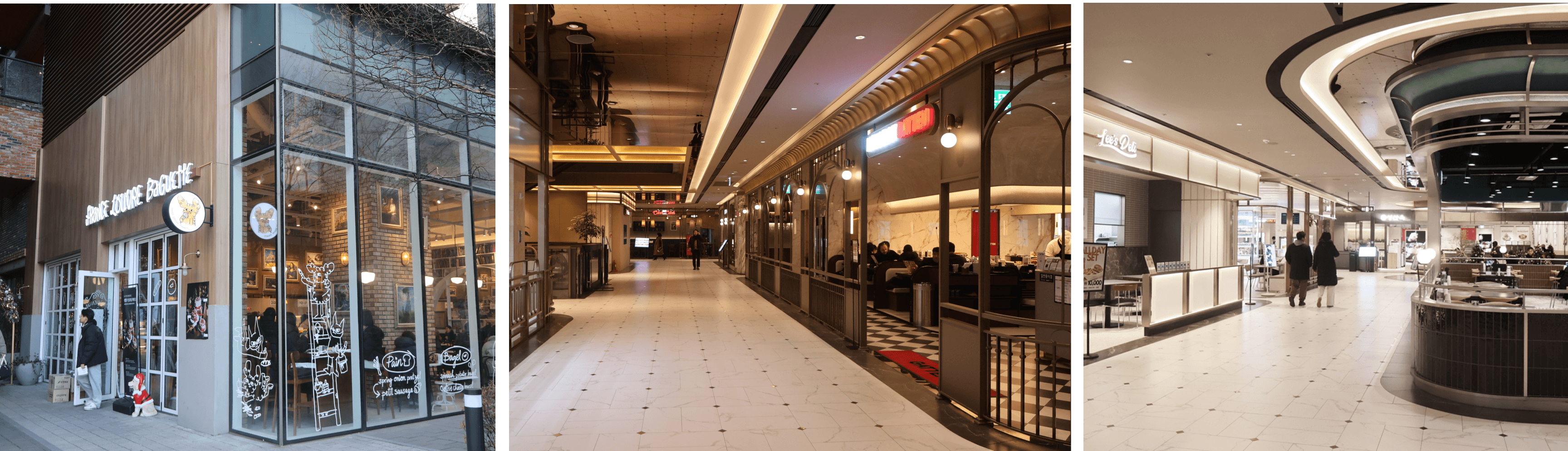
Gran Seoul’s F&B is composed with different concepts by floor; from left: Gran Seoul (1F), and Gatten Sushi (B1F), which records strong weekend sales even in the CBD
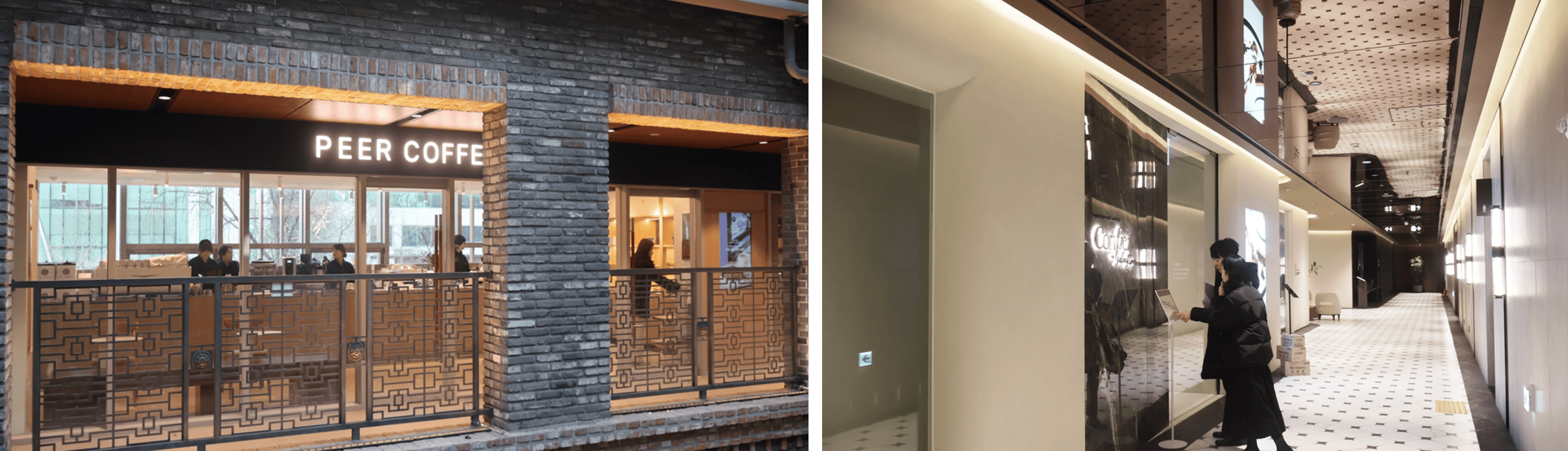
From left: PEER COFFEE on the 2nd floor and a premium dining space on the 4th floor
Q. It is generally considered impossible for office buildings—where weekend traffic drops off—to host categories like “sushi,” which have high waste rates, right?
Expert's Insight
Usually, weekend traffic dries up in office buildings, so sushi restaurants—where freshness is everything—are almost impossible to lease because of waste rates. But at Starfield Avenue Gran Seoul, thanks to Shinsegae Property’s highly sophisticated floor-by-floor culinary destination design, the place is packed with tourists and date-goers even on weekends. The fact that “Gatten Sushi” is posting top-tier sales on a single-store basis is truly symbolic. Ultimately, it seems the difference is not whether there is an “impossible category,” but whether there is the “power of design” that can draw in weekend demand.
Office retail shifting from a building’s “appendix” to its “main text”
The “7-day commercial districtization” of office retail
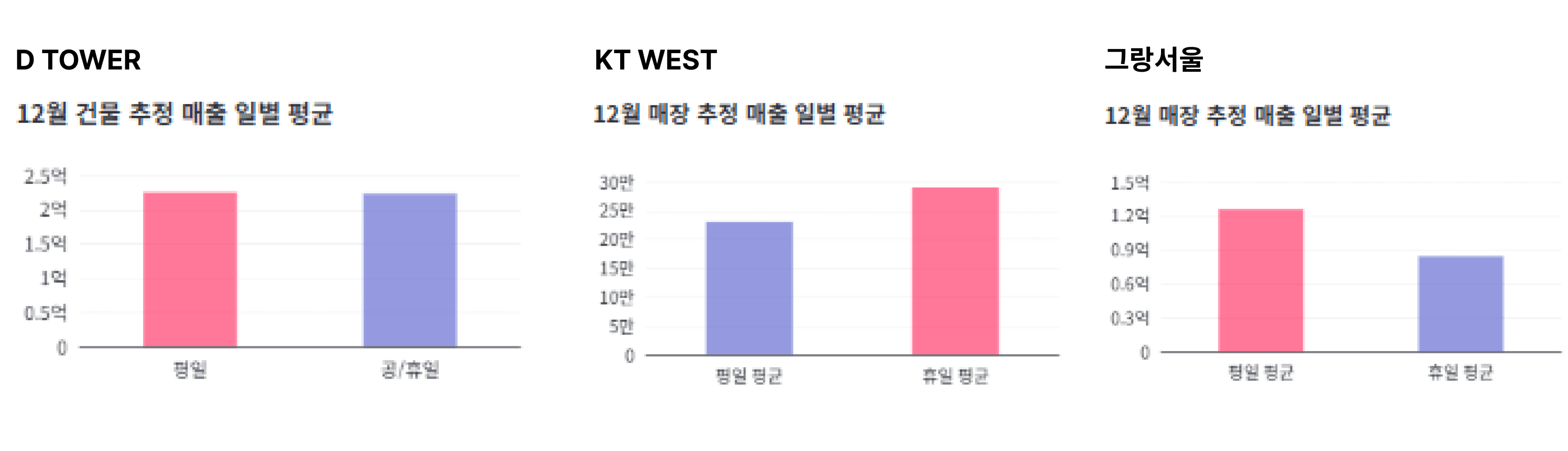
The graph above shows that the number of office workers is no longer an absolute indicator of retail sales.
D TOWER: The near absence of a gap between weekday and holiday foot traffic means it has independent drawing power that does not rely on resident population (office workers)
KT WEST:Holiday foot traffic exceeding weekday levels shows it successfully absorbed the square’s drawing power into internal retail after the Gwanghwamun Square renewal
Gran Seoul: Among the three buildings, it has the highest weekday share, but compared with the past “weekend hollowing” phenomenon of office districts, its weekend figures are quite robust
CBD’s uninterrupted pedestrian circulation has freed office retail from the frame of “tenant welfare.” Retail is now the most aggressive profit-generating anchor driving asset value appreciation. The capability to command the agglomeration effect created by inter-asset synergy and redefine space in line with urban context will become the absolute measure that separates winners from losers in the future office market.
The rules of CBD office retail are changing. In the past, success depended on how much lunchtime foot traffic and corporate card demand you could absorb, but now the key capability is designing an answer, at the scale of the entire asset, to the question: “Why does it have to be this building?” Going beyond simple podium retail, we analyze the strategies of three assets that are transforming into destination “Places” with clear visit purposes, and examine the evolving flow of CBD office retail.
PLACE: Changes in Gwanghwamun’s pedestrian environment and retail influence
Reorganized from a vehicle-centered space to a pedestrian-centered one
With the Gwanghwamun Square restructuring project completed in 2022, the west-side sidewalk (toward Sejong Center) was incorporated into the square
The pedestrian axis running from Gwanghwamun Square along Sejong-daero, past D Tower and Gran Seoul, to Cheonggyecheon is a core element of Seoul’s “everyday walkable district” strategy
With the Gwanghwamun Square restructuring project completed in 2022, the west-side sidewalk (toward Sejong Center) was incorporated into the square, reorganizing the area from a vehicle-centered to a pedestrian-centered space. The pedestrian axis from Gwanghwamun Square along Sejong-daero, past D Tower and Gran Seoul, to Cheonggyecheon is a core element of Seoul’s “everyday walkable district” strategy
Gwanghwamun D Tower: A pioneer of the urban lifestyle platform
D Tower changed the definition of office retail from “shopping arcade” to “asset branding”
Category | Key Content |
|---|---|
Strategy | From the planning stage, Daelim Industrial directly designed a clear concept: “retailization of spatial experience” |
Target | Existing office customers + weekend and evening demand based on CBD landmark symbolism. Top choice for CBD meetups |
MD Layout | Daelim Industrial directly branded the 1st–5th floor commercial space as “Replace.” Some restaurants were designed with open terraces, and full-height glass allows indoor spaces to feel outdoors—creating a rare “linger mood” for office retail. |
From left to right: inside D Tower, UNIQLO, and the recently opened Olive Better
Q. How did D Tower break the conventional rules of CBD office retail?
Expert's Insight
Traditional office retail has served only as office support facilities.
It was essentially a welfare function for office infrastructure—restaurants, cafes, banks, pharmacies, and the like. But D Tower changed that entire structure. From an MD perspective, it introduced features rarely seen in urban office retail: a two-floor UNIQLO flagship, large-scale meetup-oriented F&B content leveraging interior terraces, and a 1F SOHO street composition that reflects the identity of Gwanghwamun Pimat-gil. Even 10 years later, it still realizes a space that feels both “trendy and classic.”
Recently, amid intensifying office retail competition, Olive Young Global Flagship (Olive Better) opened in the former 1st–2nd floor Starbucks space. This can be read as a strategy to go beyond basic CBD office and nearby demand, absorb growing demand from international tourists, and further strengthen D Tower’s status as a CBD landmark.
KT WEST: Dressing headquarters symbolism with “Gwanghwamun heritage”
KT WEST’s planning leadership beyond the limits of renovation
Category | Key Content |
|---|---|
Strategy | From the start of renovation, KT Estate set the concept of “view utilization – KT identity – Gwanghwamun heritage” and consistently designed MD, space, and operations |
Target | Beyond office users, capture view-based dining/cafe visits plus tourism and weekend demand |
MD Layout | Implemented “how to enjoy Gwanghwamun from the best seat” through MD (2F corner, 15F dining), while utilizing the generous spatial qualities unique to a headquarters building (voids, signage, etc.) |
Full-window design framing Gwanghwamun (view of Gwanghwamun Square from the 2nd floor)
From left: an open-feeling void structure and a 1F flagship expressing the headquarters’ identity
Q. How were the limitations of a building completed in 1986 overcome?
Expert's Insight
KT WEST is a case where the limitations of an aging asset completed in 1986 were overcome through the planning capability of a clear execution主体, KT Estate. Rather than simply gathering popular restaurants, they directly connected Gwanghwamun’s permanent view rights and the headquarters’ symbolism to MD points. Bold structural changes like a new build are difficult, but by using high-ceiling voids and full-window design, they drew the view deep indoors and maximized spatial openness.
Especially impressive is how the giant media wall on the building exterior and the ground-floor flagship store were linked with retail to complete a uniquely premium character possible only for headquarters-type assets. Ultimately, the power of planning—consistently carrying location advantages through operations and spatial expression in one direction—was the key driver that rebirthed this old building into Gwanghwamun’s new retail hotspot.
From left: refined F&B inflow linking in-building office population and outside visitors (Oat Coffee), and Starbucks Reserve located in a prime site directly facing Gwanghwamun Square
Q. Why is KT WEST’s retail special?
Expert's Insight
The core of KT WEST’s MD strategy is not simply attracting popular eateries, but a design that maximizes the permanent view rights and symbolism of Gwanghwamun as a location. By placing Oat Coffee and Dourum in prime corner spots on the 2nd floor, it offers Gyeongbokgung views to both employees and visitors; on the 15th floor, in collaboration with Hanwha Food Tech, it provides a hotel-grade dining experience, elevating the reason to visit by another level.
Also, it goes beyond just bringing in famous brands and embodies “Gwanghwamun heritage.” Starbucks Reserve’s exclusive menu and Paris Baguette’s “Gwanghwamun 1945” new-concept store are differentiated points where consumers can experience the symbolic value of the location. Even the basement Original Pancake House operates in a “diner” format with strengthened alcohol offerings in consideration of nighttime stay demand. In the end, KT WEST is effectively selling not brands, but the “way” to enjoy Gwanghwamun most elegantly.
Starfield Avenue Gran Seoul: Planning leadership with added “sensibility”
An urban “dining destination” created by Shinsegae Property
Category | Key Content |
|---|---|
Strategy | Based on Starfield’s operational capabilities, clearly designed each floor’s role as an “urban Dining Destination” |
Target | Capture office lunch demand while expanding to gatherings, dates, evenings, and weekend visits. Starfield’s unique MD and operational capabilities are the biggest driver of target expansion |
MD Layout | A composition that makes high-density F&B feel like “choice,” not “crowding.” Even in an office trade area, it delivers “the value of staying” through dining, like a shopping mall |
Reconfigured into a place to stay with common areas previously seen only in shopping malls
“The Dining Destination” — turning high-density F&B into consumer choice.
Q. From an operational strategy perspective, how was it able to establish itself as a CBD landmark active through weekends?
Expert's Insight
Clarification of floor-by-floor concepts (Navigation): Starfield Avenue intuitively designed the identity of culinary experiences by floor. By implementing culinary diversity so visitors can choose without hesitation according to their situation (lunch, business meeting, date, etc.), it prevented unnecessary competition between stores.
Expanding the overall pie through integrated management (Operation):It did not stop at simple brand attraction; even after opening, it focused on operations that grow total visitor volume through continuous integrated and linked marketing. This becomes an engine that raises activation across the entire asset beyond individual tenant sales.
Redefinition of trade area characteristics (Transformation): As a result of this strategic operation, Gran Seoul moved beyond a welfare facility for “a single lunch.” It successfully anchored itself as a CBD-type F&B landmark shopping mall that keeps evening demand—once leaking to street trade areas—within the asset and accommodates weekend gatherings and dates.
Gran Seoul’s F&B is composed with different concepts by floor; from left: Gran Seoul (1F), and Gatten Sushi (B1F), which records strong weekend sales even in the CBD
From left: PEER COFFEE on the 2nd floor and a premium dining space on the 4th floor
Q. It is generally considered impossible for office buildings—where weekend traffic drops off—to host categories like “sushi,” which have high waste rates, right?
Expert's Insight
Usually, weekend traffic dries up in office buildings, so sushi restaurants—where freshness is everything—are almost impossible to lease because of waste rates. But at Starfield Avenue Gran Seoul, thanks to Shinsegae Property’s highly sophisticated floor-by-floor culinary destination design, the place is packed with tourists and date-goers even on weekends. The fact that “Gatten Sushi” is posting top-tier sales on a single-store basis is truly symbolic. Ultimately, it seems the difference is not whether there is an “impossible category,” but whether there is the “power of design” that can draw in weekend demand.
Office retail shifting from a building’s “appendix” to its “main text”
The “7-day commercial districtization” of office retail
The graph above shows that the number of office workers is no longer an absolute indicator of retail sales.
D TOWER: The near absence of a gap between weekday and holiday foot traffic means it has independent drawing power that does not rely on resident population (office workers)
KT WEST:Holiday foot traffic exceeding weekday levels shows it successfully absorbed the square’s drawing power into internal retail after the Gwanghwamun Square renewal
Gran Seoul: Among the three buildings, it has the highest weekday share, but compared with the past “weekend hollowing” phenomenon of office districts, its weekend figures are quite robust
CBD’s uninterrupted pedestrian circulation has freed office retail from the frame of “tenant welfare.” Retail is now the most aggressive profit-generating anchor driving asset value appreciation. The capability to command the agglomeration effect created by inter-asset synergy and redefine space in line with urban context will become the absolute measure that separates winners from losers in the future office market.
More in
More in
place
place
Get the best of 'detail'
in your inbox, every month
Once a month, no spam
Get the best of 'detail'
in your inbox, every month
Once a month, no spam
Get the best of 'detail'
in your inbox, every month
Once a month, no spam